
The home of Nabeel Rajab, president of the Bahrain Centre for Human Rights (BCHR) was attacked on May 21, CNN.com said that day. It was the second attack on Rajab's house in a month.
The BCHR said the attack occurred in the early hours of the morning while Rajab and his family were sleeping. It said the attackers launched teargas grenades into the house, breaking the window of Rajab's brother, the group said.
-
-
About 20,000 people took part in Switzerland's biggest anti-nuclear march in 25 years on May 22, Swissinfo.ch said that day. “Chanting and waving placards, anti-nuclear protesters marched in two groups to the site of Beznau, Switzerland’s oldest nuclear power plant which is located in canton Aargau,” the article said. Organisers said about 150 political parties and environmental organisations joined the march.
-
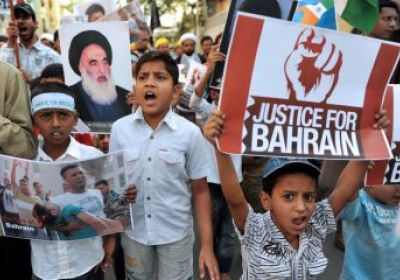
Protests across Bahrain that began on February 14 have rocked the US-backed Khalifa royal family, mobilising hundreds of thousands of people against the regime's repressive rule.
-
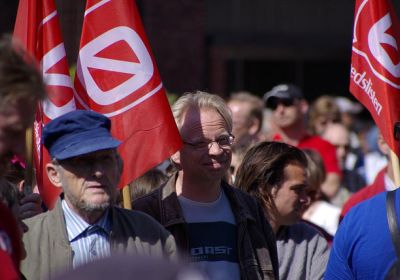 The debate over the Western military intervention into Libya that has swept sections of the world’s left since it began in March were concentrated into one passionate session at the annual congress of Denmark’s Red-Green Alliance (RGA), held in Copenhagen over May 20-22. The 300 congress delegates, representing 5900 members, were asked by a majority of the RGA’s National Board to endorse the March 18 vote of its four MPs in support of the “no-fly zone” imposed on Libya by NATO powers including Denmark ― acting in the name of United Nations resolution 1973.
 -
The response of the British Conservative-Liberal Democrat coalition government to the economic crisis, which has been to implement billions of pounds worth of public spending cuts, is intensifying the effects of the crisis on the British people. Austerity measures are worsening mass unemployment. Chief British and European economist at forecasting company IHS Global Insight Howard Archer has predicted unemployment will reach 2.67 million people by the end of 2011.
-
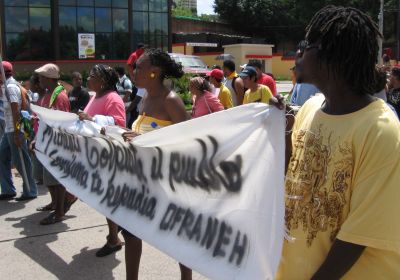 Honduran President Porfirio Lobo Sosa and former president Manuel Zelaya Rosales signed an agreement on May 22: “For National Reconciliation and the Consolidation of the Democratic System in the Republic of Honduras”. Lobo was elected in November 2009 in a rigged vote. The poll was organised by the regime installed by the June 28, 2009 military coup that overthrew Zelaya.
 -
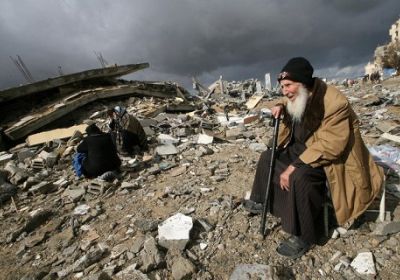 What are some examples of highly offensive words that must be censored from radio? For British state broadcaster BBC, they are not all of the four-letter variety. The BBC appears to find not just the phrase “Free Palestine” but even the geographical entity of the Gaza Strip itself unutterable on a cultural show. A controversy has broken out over the BBC's anti-Palestinian bias after its digital radio channel BBC 1xtra, which largely plays hip hop, grime and other “urban music” genres, censored on air references to Palestine.
 -
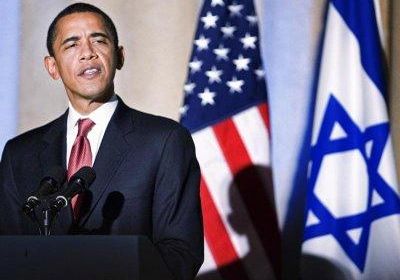 Media reports suggested that US President Barack Obama's May 19 Washington DC speech on the Middle East and North Africa contained a new proposal for peace between Israel and the Palestinians. A look at the content shows this is false. The May 20 New York Times declared: “President Obama, seeking to capture a moment of epochal change in the Arab world, began a new effort [in his speech] to break the stalemate in the Israeli-Palestinian conflict, setting out a new starting point for negotiations on the region's most intractable problem.”
 -
The formation of the Mana Party in April marked a “major step forward for a genuine working-class political voice” in New Zealand, the national director of the Unite Union and Mana party member Mike Treen told Links International Journal of Socialist Renewal. The Mana Party was formed at a 500-strong conference on April 30. It was called by Hone Harawira, MP for the Maori electorate of Te Tai Tokerau. At the conference, Harawira announced his resignation from the Maori Party and his re-election campaign as a member of the Mana Party in a by-election.
-
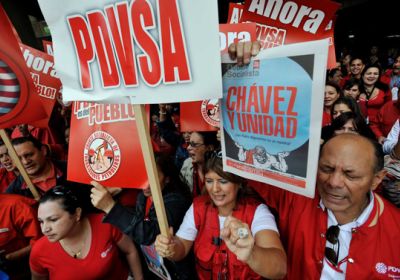 The statement below was released on May 28 by the Australia-Venezuela Solidarity Network. For more information on the AVSN, visit www.venezuelasolidarity.org . * * * On May 24, the United States’ State Department unilaterally imposed sanctions against Venezuela’s state-owned oil company, Petroleos de Venezuela, S.A. (PDVSA). The State Department accused PDVSA of undermining the US sanctions against Iran by sending two cargo ships delivering US$50 million worth of reformate ― a gasoline blending component used to improve the quality of gasoline.
 -
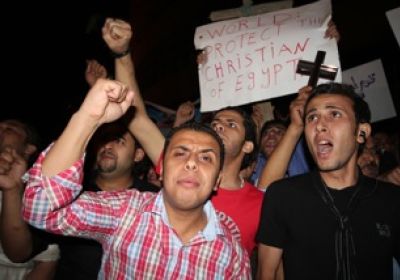
The streets of Cairo have been the frontier for a range of demonstrations over the past two weeks. A Day of National Unity between Christians and Muslims was held on May 13.
-
 “To continue this revolution, Egypt must go to Palestine.” These were the words of Akram Ismalii, a student from Cairo University who marched along side his classmates in downtown Cairo for the Third Palestine Intifada rally on May 15. The day marks al-Nakba ("the catastrophe"), as Palestinians call the anniversary of the expulsion of hundreds of thousands of Palestinians from their homes and land in 1948. It was rumored it would be a 1 million-person march, but the protests led by pro-Palestine demonstrators may have disappointed in size, but delivered in passion.