
West Papuan independence leader Buchtar Tabuni has been put on trial as part of Indonesia's crackdown on the independence movement.
Tabuni, a leader of the West Papua National Committee (KNPB), was arrested in June for allegedly organising “anarchic” protests calling on the government to properly investigate a wave of random shootings blamed on independence activists.
The protests were peaceful until attacked by police and ended with several activists dead and others injured.
-
-
 There have been outrageous abuses of power before and during the Olympic Games in London this year. These include a police attack on, and mass arrests during, a "critical mass" bike ride, the placing of missiles on civilian roofs despite protests by affected residents, and special “Olympic lanes” on roads whose use is limited those granted special permission by games organisers.
 -
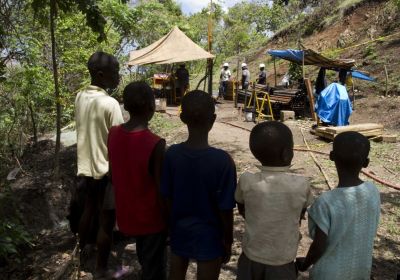 People and governments across Latin America are rising up against foreign mining companies in a wave of revolt generating alarm among investors and their political operatives in the imperialist governments. In Haiti, United States and Canadian gold mining companies are rubbing their hands over the riches that they believe await them. A recent study by Haiti Grassroots Watch estimates up to US$20 billion, at gold’s current price of $1600 an ounce, lies in the ground.
 -
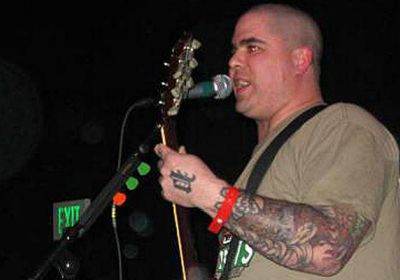
Wade Michael Page, a Nazi white supremacist, entered a Sikh temple in a town near Milwaukee, Wisconsin, on August 5 and opened fire with a semi-automatic pistol, killing six and wounding three others.
-
The list below was posted by independent journalist Juan Cole on his Informed Comment blog. * * * 1. White terrorists are called “gunmen”. What does that even mean? A person with a gun? Wouldn’t that be, like, everyone in the US? Other terrorists are called, like, “terrorists”. 2. White terrorists are “troubled loners”. Other terrorists are always suspected of being part of a global plot, even when they are obviously troubled loners.
-
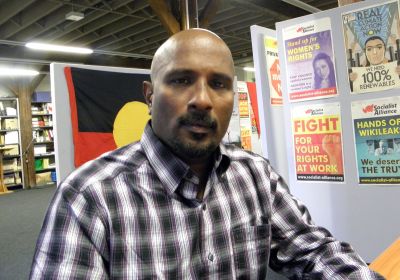 Premakumar Gunaratnam, an ethnic Tamil from Sri Lanka, who is an Australian citizen, returned to his home country in September 2011 to help organise the launch of a new left party, the Frontline Socialist Party (FLSP), a major breakaway from the Janatha Vimukthi Peramuna (JVP, People’s Liberation Front). He had been a JVP activist for three decades and a member of its underground political bureau since 1994.
 -
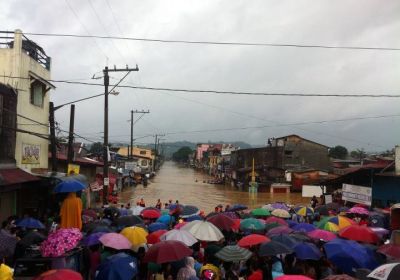 "The situation is pretty grim," Reihana Mohideen told Green Left Weekly on August 8 from the frontline of devastating floods that have submerged half of Manila over the last few days. "It's still raining hard and hard to get around." "This is another painful reminder of the global climate change crisis and the pain is being felt most by the poor and most oppressed."
 -
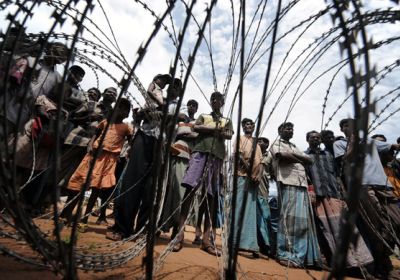 When Tamil asylum seeker Dayan Anthony was deported back to Sri Lanka by the Australian government last month, his immediate arrest and interrogation did little to allay fears he would not face harassment from authorities. His subsequent government-arranged press conference appeared to be staged for the benefit of the Sri Lankan and Australian governments.
 -
Thousands of peasant workers took to the streets of Caracas on July 26 to hand over a list of programmatic suggestions to the government and show their support for Venezuelan President Hugo Chavez.
-
 In a speech marking the one month anniversary of the parliamentary coup that overthrow left-leaning Paraguayan President Fernando Lugo, the ousted leader said on July 22 that a motivating interest for the coup-plotters was a sought-after deal between Paraguay and Montreal-based mining company, Rio Tinto Alcan (RTA). “Those who pushed for the coup are those who want to solidify the negotiations with the multinational Rio Tinto Alcan, betraying the energetic sovereignty and interests of our country,” Lugo told supporters.
 -
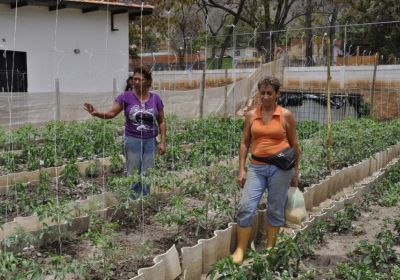
Arriving in Caracas, Venezuela’s capital, the first thing you notice is the extensive swathes of mountainside covered with poorly built, crowded, ad-hoc homes ― known locally as the barrios.
-
Bolivian President Evo Morales applauded on July 10 the agreement struck with indigenous peoples from the mining town of Mallku Khota, in the north of Potosi, to nationalise a Canadian-owned mining company. Morales said the agreement ensures the state can continue recuperating natural resources to benefit the Bolivian people. The head of state met with leaders from the ayllus (indigenous communities) in this region that were demanding the concession granting to the Canadian company South American Silver (SAS) be annulled.