
 CONALCAM brings Bolivia’s main indigenous and popular organisations together with state representatives to coordinate and debate economic policies.
The small Andean nation of Bolivia has received praise from many quarters due to the economic transformation it has undergone over the past decade.
CONALCAM brings Bolivia’s main indigenous and popular organisations together with state representatives to coordinate and debate economic policies.
The small Andean nation of Bolivia has received praise from many quarters due to the economic transformation it has undergone over the past decade.
-
CONALCAM brings Bolivia’s main indigenous and popular organisations together with state representatives to coordinate and debate economic policies.
The small Andean nation of Bolivia has received praise from many quarters due to the economic transformation it has undergone over the past decade.
-
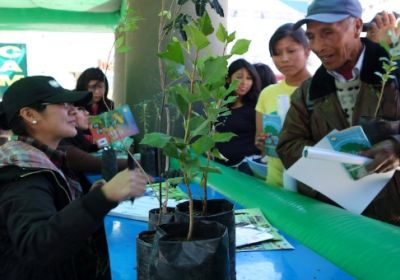 When Bolivian President Evo Morales announced in May that his government was allowing oil and gas drilling in national parks, mainstream and progressive media outlets alike were quick to condemn his supposed hypocrisy on environmental issues. Writing for the Associated Press, Frank Bajak argued that although Morales is known internationally for his outspoken campaigning on climate change, at home he faces constant criticism from conservationists “who say he puts extraction ahead of clean water and forests”.
 -
 Unveiling of monument to Juana Azurduy.
Bolivia's Morales unveils indigenous resistance statue in Argentina
Unveiling of monument to Juana Azurduy.
Bolivia's Morales unveils indigenous resistance statue in Argentina
-
 Supports of the 'no' vote celebrate in Athens on the night of July 5.
Leaders of Latin American left-wing governments have congratulated the Greek government and its people after Greece's historic July 5 referendum. Voters rejected debt austerity proposals by Greece's European lenders.
Venezuelan President Nicolas Maduro said: “The ‘no’ vote in Greece is a victory against the financial terrorism carried out by the International Monetary Fund (IMF).”
Supports of the 'no' vote celebrate in Athens on the night of July 5.
Leaders of Latin American left-wing governments have congratulated the Greek government and its people after Greece's historic July 5 referendum. Voters rejected debt austerity proposals by Greece's European lenders.
Venezuelan President Nicolas Maduro said: “The ‘no’ vote in Greece is a victory against the financial terrorism carried out by the International Monetary Fund (IMF).”
-
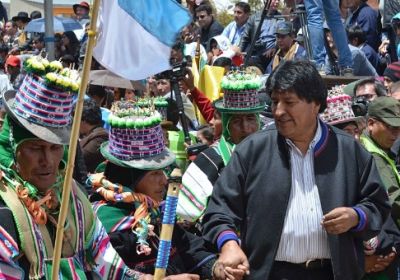
Bolivia's President Evo Morales highlighted the importance of social movements in driving the changes and the economic growth experienced by the South American country in recent years.
-
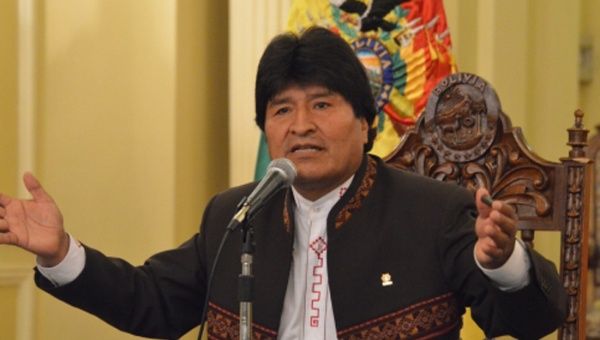 Evo Morales. Photo: ABI — Agencia Boliviana de Información.
Bolivia's left-wing president Evo Morales announced various salary rises on May 1 in honour of International Workers’ Day, TeleSUR English said. The national minimum wage will increase by 15% from US$208 to $239 a month and the general salary by 8.5%.
Evo Morales. Photo: ABI — Agencia Boliviana de Información.
Bolivia's left-wing president Evo Morales announced various salary rises on May 1 in honour of International Workers’ Day, TeleSUR English said. The national minimum wage will increase by 15% from US$208 to $239 a month and the general salary by 8.5%.
-
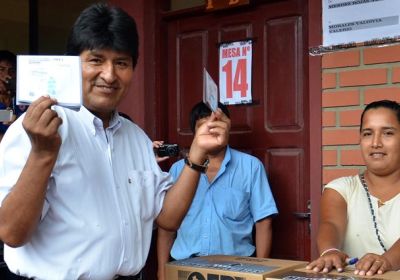 Up to 90% of the electorate voted in Bolivia’s “local” elections on March 29 for governors, mayors and departmental assembly and municipal council members throughout the country. The governing Movement for Socialism (MAS) of left-wing President Evo Morales once again emerged as the only party with national representation. It is by far the major political force in Bolivia, and far ahead of the opposition parties, none of which has a significant presence in all nine departments.
 -
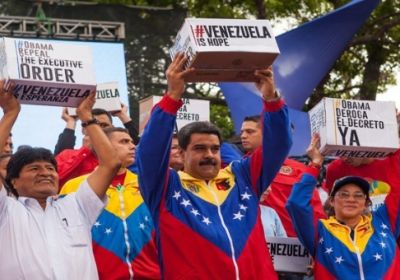 Venezuelan President Nicolas Maduro, along with his Bolivian counterpart Evo Morales, received a petition with 10 million signatures against U.S. President Barack Obama's executive order labelling the country as a “security treat” on April 9. After the decree was issued, Maduro launched a campaign seeking 10 million signatures from Venezuelans demanding the decree be repealed, saying he would present them to the U.S. President Barack Obama at the April 10-11 Summit of the Americas in Panama.
 -
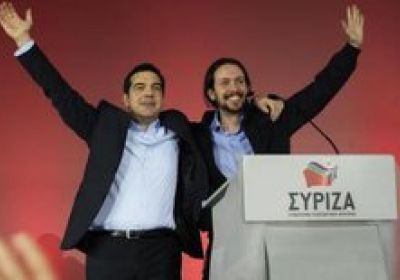 Experience proves that left-wing movements can win government, but nevertheless not hold power. Democracy, in other words the exercise of power by the people and for the people, requires much more. The problem is now being faced in Greece with with radical left party SYRIZA, which won elections in January. It will have to be faced in Spain if the new anti-austerity party Podemos wins November elections.
 -
The Bolivian government said the Andean nation’s gross domestic product grew US$34 billion last year, establishing it as one of the fastest growing economies in the region. Vice-President Alvaro Garcia Linera said that the country’s Social Community Productive Economic Model allowed for the economy to grow, despite a fall in prices for raw materials. “In 1996 the Bolivian economy accounted for $5.3 billion and by 2005, $9.5 billion dollars,” Garcia said.
-
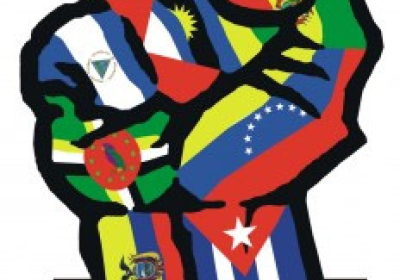 The Bolivarian Alliance of the Peoples of Our America (ALBA) is an anti-imperialist trading bloc first formed by the left-wing governments of Venezuela and Cuba to promote trade on the basis of solidarity rather than competition. It has since expanded to include 11 nations, with Venezuela and Cuba joined by Bolivia, Ecuador, Nicaragua, Dominica, Antigua and Barbuda, St Vincent and the Grenadines, Saint Lucia, Grenada and Saint Kitts and Nevis. Honduras was an ALBA member, but was forced to withdraw when a 2009 US-backed coup installed a right-wing dictatorship.
 -
Bolivia's fast growing economy fuelled by social spending The Bolivian government said the Andean nation’s gross domestic product grew US$34 billion last year, establishing it as one of the fastest growing economies in the region, TeleSUR English said on February 17. Vice-President Alvaro Garcia Linera said that the country’s Social Community Productive Economic Model allowed for the economy to grow, despite a fall in prices for raw materials. “In 1996 the Bolivian economy accounted for $5.3 billion and by 2005, $9.5 billion dollars,” Garcia said.