-
-
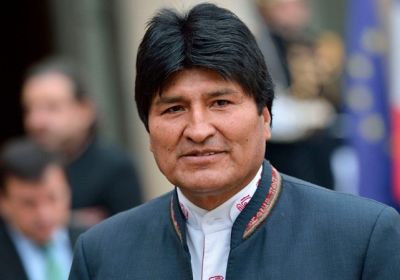
Bolivian President Evo Morales has rejected the United States economic blockade imposed on Cuba, as well as President Donald Trump’s decision to backtrack on the normalisation of diplomatic relations with Havana.
In a public letter sent to his Cuban counterpart Raul Castro, Morales repeated his nation’s “unconditional support and solidarity” with the Cuban Revolution and the “most heroic people of the continent”.
-
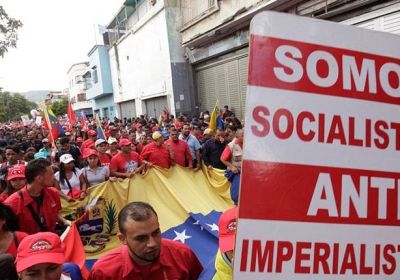
Venezuelan President Nicolas Maduro has responded to the latest threats to Venezuela's sovereignty from US President Donald Trump, in which the US leader promised "swift and strong actions" if Venezuela decides to proceed with the July 30 elections for a National Constituent Assembly.
Maduro called Trump's threats "vulgar", TeleSUR English reported. He said: "The process of the constituent assembly is already in the hands of the people who will exercise their right to vote. This is my response, the constituent assembly does not belong to me.
-
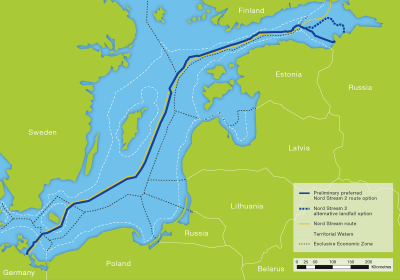
In regard to the charges about US President Donald Trump’s collusion with Russia to throw the election his way, it is worth mentioning that going through the list of all the nations that Washington has meddled in is far too long for one article. The US is, without any doubt, the world’s meddler in chief.
Even the list of countries where the US conspired to overthrow elected governments when electoral meddling failed is lengthy.
But one angle to the Russian controversy that is underreported is this: scratch the Russian connection and US-German relations pop up.
-
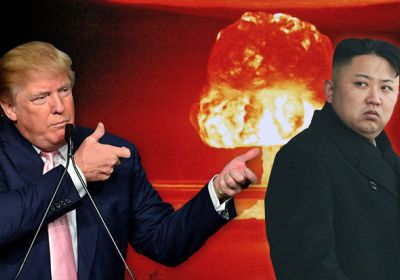
The cycle of belligerency and threat making on both sides is intensifying. And it is always possible that a miscalculation could trigger a new war, with devastating consequences.
But even if a new war is averted, the ongoing embargo against North Korea and continual threats of war are themselves costly: they promote and legitimise greater military spending and militarisation more generally, at the expense of needed social programs, in Japan, China, the US, and the two Koreas.
-
-
-
-
-
-
-
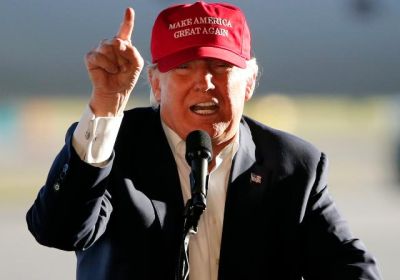
Recent weeks have brought to the fore two main issues concerning US President Donald Trump.
The first was his doubling down on one central theme of his election campaign — economic nationalism. This was found in his charge that most of the rest of the world is somehow “exploiting” the United States — and he will fight back.
The second is his drive to establish himself as an authoritarian president, the “strongman” who can take on the dysfunction in the two capitalist parties that dominate US politics.
Donald Trump
Donald Trump