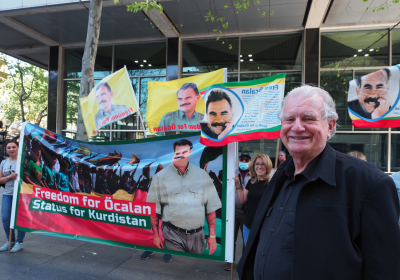
A new international campaign to free jailed Kurdish liberation movement leader Abdullah Ocalan was launched on September 23, reports Peter Boyle.
A new international campaign to free jailed Kurdish liberation movement leader Abdullah Ocalan was launched on September 23, reports Peter Boyle.

World Peace Day was marked in Sydney by the Kurdish community and its allies with a candlelight vigil, reports Peter Boyle.
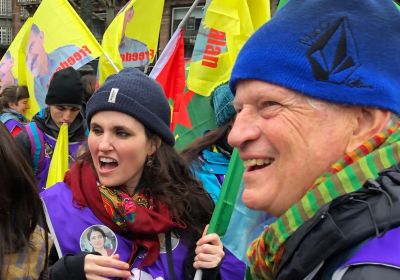
Veteran South Africa anti-Apartheid activist Sidney Luckett spoke to Green Left's Peter Boyle about the important link between South Africa's iconic freedom fighter Nelson Mandela and Kurdish leader Abdullah Ocalan.
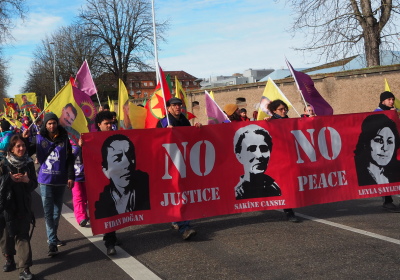
Thousands of Kurds and their international supporters converged for a huge protest in Strasbourg, France, to demand the release of Kurdish leader Abdullah Ocalan, writes Peter Boyle.
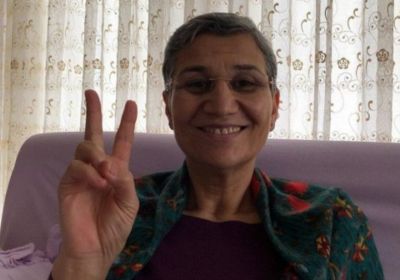
Peoples Democratic Party MP, Leyla Güven ended her 200-day hunger strike on May 26, after the Turkish government finally allowed imprisoned PKK leader Abdullah Öcalan to meet with his lawyers.
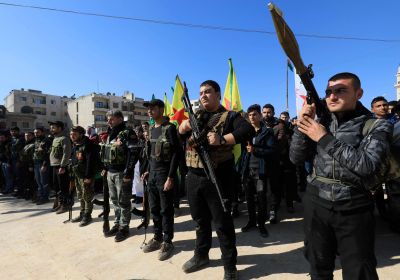
On January 20, Turkey launched an invasion of Afrin, one of the three cantons that make up the Democratic Federation of Northern Syria (also known as Rojava), the site of a profound, Kurdish-led social revolution based on multi-ethnic participatory democracy and women’s liberation.
The invasion has killed dozens of civilians in an area that has welcomed hundreds of thousands of refugees from Syria’s conflict. Turkey’s actions would be impossible without at least passive acceptance from several great powers active in Syria. Cihad Hammy looks at the motivations for various major players.