-
The People’s Coalition Against Regressive Taxation held a 4000-strong blockade of the upmarket Manila Shangri-La Hotel from December 5 to 6. The Bicameral Conference Committee, representing the upper and lower houses of the Philippines parliament, were inside debated the Sin Tax Bill, which will double the prices of cigarettes and alcohol. Workers and farmers were represented in the blockade, whose ranks were drawn predominantly from the urban poor.
-
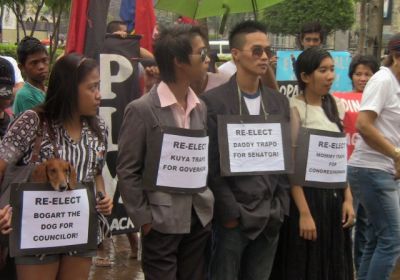
At a one-day assembly of more than 500 delegates on November 28, the militant socialist Party of the Labouring Masses (PLM) introduced its candidates for national elections scheduled for May 13 next year. The PLM, which now holds positions in several Barangay (neighbourhood) councils, is running 20 candidates for municipal councillor, vice-mayor, mayor and Congress. They include candidates in Negros and Iligan, in the Philippine archipelago’s south. Most candidates, however, are in Metro Manila or the semi-urban provinces surrounding the capital: Cavite, Rizal, Bulacan and Laguna. -
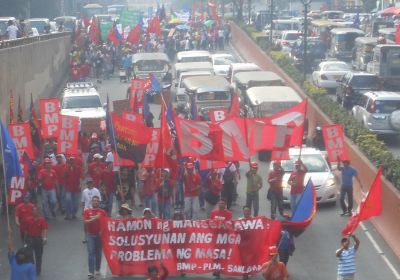
A 1500-strong march wound its way through Manila to mark Bonifacio Day on November 30. The day marks the birthday of 19th century Filipino independence leader Andres Bonifacio, known as “the Great Plebian” due to his humble origins and support for the poor. Bonifacio died at the hands of pro-elite rivals in the independence movement. The march was organised by the BMP trade union confederation, the Party of the Labouring Masses (PLM), the peasants’ and rural workers’ organisation AMA, the KPML organisation of the urban poor and the SANLAKAS democratic front. -
The petition for certification of Party of the Labouring Masses (PLM) as a national political party was approved by the Commission on Elections in September. With this approval, the fight for a national political party representing the marginalised sectors has escalated to new heights. This is a confirmation of the PLM’s three-and-a-half years of existence and its expansion as a political party with a mass constituency and grassroots chapter-formations.
-
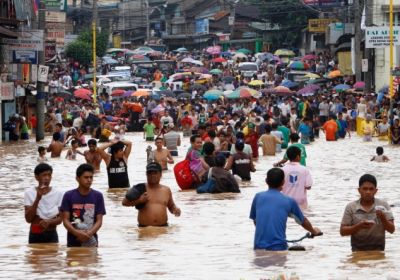
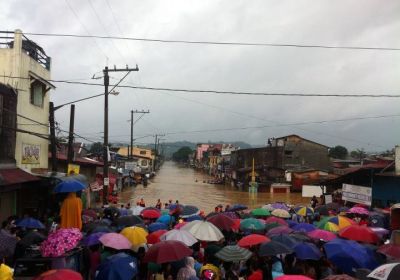
The desperate millions than comprise Manila's urban poor settlers were the worst hit by the recent floods but the government has scapegoated them for the ongoing disaster and threatened to "blast away" the shanty homes of 100,000.
-
As the Philippine government dithered and made excuses for its grossly inadequate response to the catastrophic floods — which inundated 80% of the country's capital, Manila — Sonny Melencio was leading a grassroots relief effort that brought the first food supplies in days to some of the poorest and most badly affected communities. -
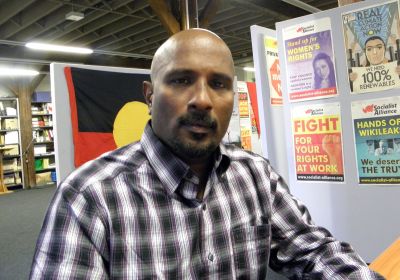
Premakumar Gunaratnam, an ethnic Tamil from Sri Lanka, who is an Australian citizen, returned to his home country in September 2011 to help organise the launch of a new left party, the Frontline Socialist Party (FLSP), a major breakaway from the Janatha Vimukthi Peramuna (JVP, People’s Liberation Front). He had been a JVP activist for three decades and a member of its underground political bureau since 1994. -
"The situation is pretty grim," Reihana Mohideen told Green Left Weekly on August 8 from the frontline of devastating floods that have submerged half of Manila over the last few days. "It's still raining hard and hard to get around." "This is another painful reminder of the global climate change crisis and the pain is being felt most by the poor and most oppressed." -
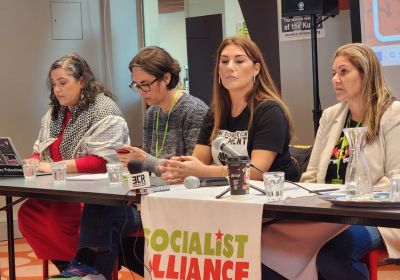
The Socialist Alliance released the statement below on June 19. * * * Message of solidarity to anti-war and progressive movements opposing the Philippine-Australia Status of the Visiting Forces Agreement -
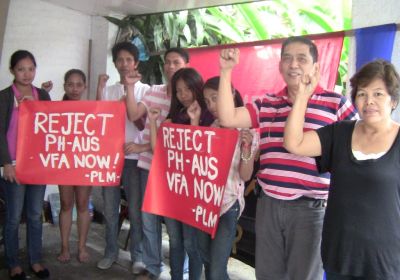
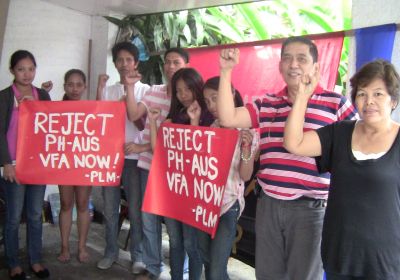
Australian mining companies, already ravaging the traditional land of Indigenous peoples in the Philippines, are now pushing for ratification of a military agreement that would allow Australian troops to enter the Philippines for "combined training, exercises, or other activities mutually approved by the Parties". Protests broke out in Manila on June 6, 2012 as the Philippines Senate was deliberating the ratification of this controversial 'visiting forces' military pact with the Australian government, signed by the disgraced former President Gloria Arroyo in 2007.
-
Anti-war and progressive groups in the Philippines have requested Australian solidarity against a Status of Visiting Forces Agreement between Australia and the Philippines currently before the Philippines Senate for ratification. On June 6 there were two anti-war demos against this Visiting Forces Agreement (VFA) which is seen as part of a US-led military build up in the Asian region aimed at China. -
Anti-war and progressive groups in the Philippines have asked for Australian support against a Status of Visiting Forces Agreement (VFA) between Australia and the Philippines currently before the Philippines Senate for ratification. On June 6, there were two anti-war protests against the VFA, which is seen as part of a US-led military build up in the Asian region aimed at China. The US used to operate huge military bases in the Philippines under the Marcos dictatorship. After Marcos was toppled by peoples power uprisings, these agreements were revoked.
Philippines
Philippines