China

Greedy property developers and corrupt government officials have forcibly driven tens of thousands of people across China from their homes. Most of these homeowners weren’t in a position to resist the developers’ strong-arm tactics.
Beijing’s drive since the early 1990s to pursue the restoration of capitalism in China received a boost on March 16, with the introduction of the controversial Property Law. Ironically, the law will take effect on October 1 — exactly 58 years since the founding of the People’s Republic of China. The law will safeguard the property of China’s burgeoning capitalist class, giving private property the same protection as state-owned assets. This includes the large number of formerly state-owned assets converted to private property in sleazy and underhand deals.
On the eve of China’s annual parliamentary session — the National People’s Congress (NPC) — on March 5-16, Beijing announced plans to increase its military spending for 2007 by 17.8% to 350 billion yuan (US$45 billion), provoking immediate concern from Washington.
China’s much increased economic activities in Africa in recent years — investments in energy and natural resources extraction and loans to African governments — have provoked accusations that it is becoming a new neocolonial power in the continent.
Last November, Hu Deping, the deputy chief of the united front department of the Communist Party of China (CPC) central committee, called for a halt to the popular campaign that seeks to force mainland China’s new class of capitalists, most of whom acquired their initial wealth from embezzling the state sector, to return their ill-gotten gains for the public benefit.
On December 29, 2006, the 176-member standing committee of the National People’s Congress (NPC — China’s law-making body) lent its support to the draft of the proposed Property Law. Many fear this controversial law will help launder the enormous state wealth already appropriated illegitimately by corrupt Communist Party officials and their hangers-on, as well as encourage more such activities.
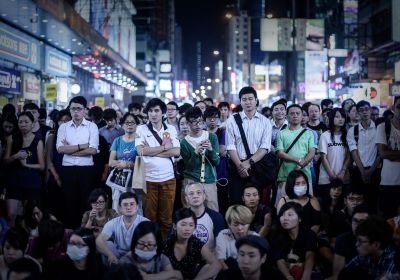
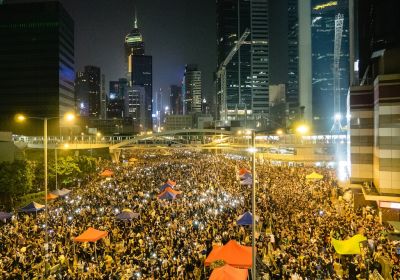
On November 6, quoting the Ministry of Public Security, the official Xinhua News Agency proudly announced there were only 17,900 “mass incidents” — Beijing’s term for mass protests — in the first nine months of 2006. Xinhua said it represented a drop of 22% from the same period last year.

Pages

Subscribe to China