-
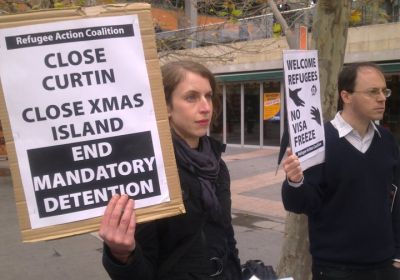
On August 23, the Department of Immigration and Citizenship (DIAC) reported that a 30-year-old man found unconscious in the Curtin Immigration Detention Centre in Western Australia had died. After his collapse on August 21, the man was taken to Derby hospital, 40 kilometres away. That night, he was transferred to Sir Charles Gairdner Hospital in Perth, more than 2000km south of Derby. He died the next day. DIAC would not tell Green Left Weekly the man’s name, but said it didn’t believe there were suspicious circumstances surrounding his death. A Coronial inquiry -
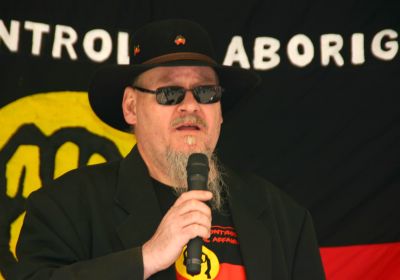
Greg Eatock, a well-known Indigenous activist in Sydney, passed away aged just 51 on August 24. His early death, from chronic health problems, was more proof of the shameful 11.5-year gap in life expectancy between Indigenous and non-Indigenous males in Australian. One of Greg's brothers, Ronald, had already passed away, aged 27. Greg came from a family with a four-generation history of political activism. His great grandmother, Lucy Eatock, and her husband William were veterans of the great 1890s shearers’ strike. Lucy later moved to Sydney from Queensland. -
Voters’ stunning rejection of both major parties has left neither likely to form a government in its own right. Whichever party governs, it will have to rely on the support of at least three and probably four independents, with Andrew Wilkie's chance of taking Denison from Labor firming. -
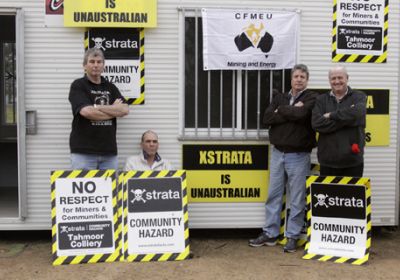
Coalminers in Tahmoor have been locked out of their workplace again. They've been fighting with their employer, the coal giant Xstrata, for more than 22 months for a fair, new Enterprise Agreement. Attempts to negotiate have collapsed repeatedly because the company has refused to budge, even during mediated talks. During a workplace dispute over job security and safety conditions, the workers held a six-hour strike on February 7, followed by a 24-hour stoppage on February 8. -
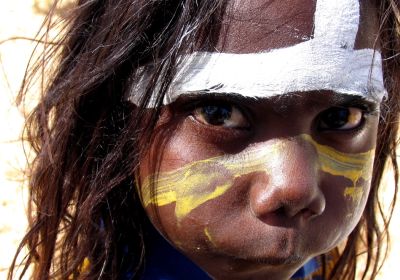
A powerful new film about the Northern Territory intervention, Our Generation, is being shown to audiences across the NT, and will screen in places across Australia. The film-makers, Sinem Saban and Damien Curtis, spent three years with “just a camera and a microphone and lots of tape stock and time” and no script, allowing Yolngu people in North-East Arnhem Land to tell their stories about how the policies of the intervention — introduced by the Howard government and continued by Labor — have changed their lives. -
Green Victory I The most striking thing about the Greens victory in the seat of Melbourne is not that it is their first lower house seat at a federal election. More significant is that more than 11% of the vote for the Greens results in less than 1% of the seats. In theory, a party could receive 20% or 30% of the vote and get no seats whatsoever. It is time that Australia moved to a more democratic proportional representation system where parties are represented in proportion to their level of support among the people. Alex Bainbridge Perth
-
At dawn on August 20, the offices of Kurdish groups in Sydney, Perth and Melbourne were raided by Australian Federal Police and state police. Police alleged the groups were linked to the Kurdish Workers Party (PKK), which struggles for self-determination for the oppressed Kurdish minority in Turkey. The PKK was listed as a “terrorist organisation” by the Australian government in 2005. Kurdish leaders in Melbourne, along with the association’s lawyer Chris Ryan, questioned the timing of the raid, coming as it did the day before the federal election. -
Rather than giving us the government we deserve, the August 21 federal election delivered an outcome the two old parties deserved. Because both Labor and the Coalition focused on negative campaigning, sloganeering and scapegoating refugees and other minorities, a large number of voters decided to vote for alternatives with some vision. A hung parliament with the Greens holding the balance of power in the Senate was only a partial reflection of this growing disenchantment with the two-party system. -
By denying both the Australian Labor Party (ALP) and the the Liberal-National coalition an outright majority in primary votes and in House of Representatives seats, Australian electors voted “neither of the above” for the traditional parties of government. This followed an election campaign in which the major parties conducted an ugly race to the right, most notoriously by scapegoating the few thousand desperate refugees who attempt to get to Australia on boats. -
Unexpectedly, it seems to me, a great opportunity for social change has emerged. This might seem strange, with another neo-fascist on the verge of becoming Australian Prime Minister. However remember that real change comes from widespread social participation, over longer periods.
-
Victorian Socialist Alliance Federal election candidates strongly condemn the Australian Federal Police raids on the Kurdish Association of Victoria and community members.
-
Marrickville Town Hall August 18, 2010