-
-

Emmanuel Macron won the second round of the French presidential elections on May 7, receiving 58.21% of the vote compared to the 30.01% share for far-right National Front (FN) candidate Marine Le Pen.
Despite the apparently decisive victory, the vote signals continued political uncertainty in France fuelled by widespread disillusionment with France’s democracy. It raises questions as to whether Macron’s supporters, organised in a new centrist movement called En Marche!, will be able to form a working government out of legislative elections scheduled for late June.
-
-
-
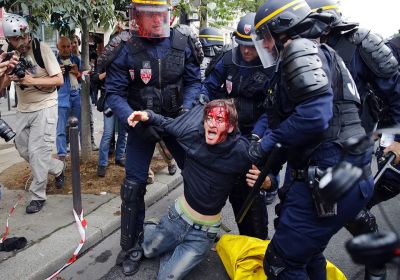
More than 170,000 workers and students joined more than 110 protests across France on September 15 against new labour laws that dramatically deregulate France’s labour code.
-
-
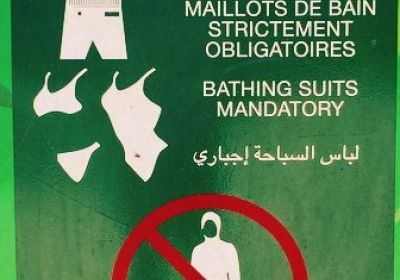 Since the announcement of an ordinance banning the wearing of burkinis on the beaches of the French Mediterranean city of Cannes in late July, France has been swept up in a new wave of Islamophobia. A further 17 municipalities have announced their own ordinances banning the burkini — the full-body swimsuit worn by some Islamic women. These bans have been endorsed not only by France’s far right, but by the Socialist Party Prime Minister Manuel Valls.
 -
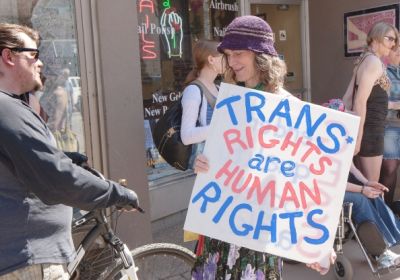 The Victorian government announced new legislation on August 18 aimed at simplifying the process for trans and gender diverse (TGD) people’s to change the sex marker on their birth certificates and records. This has rightfully been welcomed as an important step forward for TGD people rights. The new legislation, which follows similar legislation in the ACT and 2013 changes to policies regarding sex markers on Commonwealth documents, is a start towards eliminating medical gatekeeping on the lives of TGD people.
 -

President Nicolas Sarkozy enacted a new law on November 10 that increases the retirement age of French workers. The move came just days after more than a million workers and students mobilised across France against the law.
-
 French workers and students have mobilised in large numbers again to oppose changes in pension laws that will raise the age at which workers are able to retire. The seventh national strike in as many weeks took place on October 28, as indefinite strikes in many industries against the changes entered their third week. The protests took place despite the government’s pension bill passing through France’s parliament on October 27.
 -
 Since October 12, France has been gripped by intensifying mass opposition by workers and students to proposed counter reforms to the country’s pensions system by the right-wing government of President Nicolas Sarkozy. Public opposition to the attack has been highlighted by three national strikes each involving millions of people, two national student strikes and a growing wave of indefinite strikes in a range of industries — most notably the crippling shutdown of the oil industry.
 -
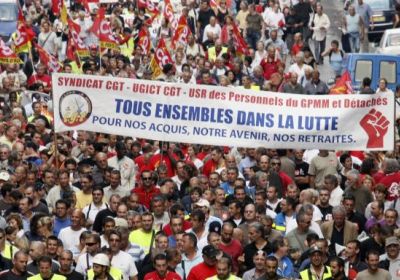
More than three million people took part in strikes and protests across France on September 23. They were demanding the withdrawal of laws that will dramatically reduce the right of workers to access pensions. The protests, which had been called by a coalition of seven of France’s union confederations, showed that the passage of the Pension Bill through France’s lower house of parliament had done nothing to weaken opposition to the attack on pensions.
Lisbeth Latham
Lisbeth Latham