-
-
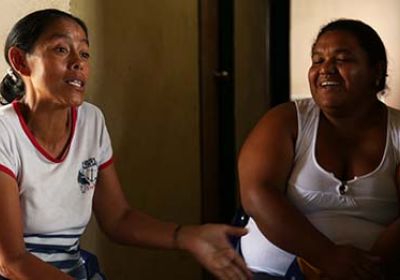
One of the most important aspects of Venezuela’s pro-poor Bolivarian Revolution has been its promotion of women's empowerment through community organisation.
To get a sense of how this grassroots process of community organising is developing and the role women are playing in the process, we visited the Ataroa and Lomas de Leon communes as part of the Venezuela Analysis international solidarity delegation in late August.
-
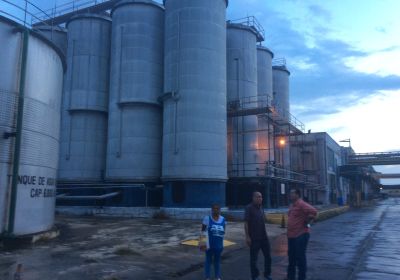
Workers in Venezuela are demonstrating what is possible when workers and communities take over the means of production.
Faced with a company shutdown and mass sacking, workers at the former Brahma beer factory in Barquisimeto, Lara state, occupied the factory in 2013. Today, the company is owned by the community, run by workers and geared towards meeting the need of local farmers and residents.
-
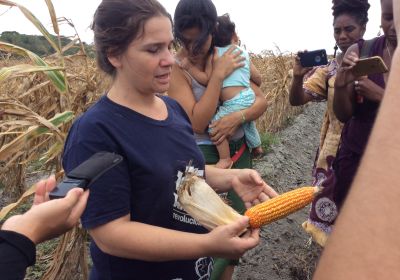
The Agricultural Social Production Unit (UPSA) Caquetios, located in Cabudare, in Palavecino municipality, Lara state, is run by the Brazilian Movement of Rural Landless Workers (MST). A campesino organisation, the MST shares similar objectives to those of former president Hugo Chavez and the pro-poor Bolivarian Revolution he led – in particular, land collectivisation as the best way to grow food and put an end to rural inequality.
In 2006, the MST was invited to Venezuela to take over a 40-hectare estate as part of Chavez’s attempt to transform Venezuela’s countryside. Since then, the group has been joined by several Venezuelan farmers, with both groups learning new experiences from each other.
-
-
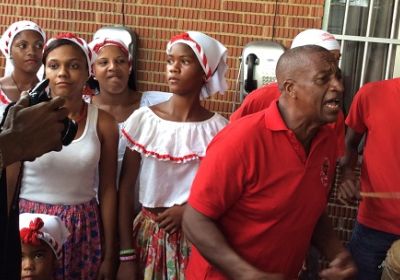
Having spent our first few days in Caracas, we travelled to Higurote, the capital of Brion municipality, in Miranda state, which is part of the coastal region known as Barlovento – a centre of African culture in Venezuela.
-
-
-
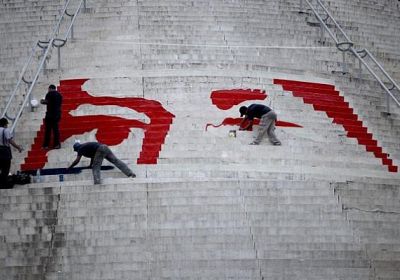
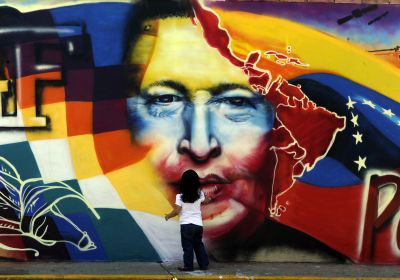
Travelling past El Calvario Park, just a few blocks from the Miraflores presidential palace in Caracas, we see a familiar image: an outline of late former president Hugo Chavez’s eyes, painted across several stairs.
This image can be seen all over Caracas. The government of President Nicholas Maduro has converted it into a recognisable trademark, much like the iconic image of Che Guevara that is splashed across T-shirts, flags and walls the world over.
-
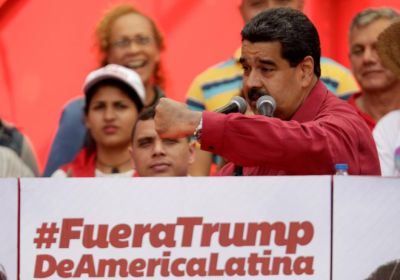
With the Venezuelan right-wing opposition in disarray after failing to overthrow President Nicolas Maduro through violent protest, and divided in the face of the upcoming October 15 regional elections, the frontline of the battle for Venezuela’s future has shifted outside its borders.
-
Flying into Caracas, the plane was full of middle class Venezuelans travelling home from Miami. On board, no one spoke to the passenger next to them for fear of finding out they were on the opposite side of the political divide.
In highly polarised Venezuela, these things are best left unsaid.
-
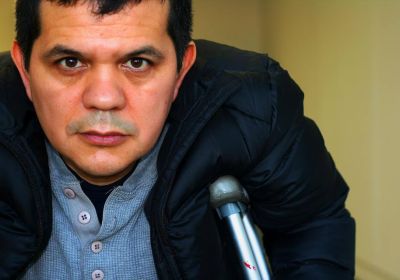
“The US is doing the same thing as it did with the economic blockade on Cuba, to try and suffocate the Venezuelan economy” explained Williams Camacaro, a long-time Venezuelan grassroots activist based in New York.
Speaking to Green Left Weekly in Caracas, Camacaro said “The sanctions will cause a lot of difficulties for Venezuela”, but “the reality is that a lot of time has passed since [the blockade was first imposed on Cuba]. Many things have changed.”
Coral Wynter
Coral Wynter