
The largest US refinery workers strike since 1980 entered its third week, TeleSUR English said on February 18, with union and oil company representatives set to renew face-to-face talks over pay and safety after a week-long hiatus.
The article said: “The United Steelworkers Union (USW) is seeking a three-year, industry-wide pact that would protect 30,000 workers at 63 U.S. refineries, covering up to two-thirds of the country's domestic oil producing capacity.
-
-
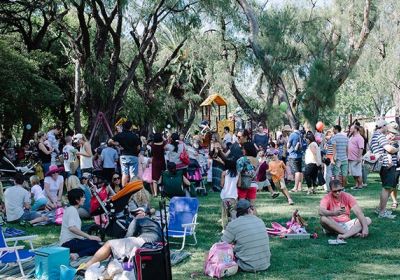 Several hundred residents and supporters of the campaign to stop the NSW government's WestConnex tollway project gathered in Whites Creek Park, Annandale, on February 15. Cait Jones, a representative of the campaign which successfully stopped the similar East-West Link tollroad in Melbourne, said: "In Victoria, we beat the East-West Link. We're here today to stand with you in your fight against WestConnex. Mass transit is what we want and need. Tollroads are a disincentive to public transport.”
 -
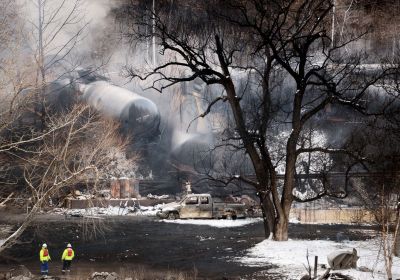 Fires were still smouldering on the morning of February 17 as emergency crews assessed the damage after a train carrying Bakken crude oil derailed and exploded near the Mt Carbon area of Fayette County, West Virginia, the day before. About 2400 people have been evacuated or displaced by the derailment, according to the Federal Emergency Management Agency, as the fire burned power lines.
 -
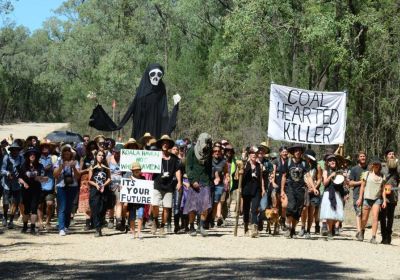
About 250 people gathered at the Leard State Forest in northern NSW from February 13 and 18 to stop Whitehaven Coal clearing the forest to make way for its proposed Maules Creek coalmine.
-
Hundreds of people started a week-long walk through Sydney’s western suburbs on February 21 to highlight the risk coal seam gas poses to drinking water. Beginning at Cataract Dam the route will continue for 160 kilometres through Camden, Campbelltown, Liverpool, Fairfield, Prospect, Parramatta, Auburn, Ryde and Gladesville before finishing at Parliament House in Sydney. More than 10 community groups came together to organise the walk, including the Western Sydney Environment Network, Stop CSG Macarthur, Parramatta Climate Action Network and the Nature Conservation Council of NSW.
-
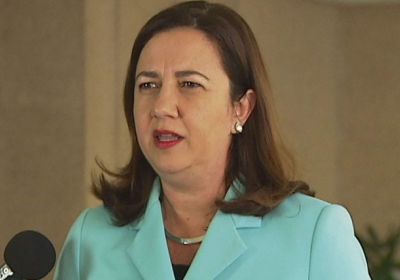 With 44 seats (to the LNPs 42) and the support of Independent Peter Wellington, the ALP leader Annastacia Palaszczuk was sworn in as Premier on February 14. The full Cabinet of 14 (including 8 women) was sworn in on February 16. The ALP minority government represents a number of firsts for Queensland: first cabinet with a majority of women ministers; first female team of Premier and Deputy Premier (Jacki Trad); and first woman indigenous cabinet minister Leeanne Enoch. It is assumed that the axing of asset sales will be the first item on the new government’s to-do list.
 -
 Pressure is mounting on Australia’s big four banks over their support for the construction of coalmines in Queensland’s Galilee Basin. Greenpeace launched a public email campaign targeting the executives of ANZ, Commonwealth, NAB and Westpac, “to publicly rule out financing or advising Adani [Mining] on the Carmichael coal mine and associated infrastructure project in the Great Barrier Reef or Queensland”.
 -
Australia has a poor record on native animal extinctions. We know that native forest is essential habitat for koalas and other wildlife. Yet, knowing how important the preservation of sufficient, suitable habitat is to sustaining endangered wildlife, we still continue to destroy vital native vegetation and old growth forest. The dire situation for koalas around Ballina, NSW, is in the spotlight again. A critical colony of more than 200 koalas is at risk of extinction in the region if Stage 10 of the Pacific Highway upgrade goes ahead.
-
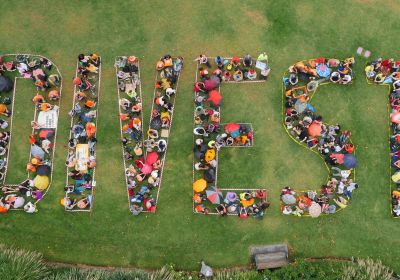
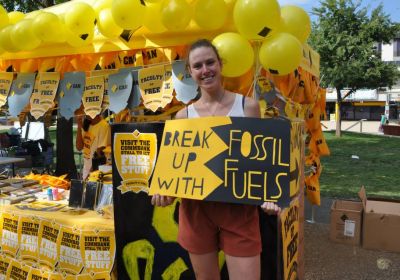 In the lead-up to the first global divestment day on February 14, the University of Sydney announced it will reduce the carbon footprint of its investments by 20% within three years by divesting from heavy polluters. But it has shied away from divesting from fossil fuels altogether. The decision follows a sustained student-led campaign, with support from Greenpeace, that has been urging the university to completely divest its investments in fossil fuels.
 -
 Biologists consider the health of frogs to be indicative of the health of the biosphere as a whole. Frogs have permeable skin that easily absorbs toxins. They require specific aquatic and terrestrial environments to survive and breed, making them highly susceptible to environmental disturbances. Because of this they are considered accurate indicators of environmental stress. Frogs have lived on the Earth for 250 million years, surviving ice ages and other climate changes. Yet around the world, populations of amphibians, particularly frogs, are now in drastic decline.
 -
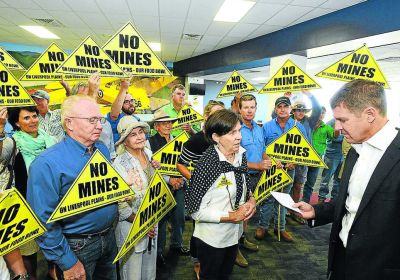 Three new coalmines have been approved by the New South Wales Planning Assessment Commission, just weeks before the state election. The new coalmines will be in Bengalla, near Muswellbrook in the Hunter Valley, the Watermark Coal Project, near Gunnedah on the Liverpool Plains and Moolarben, north-east of Mudgee.
 -
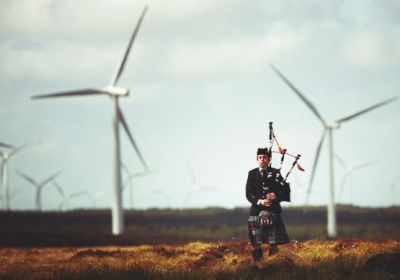 SCOTLAND AND WALES BAN FRACKING The National Assembly of Wales banned shale gas fracking in Wales on February 4. It follows an announcement on January 28 that the Scottish government will temporarily ban fracking until a public health assessment is completed. Early last year British Prime Minister David Cameron said his government was going "all out for shale".