
How does capitalism survive? This was the question that greeted the 11th annual Historical Materialism conference in London. Held from November 6 to 9 at the Vernon Square Campus, it was a four-day long broad marriage of global leftist activists and academics run by the Marxist journal of the same name.
Posed as a simple question, it quickly developed into as many answers and narratives as there are positions within the left.
-
-
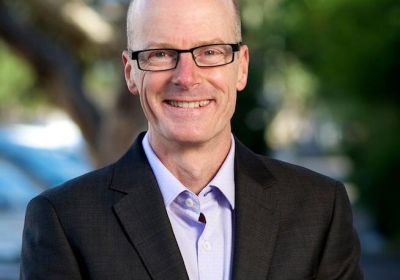 In the 2010 Victorian elections the Greens scored about 30% of the vote in each of the Labor-held inner-city seats of Brunswick, Richmond and Melbourne. They are campaigning hard to break into the Legislative Assembly in all three in the November 29 election. A poll reported in the November 7 Age predicted Greens wins in Richmond and Melbourne, but was not conducted in Brunswick. Tim Read, a medical doctor and researcher, is the Greens candidate for Brunswick. He believes that parliament should stand up to big business.
 -
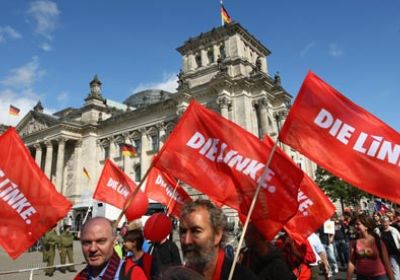 Nearly twenty-five years to the day after the fall of the Berlin Wall, socialist party Die Linke (“The Left”) looks set to form government in the eastern German state of Thuringia for the first time. After two months of uncertainty following September 14 state elections, the way was cleared for Die Linke to head a coalition government in December, alongside the Social Democrats (SPD) and the Greens, on November 4 when nearly 70% of SPD members in Thuringia voted to enter the coalition.
 -
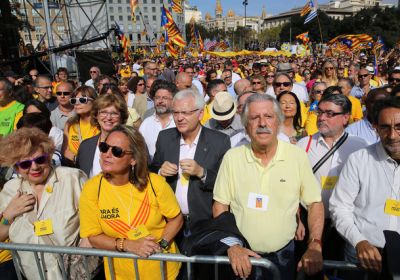 Millions of residents of Catalonia will indicate their preference for the future political status of their country, one of the 17 “autonomous communities” (regional governments) within the Spanish state, in the November 9 Catalan “participatory process”. The “process” will present voters with the same ballot paper as the original non-binding consultation adopted by the Catalan parliament on September 26 — which was immediately suspended by the Spanish Constitutional Court. Its asks: “(1) Do you want Catalonia to become a state? (2) If yes, do you want that state to be independent?”
 -
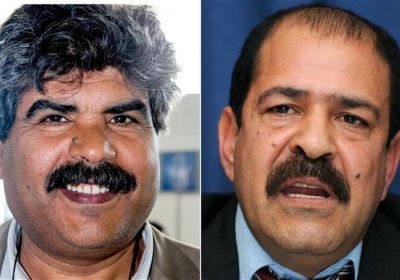 Tunisians are now enjoying the pleasure of thinking up the most improbable “scenarios” of political alliances between political Islamists, militant secularists and left wingers. Why? The Tunisian parliamentary elections of October 26 did not produce a majority party and rumours are everywhere. For the left, the results have posed serious problems.
 -
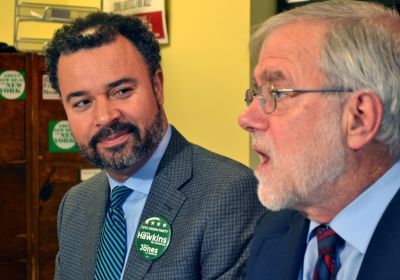 Green Party gubernatorial ticket in New York in the November 4 elections — headed by left-wing activist Howie Hawkins for governor and International Socialist Organization activist Brian Jones for lieutenant governor — scored a large rise in the Green vote.
 -
 In the run-up to the November 4 midterm elections, Democrats filled e-mail inboxes to the brim with messages that ranged from panicky to pleading. The subject lines revealed the desperation of the Democratic establishment as it tried to drum up money and support: “heartbreaking shame”, “deep trouble”, “devastating loss”, “Terrible news”, “we're BEGGING”, “begging … BEGGING”, “kiss any hope goodbye”.
 -

Edinburgh’s Augustine United Church is a pretty cold place when the wind is howling, as it was when the Scottish Socialist Party (SSP) held its annual conference there on October 25.
-
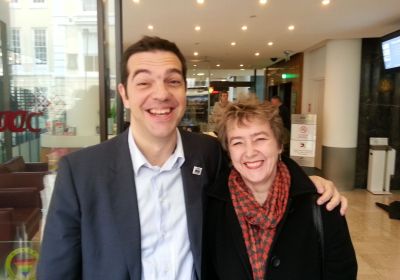 Left Unity is a new political group in Britain created out of a call last year by filmmaker Ken Loach for a new party to the left of Labour, which has moved rightwards in recent years and supports anti-worker austerity measures. The call was supported by thousands of people and Left Unity held its founding conference in November last year. Green Left Weekly's Denis Rogatyuk spoke with Left Unity's national secretary Kate Hudson, a veteran campaigner who is also general secretary of the campaign for Nuclear Disarmament.
 -
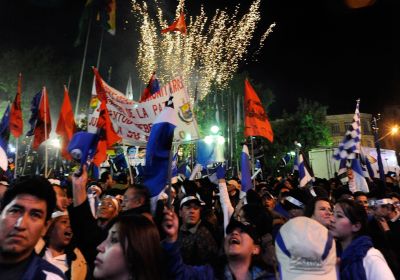 Predictions by pollsters and commentators that Evo Morales would easily win Bolivia’s October 12 presidential elections were confirmed when he obtained more than 60% of the vote. Most, however, differ over why, after almost a decade in power, Morales’ Movement Towards Socialism (MAS) continues to command such a huge level of support. Their explanations tend to focus on specific economic or political factors, such as booming raw material prices or the MAS’s ability to control and co-opt the country’s social movements.
 -
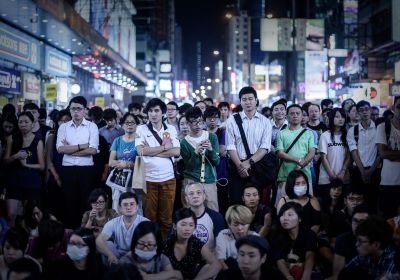 As talks between Hong Kong protesters and the Chinese government began on October 21, the region’s current chief executive C.Y. Leung spoke out against free elections on the grounds that it would empower the poor. In his first interview with foreign media since the pro-democracy movement began, Leung said that if the public were allowed to nominate any candidate of their choosing, elections would be dominated by the large sector of Hong Kong residents now living in poverty.
 -
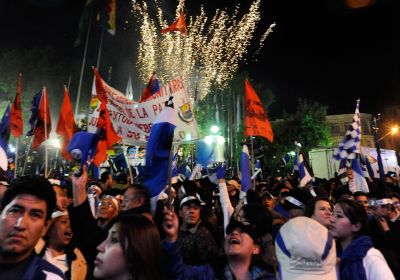 Bolivian President Evo Morales was re-elected for his third term on October 12 with more than 60% of the vote.