
 “What we do matters.” “We are many, they are few.” “The squeaky wheel gets the grease.”
These phrases are what people trying to effect change often say quietly to avoid slouching into despair. Today, they are what crews of Bostonians are singing to one another over rowdy, joyous toasts, confident that their actions just beat back the most powerful plutocrats in town.
“What we do matters.” “We are many, they are few.” “The squeaky wheel gets the grease.”
These phrases are what people trying to effect change often say quietly to avoid slouching into despair. Today, they are what crews of Bostonians are singing to one another over rowdy, joyous toasts, confident that their actions just beat back the most powerful plutocrats in town.
-
“What we do matters.” “We are many, they are few.” “The squeaky wheel gets the grease.”
These phrases are what people trying to effect change often say quietly to avoid slouching into despair. Today, they are what crews of Bostonians are singing to one another over rowdy, joyous toasts, confident that their actions just beat back the most powerful plutocrats in town.
-
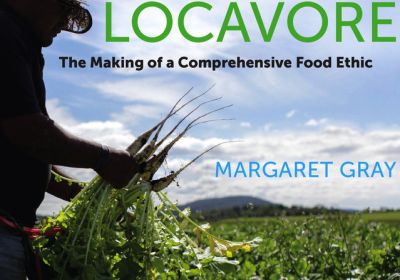
Over the past few decades there has been a rapid growth of interest in buying food that does not come from large-scale industrial farms. Concerns exist over their use of large amounts of commercial fertilisers, pesticides and genetically modified organisms, and inhumane treatment of farm animals.
-
 Anti-water charge protests in Letterkenny, County Donegal on November 1.
The Irish government’s unpopular public utility, Irish Water, has been dealt a body blow. It failed two key tests within the space of a fortnight — gifting a huge victory to opposition parties and the huge anti-water charges movement.
Anti-water charge protests in Letterkenny, County Donegal on November 1.
The Irish government’s unpopular public utility, Irish Water, has been dealt a body blow. It failed two key tests within the space of a fortnight — gifting a huge victory to opposition parties and the huge anti-water charges movement.
-
 For a long time, superannuation was available only to permanent public sector workers and managerial employees in the private sector. So-called “blue collar” workers were not so privileged. In the mid-1980s, only about a quarter of these workers had access to superannuation, more often than not following union-led campaigns in targeted industries.
 -
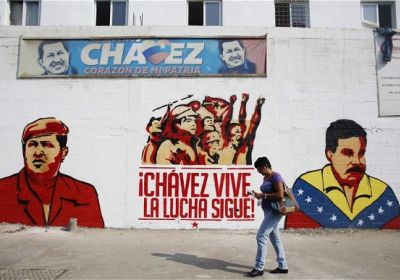
Had Hugo Chavez not passed away in 2013, the former Venezuelan president and revolutionary socialist would have turned 61 on July 28. However, though Chavez is gone, his indelible imprint on Venezuela’s political landscape endures.
-
 On July 30, Liverpool Council outdoor staff walked off the job after hearing that management wants to “tender out” cleaners’ jobs.
Management wants to “cut costs” by tendering the jobs to cheaper firms which would pay less and provide a poorer service for residents. The United Services Union (USU) said that management, cynically, had offered to help workers prepare a tender for their own jobs!
On July 30, Liverpool Council outdoor staff walked off the job after hearing that management wants to “tender out” cleaners’ jobs.
Management wants to “cut costs” by tendering the jobs to cheaper firms which would pay less and provide a poorer service for residents. The United Services Union (USU) said that management, cynically, had offered to help workers prepare a tender for their own jobs!
-
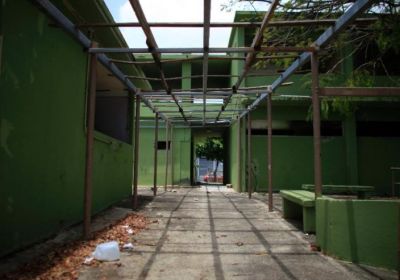 “Billionaire hedge fund managers have called on Puerto Rico to lay off teachers and close schools so that the island can pay them back the billions it owes,” the Guardian said on July 28 on the debt crisis facing the United States' Caribbean colony.
 -
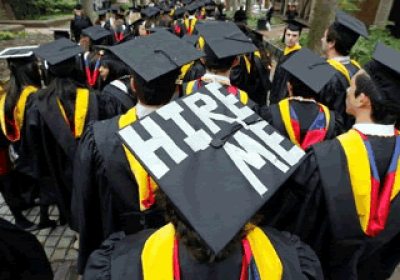 When Gough Whitlam’s Labor government abolished university fees in January 1974, student enrolments had already been increasing at double the population growth for two decades. In 1985, three years before Bob Hawke’s Labor government abolished free tertiary education and brought in the Higher Education Contribution Scheme (HECS), it had decided to develop the full-fee international marketing of education as an export industry.
 -

British politics is being shaken up by the shock rise of veteran socialist Jeremy Corbyn to take the lead in the British Labour Party leadership contest, running on a platform against austerity and for pro-people measures such as renationalising privatised industries. The ballot for Labour leader closes in September.
-
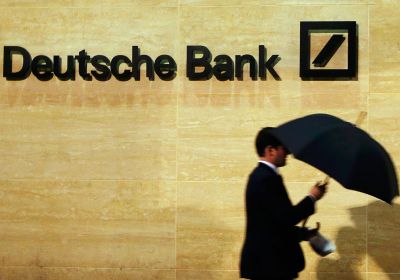 In 1870, six months before a retreating French army was defeated by Prussian troops at Sedan, the Deutsche Bank was established in Berlin. Although Britain was still the pre-eminent world economic power, the US and Germany were starting to take the giant strides that would soon enough see them leave the former “workshop of the world” in their wake.
 -
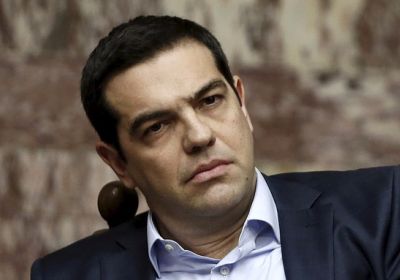 The International Monetary Fund (IMF) has decided not to sign off on the European Union's bailout deal with Greece, saying it does not specifically address tackling Greece's debt, TeleSUR English said on July 30. In a meeting on July 29, the IMF board members said they “cannot reach staff level agreement at this stage” over whether to support Greece's bailout package, according to the Financial Times who received the confidential meeting minutes.
 -
 In the aftermath of the harsh deal for brutal austerity and mass privatisation imposed on Greece in the early hours of July 13, both Berlin and Paris are floating alternative “solutions” to the euro problem. Germany, on the one hand, wants greater fiscal integration, whereas France is calling for the creation of a eurozone government as well as a dedicated finance minister. The mainstream press is talking up the divisions between the two nations as fundamentally different perspectives on the euro — or even differences in political “culture”.