-
The decade-long campaign against the Bickham coal project, north of Scone in New South Wales, ended in victory on May 14, when NSW Premier Kristina Keneally announced the government would reject the proposed mine. The open-cut mine would have extracted 36 million tonnes of coal over 25 years. Keneally's decision came after the May 3 publication of the state Planning Assessment Commission's (PAC) report, which recommended the mine not proceed. It could be the first time the NSW government has ever blocked the development of a coalmine. -
NSW Premier Kristina Keneally announced that the Labor government would block a proposed open-cut coalmine near Scone in the Upper Hunter Valley on May 14. The decision puts an end to the Bickham coal project, which would have mined coal for the next 25 years, threatening to contaminate the Pages River and other water sources for local farmland. The decision also permanently bans any open-cut coal mines at the Bickham site. Keneally said: “This mine is simply not compatible with the unique rural characteristics of this locality, including the horse-breeding industry.
-
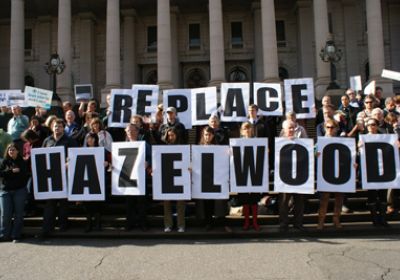
MELBOURNE — In the wake of the Rudd government’s backflip on climate change, more than 250 people rallied outside the Victorian parliament on May 6 to urge Labor Premier John Brumby and Coalition leader Ted Baillieu to commit to replacing Hazelwood coal-fired power station, the world’s dirtiest, with clean energy by 2012. -
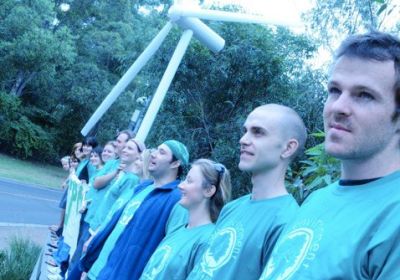
On May 3, students protested at the entrance to the University of Wollongong to call for 100% renewable energy on campus. The action was a part of nationwide events calling for renewable energy across Australia. More than 2000 students have signed a petition calling upon the university to increase its purchase of renewable energy from the current 15% to 50% by the end of 2010, and then to 100% by the end of 2015. -
As towns go, Orroroo in South Australia might seem small, but with 850 people it is one of the larger stops on the road between Broken Hill and Port Augusta. The countryside around it is marginal farmland. Only in the occasional year is there enough rain for a good crop of wheat, and in a process with well-researched links to global warming, the wet years have been getting fewer. It is ironic, therefore, that this district 250 kilometres north of Adelaide now seems destined to hurry climate change along.
-
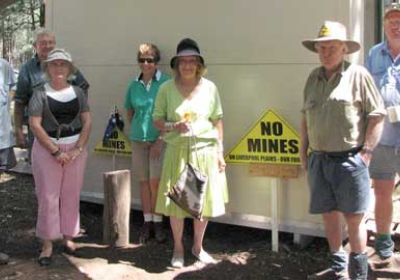
Farmers at Caroona on the Liverpool Plains near Quirindi, New South Wales, have been defending their properties from invasion by BHP-Billiton’s coal exploration drillers. For 615 days, until March 25, they inspired coal-threatened communities everywhere with their blockade, by saying “No” — and meaning it. Trish Duddy and Tommy and George Clift have been at the blockade camp for every one of those 615 days, joined by other locals on a rolling roster for cups of tea, information-swapping, resolve-steeling — and symbolic trailblazing. -
As the Copenhagen Summit on Climate Change got underway so did global demonstrations demanding real action to address the global warming crisis. This is footage of the 15,000-strong 'Walk Against Warming' march in Sydney on December 12, 2009.
-
PERTH — Twenty “billionaires for coal” and their supporters held a mock rally on the steps of Woodside Plaza on August 11, as parliament resumed for the session that was to vote on the Rudd government's proposed emissions trading scheme.
-
The S11 protests against the World Economic Forum were a triumph for the Australian left, writes Susan Price. But it was a tough job to put them together and took enormous efforts of many different people from many different backgrounds.
-
Reports of a giant breakaway iceberg and a new 64-kilometre crack in the Larsen ice shelf in the Antarctic peninsula — dramatic indicators of warmer weather — seem to have had little or no impact on the major greenhouse gas culprits at the world climate conference in Berlin. Australia and the United States are leading the charge against strict controls of greenhouse gas emissions in the two-week conference, which began on March 28.
-
Fidel Castro's rousing six-minute address to the Earth Summit in Rio said everything delegates had come from around the world to hear, says Dr Judy Henderson, Australian Council for Overseas Aid representative at the Earth Summit in June.
-
- Gadigal Country/Sydney