-
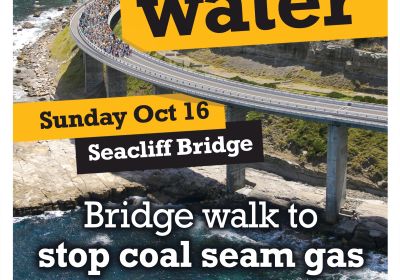
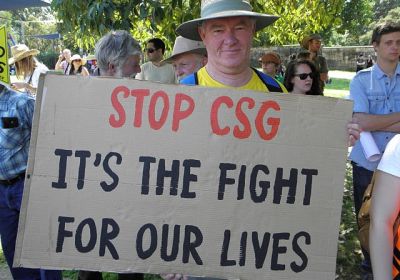
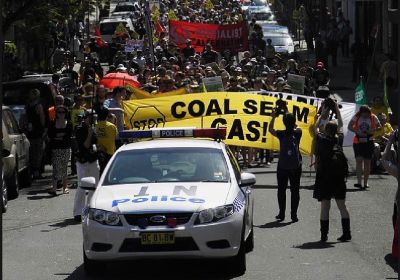
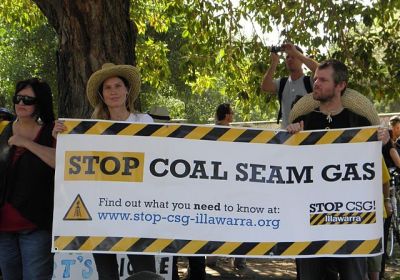
More than 3000 people turned out on October 16 to walk across the Sea Cliff Bridge in the Illawarra in protest against coal seam gas mining plans in the area. The protest was further proof the coal seam gas (CSG) industry is in trouble. Its problem? An informed public. The Australian said on October 10 that a survey had showed the CSG industry was “losing the PR battle”, with 63% of respondents recalling a negative media story about CSG. Driving the bad coverage has been the large grassroots campaign against the industry. -
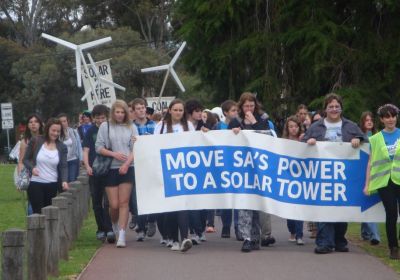
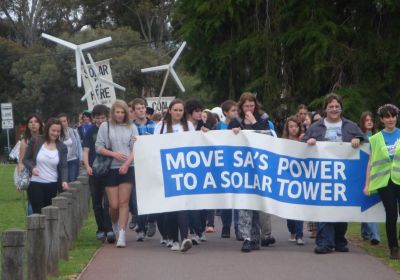
More than 300 people of all ages gathered in Adelaide on September 24 calling for concentrating solar thermal (CST) technology to replace Port Augusta’s ageing coal fired power stations. The action was organised by several environment groups, including the Australian Youth Climate Coalition, the Climate Emergency Action Network, the Socialist Alliance, Resistance and the Young Greens. The crowd met in Adelaide’s Rymill Park and took to the streets in a colourful, rhythmic parade, featuring a moving solar thermal tower. -
“I’ve come to believe that if we burn all reserves of oil, gas and coal, there is a substantial chance we will initiate the runaway greenhouse. If we also burn the tar sands and tar shale, I believe the Venus syndrome is a dead certainty.” -
The Polynesian island nation of Tuvalu, in the Pacific Ocean, is facing a severe shortage of fresh water. Australia Network News said on October 10 that a state of emergency had been declared and Tuvalu's disaster co-ordinator Sumeo Silu said there was only about three days of water left. Tuvalu is in the midst of a crippling drought and had no rain for months. ANN said Australia and New Zealand would deploy a large desalination plant to the island, home to about 10,000 people.
-
More than 300 people of all ages gathered in Adelaide on September 24 calling for world leading concentrating solar thermal (CST) technology to replace Port Augusta’s aging coal fired power stations. The action was organised by several environment groups, including the Australian Youth Climate Coalition, the Climate Emergency Action Network, the Socialist Alliance, Resistance and the Young Greens. The crowd met in Adelaide’s Rymill Park and then took to the streets in a colourful, rhythmic parade, featuring a moving solar thermal tower. -
Stop CSG Illawarra released the statement below on October 10. * * * Stop CSG Illawarra — the community group that organised the 3000-plus person human sign action on Austinmer Beach in late May — is planning a community walk across the iconic Sea Cliff Bridge for October 16. The walk is part of a national day of coordinated actions under the theme “Defend Our Water”, and is calling for a moratorium on the coal seam gas (CSG) industry, a Royal Commission into CSG and a ban on “fracking”. -
Just about every passerby stopped at a recent Green Left Weekly stall in Hamilton, Newcastle, to sign a Lock the Gate Alliance petition for a moratorium on coal seam gas (CSG) mining. All those who stopped were concerned about plans to mine CSG at nearby Fullerton Cove. -
Mining company ECI International has “submitted a surrender request” to the state government for its coal and gas exploration licence covering 500 square kilometers — including the town of Colac and a large region of the Otway Ranges — said the October 7 Colac Herald. This is the second coal exploration venture in the area that has withdrawn after Mantle Mining pulled out of its project in the Deans Marsh area. The withdrawal occurs less than two weeks after 100 residents packed a hall at Forrest, in the Otway Ranges, to organise opposition to the project. -
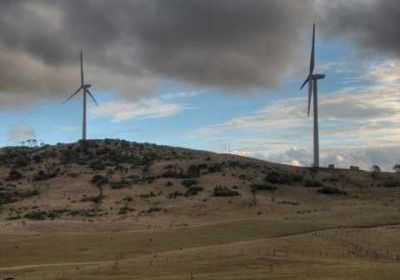
A report released on September 24 by Friends of the Earth has revealed that the new Victorian planning laws restricting wind farms are costing the state dearly in jobs and investment. -
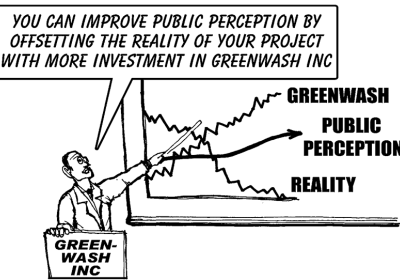
In recent debates around solutions to the climate crisis, several ideas hold the largest share of government support and media coverage. These include: green consumerism, carbon offsetting, carbon taxes, carbon trading, geo-engineering and carbon capture and storage. But do these “solutions” take, as their frame of reference, the full extent of the problem? Here are some reasons to be doubtful. Green consumerism is one variation of the argument whereby “your dollar is your vote”. -
The development of the coal seam gas (CSG) industry brings risks to Australia’s limited water resources. It draws contaminated water out of the ground, damages aquifers and uses and pollutes large quantities of freshwater. These risks, and the implications for health, agriculture and the environment, are central reasons for the growing community campaign to stop CSG mining. Images in the documentary Gasland of people setting their tap water on fire have made many question the impact of unconventional gas on water supplies.
-
Chanting “Coal seam gas, we will stop it; our community is not for profit”, 2000 locals marched on September 18 from Newtown’s Camperdown Park to Sydney Park in St Peters, just 200 metres from a proposed CSG mining site. The colourful march packed King Street, where most cafes and shops carried “No Gas” signs. Many pedestrians either cheered the rally or joined the march.