
In the small hours of July 6, just after midnight, a train hauling 73 cars of petroleum products derailed and exploded in the centre of the town of Lac Megantic, Quebec.
A large number of the rail cars caught fire and exploded in huge fireballs. The centre of the town was razed and the rail cars were still burning 36 hours later.
-
-
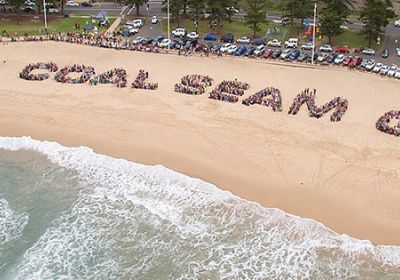 In a massive win for people power, the Planning Assessment Commission (PAC) disapproved a project for 16 coal seam gas (CSG) wells in the Illawarra in and around drinking water catchments for greater Sydney. Stop CSG Illawarra spokesperson Jess Moore said: “This is huge win for the campaign to stop CSG and protect our water. "It is the result of the extraordinary and tireless efforts of so many in the Illawarra community. It is the result of a powerful community campaign that has brought people together to stand up for what's right.”
 -
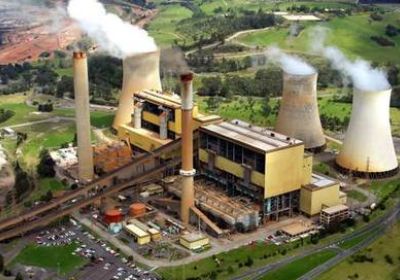 Environment Victoria released this statement on July 13. *** Environment Victoria has described news that the owners of Yallourn power station are seeking payment for closure as a desperate measure that is unlikely to succeed.
 -
 I want to start by acknowledging that we’re meeting here today on stolen Aboriginal land, the land of the Jagera and Turrbal people, and that their sovereignty over this land was never ceded, and that it always was, and always will be Aboriginal land. We all know that Australia has experienced an unprecedented mining boom over the past decade. This boom is slowing now, but it is still producing huge wealth. Over the last decade, profits of the mining companies have gone up by 400%. The big mining corporations now make almost a quarter of all profits in this country.
 -
Yet again, there are floods devastating the Himalayan region; yet again the same criminal negligence and apathy of the administrative machinery exacerbating the tragedy. The lack of proper disaster management infrastructure in the northern Indian state of Uttarakhand, the delayed warnings, and the government’s refusal to act on the warnings from the Meteorological department in Delhi ― unfortunately, all of this is painfully familiar.
-
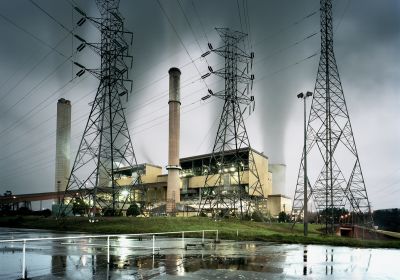 Some environment NGOs have been quick to say that Australia’s carbon price has sharply cut carbon emissions in its first year. The claims not only contradict the evidence, but are positively deceptive: an exercise to cast a deeply flawed policy as a serious response to climate change.
 -
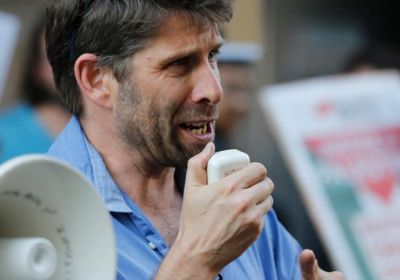
Fremantle city councillor and Socialist Alliance candidate for Fremantle, Sam Wainwright, spoke at a GetUp forum in Perth on June 14.
-
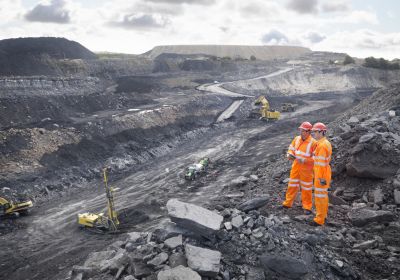 Most of Australia’s fossil fuel reserves — coal, oil and gas — must stay in the ground if we are to keep the climate below a 2°C rise and avoid catastrophic climate change, a new report by the Australian Climate Commission says. The report, The critical decade 2013: Climate change science, risks and responses released on June 15, said “the best chance for staying below the 2°C limit requires global emissions to begin declining as soon as possible and by 2020 at the latest.”
 -
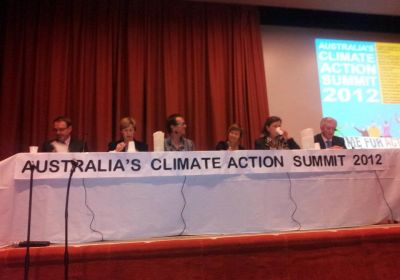 About 400 activists from across Australia converged on Sydney over June 21-23 for Australia’s Climate Action Summit 2013. As the science of climate change becomes ever more alarming, and as the refusal of business and political elites to act becomes ever more glaring, the activists met to share ideas and strategies to build a strong movement for a safe climate.
 -
 The news in May that carbon dioxide levels had broken through the symbolic barrier of 400 parts per million (ppm), a level not seen since the beginning of our species’ evolution on planet Earth, 3 million years ago, caused a barely perceptible ripple in the mass media.
 -
Democratic Left pulled its ministers out of Greece's ruling coalition cabinet on June 21 after talks to resume state television broadcasts collapsed. MPs from the party, which makes up the third part of the ruling coalition, were angered by the abrupt shutdown of broadcaster ERT on June 11 and met to decide whether to continue backing Prime Minister Antonis Samaras.
-
 I want to talk about a campaign we should abandon. We should stop saying yes to a price on carbon. At the launch of last year’s Climate Summit, I argued that carbon pricing — the notion that we can best reduce pollution by extending private property rights to pollution — had a fatal flaw at its core. Prices can never reflect true ecological values because those values simply cannot be expressed in dollar terms.