-
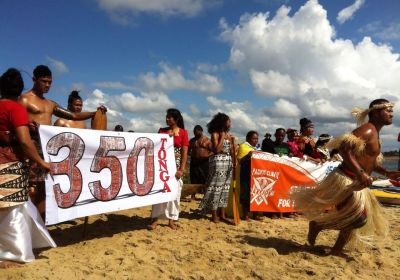
Young people from 13 Pacific Islands visited Australia in October to raise awareness about the risk climate change poses for their homes and communities. Known as the Pacific Climate Warriors, they spoke at public forums in Brisbane, Canberra, Perth, Sydney and Melbourne. They decided to tour Australia because they did not want to stand idly by as their homes sink. They said: “We are not drowning. We are fighting.” Their message to Australia was blunt: emissions need to be cut and fossil fuel production needs to be phased out. -
The City of Moreland became the first council in Victoria to rule out direct investments in fossil fuels and the first council in Australia to start developing a strategy to move investments away from financial institutions that fund fossil fuel developments, after a vote at its October 8 meeting.
-
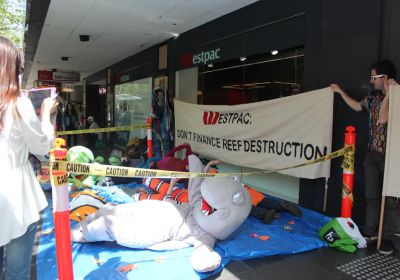
Something fishy was going on outside Westpac headquarters in Melbourne on October 11, as colourfully dressed protesters came together to reveal the true cost of potential investment in the Great Barrier Reef coal port expansion. Protests took place across Australia against controversial new plans to increase coal shipping through the World Heritage Area. Though Westpac released its own promising report on climate change in 2009, Market Forces estimates it has since lent more than $900 million to fossil fuel export projects within the marine park.
-
Awami Workers’ Party (AWP) general secretary Farooq Tariq has appealed for international support for 12 activists jailed for “terrorism” for helping climate change victims. In a September 25 letter to “solidarity networks” around the world, Tariq said Baba Jan, an activist in Gilgit, and 11 others had been sentenced to life in jail by a Gilgit “anti-terrorism” court. Jan is a vice-president of the AWP. The activists were arrested over their role in protests in favour of the rights of flood victims in 2011.
-
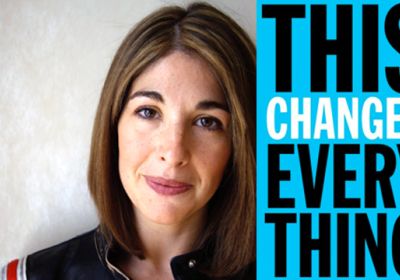
This Changes Everything: Capitalism vs The Climate By Naomi Klein Simon & Shulster, 2014 Award-winning author and activist Naomi Klein, who wrote The Shock Doctrine and No Logo, is back with her long-awaited new release: This Changes Everything: Capitalism vs the Climate. Now, she is taking on the biggest issue of our time ― climate change, and exploring the implications of the climate crisis for social change today and into the future. -
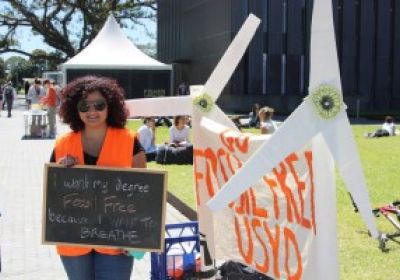
Fossil Free Sydney University released this statement on September 25. *** In a historic referendum at the University of Sydney, voters overwhelmingly supported fossil fuel divestment. Eighty percent of the students demanded the Vice-Chancellor commit to divesting from fossil fuels. In a first step last August the University froze further investment in all fossil fuels, pending review and consultation with stakeholders. Since then, all major student representative organisations have called upon the University to divest in full. -
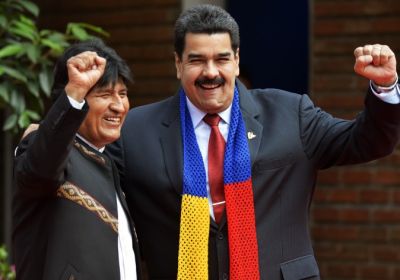
After speaking at the United Nations climate change summit on September 23, Venezuelan President Nicolas Maduro seized the chance to visit community leaders, local activists and grassroots groups in an event hosted by Hostos Community College of the South Bronx in New York City. About 1000 people attended the event, which was organised by Citgo, a subsidary of Venezuela's state-own oil company. Many arrived early to wait outside for good seats and to hold signs welcoming Maduro as “president of the people”. The Bronx community
-
“The excessive focus on profits neither respects Mother Earth, nor takes human needs into account,” Bolivian President Evo Morales said in his speech to Untied nationals climate summit on September 23. “The continuation of this unequal system only leads to greater inequalities.” Prensa Latina said that day that Morales called for incentives to respect Mother Earth and exhorted the developed countries to live up to their promises. -
On September 24, one day after the United Nations climate summit in New York once more failed to come up with any form of serious action to confront the climate crisis, Filipino socialist group Party of the Labouring Masses released the statement below. * * * Philippines President Benigno Aquino concluded his United Nations speech in New York on September 23 by posing the question: What more can we do? The question is rhetorical, even hypocritical, as the president well knows what needs to be done: to address the demands of the mass movements, which he has heard, but not heeded.
-
In her previous books The Shock Doctrine: The Rise of Disaster Capitalism (2007) and No Logo: No Space, No Choice, No Jobs (2000), Canadian author and activist Naomi Klein took on topics like neoliberal “shock therapy,” consumerism, globalisation and “disaster capitalism”. Klein extensively documented the forces behind the dramatic rise in economic inequality and environmental degradation over the past 50 years. -
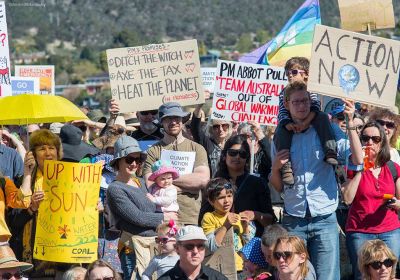
Susan Austin gave this speech at the Museum of Old and New Art (MONA) in Hobart on September 21 as part of a global day of action on climate change. She is a member of Climate Action Hobart. *** UN Secretary-General Ban Ki-Moon called a special Climate Summit at United Nations Headquarters in New York City on September 23. Shamefully, Tony Abbott will not be there, even though he will be in New York the next day for a security meeting. The security of our future is at stake due to climate change but he, and many of our other political and business leaders, is ignoring that.
-
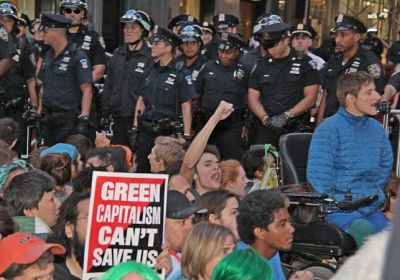
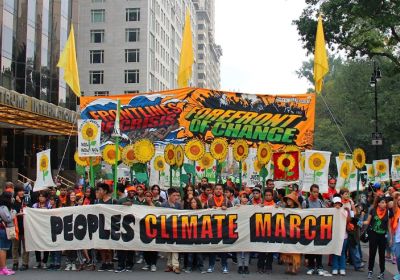
The largest demonstration to date on the need to stop global warming was held in New York City on September 21. It was the largest of the global demonstrations in more than 160 cities that day ahead of a United Nations climate summit held on September 23 in New York. The historic protest brought together a wide range of groups and individuals in a march through Manhattan, two days before heads of states gathered to discuss the issue.