-
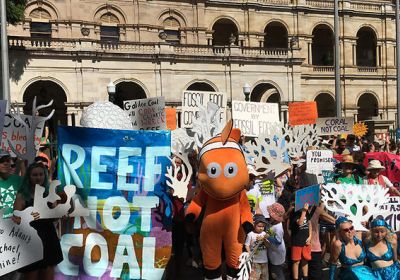
On April 3, the Queensland mines minister Anthony Lynham and Premier Annastacia Palaszczuk approved the three mining leases of Indian multinational Adani for the Carmichael coalmine and rail project in the Galilee Basin. Federal approval was granted by federal environment minister Greg Hunt in October. -
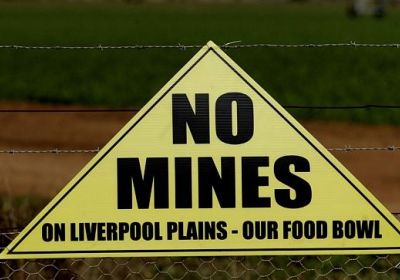
Opponents of Shenhua-Watermark's mega coalmine in the Liverpool Plains in north-western NSW have been given a boost by the Chinese government-owned company's annual report released on March 24, which hinted it may not proceed.
-
Ian Angus is a Canadian ecosocialist activist and author. The editor of Climateandcapitalism.com, Angus is also the co-author of Too Many People? Population, Immigration, and the Environmental Crisis with former Green Left Weekly editor Simon Butler (Haymarket, 2011).
-
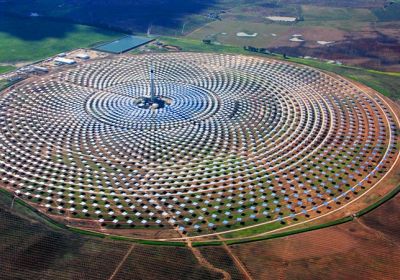
On March 23 Prime Minister Malcolm Turnbull announced a new Clean Energy Innovation Fund (CEIF) with $1 billion in funding over ten years. The Prime Minister's media release explicitly mentioned that it could be used to fund projects such as a “large scale solar facility with storage in Port Augusta”. -
Self-proclaimed socialist Senator Bernie Sanders has lit up the US presidential race by drawing on enthusiastic support of largely young people in a campaign calling for a “political revolution” against Wall Street. Defying talking heads who long ago gave the Democratic nomination to the corporate-backed Hillary Clinton, Sanders’ social justice platform of pro-poor reforms has provided a hopeful counter-point to the hate pushed by Republican candidate Donald Trump. -
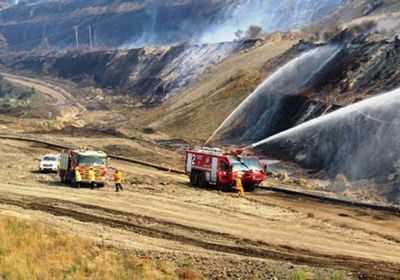
The Victorian Environment Protection Authority is expected to file 12 air pollution charges against the Hazelwood power station operator, GDF Suez, over the Morwell coalmine fire. The fire burned for 45 days in 2014, covering Morwell in smoke and ash. Residents were advised to leave by health authorities. An inquiry found GDF Suez had failed to adequately prepare for the fire, which was sparked by a nearby bushfire, and that the fire probably contributed to increased deaths in the region. -
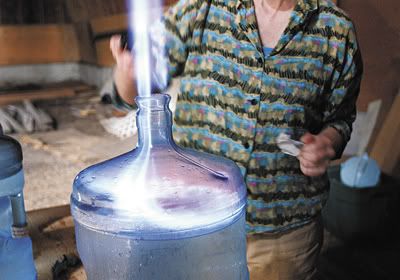
Slick Water: Fracking – and One Insider’s Stand Against the World’s Most Powerful Industry Andrew Nikiforuk Greystone Books/David Suzuki Institute 2015, 350 pages The fracturing of rocks to mine more fossil fuels was born with the oil business, writes the Canadian journalist, Andrew Nikiforuk, in Slick Water. During the world’s first oil boom in Pennsylvania in the 1850s, highly volatile nitro-glycerine and other explosives were used on sluggish wells with lethal risk, to turn them into gushers by creating new fractures to channel blocked oil to the surface. -
"This is a law to protect the rich. We will need to break these laws to protect our democratic rights," Aboriginal activist and lead NSW Senate candidate for the Socialist Alliance team in the federal elections Ken Canning, said on March 15.
-
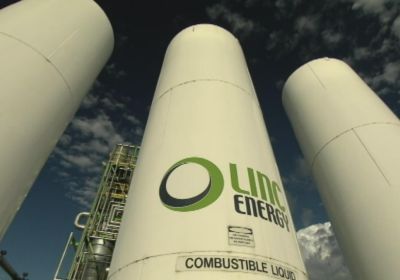
Linc Energy will stand trial on five charges that it breached Queensland's environmental laws at its underground coal gasification site. The Department of Environment and Heritage Protection (DEHP) has accused the company of wilfully causing serious harm at its trial site near Chinchilla on the Darling Downs. -
NASA dropped a bombshell of a climate report on March 11. February 2016 has soared past all rivals as the warmest seasonally adjusted month in more than a century of global recordkeeping. NASA's analysis showed that February ran 1.35°C above the 1951-1980 global average for the month, as can be seen in the graph of monthly anomalies going back to 1880.
-
Australia's large energy companies appear to prefer to accept fines for not building renewable energy rather than build it and weaken their investments in coal and gas generation. When the Tony Abbott government passed legislation to reduce the Renewable Energy Target (RET) by about 20% in June 2015, some supporters of renewables hoped that an end to policy uncertainty would free up finance for investment and get planned projects into the construction phase. -
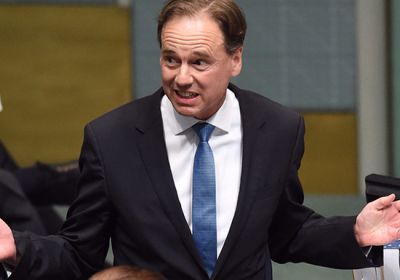
Experts have laughed at a prediction by the environment minister Greg Hunt that Australia’s greenhouse gas emissions peaked 10 years ago. Hunt told the ABC’s AM program: “I believe that we have reached what is sometimes known as peak emissions. In my best judgment … we reached peak emissions in 2005-06 ... and the course of history to come for Australia is that we will continue to be below that figure.” Experts have laughed at a prediction by the environment minister Greg Hunt that Australia's greenhouse gas emissions peaked 10 years ago.