-
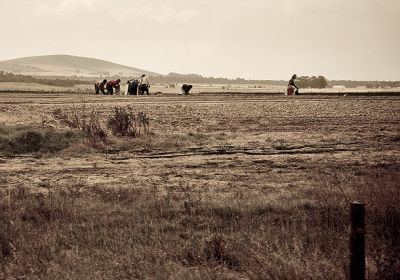
The deluge of rain hitting south-east Australia has broken the 10-year drought that brought the Murray Darling Basin and many farming communities to the brink of disaster. A few months of wet weather have brought the wetlands back to life. The rivers are flowing again, and farmers might even be able to harvest a bumper crop if they can beat the mass locust hatchings. -
One of Venezuela’s state-run food supply networks increased by 70% its sales in July, Edward Ellis reported in the Correo del Orinoco International on August 13. Ellis said commerce minister Richard Canan told Venezuelan television program Desperto Venezuela of a record income for the Bicentennial Markets, which took in a total of US$56.5 million in July. Ellis said Canan, a member of socialist President Hugo Chavez’s government, reported a 2.1 million people visited the markets in July, an increase of 35%. -
Recent scenes of roadblocks, strikes and even the dynamiting of a vice-minister’s home in the Bolivian department (administrative district) of Potosi, reminiscent of the days of previous neoliberal governments, have left many asking themselves what is really going on in the “new” Bolivia of indigenous President Evo Morales. Since July 29, the city of Potosi, which has 160,000 inhabitants, has ground to a halt. Locals are up in arms over what they perceive to be a lack of support for regional development on the part of the national government. -
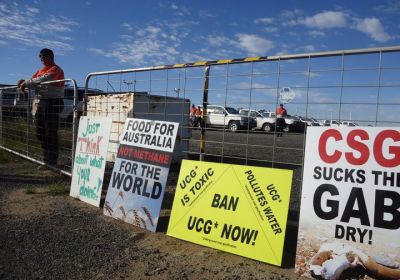
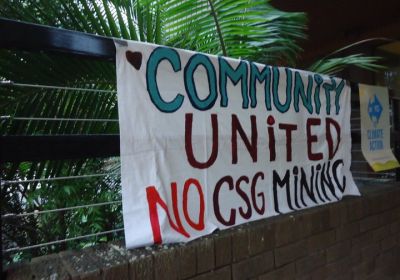
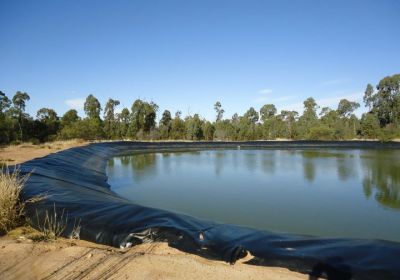
“The poisoning of groundwater near Kingaroy is just the tip of the iceberg with coal seam gas [CSG] extraction”, climate change activist and Socialist Alliance candidate for the seat of Brisbane Ewan Saunders told Green Left Weekly. The contamination of groundwater by toxic chemicals was revealed two weeks ago, sparking calls for urgent action against the CSG industry, which is rapidly expanding in south-eastern Queensland.
-
Peoplequake: Mass Migration, Ageing Nations & the Coming Population Crash By Fred Pearce Corgi Books, 2010, 352 pages Review by Martin Empson In the 200 years since the Reverend Thomas Malthus first penned his tract, An Essay on the Principle of Population, the question of the “carrying capacity” of the planet has repeatedly appeared. Most recently, mainstream debates around how to solve the question of climate change have boiled down to the simplistic argument that “there are too many people”. -
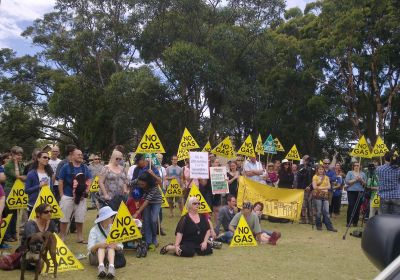
Five hundred farmers from the Darling Downs agricultural region attended a protest meeting at Cecil Plains, west of Toowoomba, on May 19. They protested against the expansion of coal seam gas mining on their properties. The May 19 Courier-Mail said the farmers called on the state government to place a moratorium on mining development while its environmental impacts are properly assessed. The protesters surrounded a paddock with a one-kilometre barrier of farm machinery in a demonstration of their abilityto stop the mining companies from entering their properties. -
The decade-long campaign against the Bickham coal project, north of Scone in New South Wales, ended in victory on May 14, when NSW Premier Kristina Keneally announced the government would reject the proposed mine. The open-cut mine would have extracted 36 million tonnes of coal over 25 years. Keneally's decision came after the May 3 publication of the state Planning Assessment Commission's (PAC) report, which recommended the mine not proceed. It could be the first time the NSW government has ever blocked the development of a coalmine. -
Farmers at Caroona on the Liverpool Plains near Quirindi, New South Wales, have been defending their properties from invasion by BHP-Billiton’s coal exploration drillers. For 615 days, until March 25, they inspired coal-threatened communities everywhere with their blockade, by saying “No” — and meaning it. Trish Duddy and Tommy and George Clift have been at the blockade camp for every one of those 615 days, joined by other locals on a rolling roster for cups of tea, information-swapping, resolve-steeling — and symbolic trailblazing. -
- Online
-
- Naarm/Melbourne
-
-