-
-
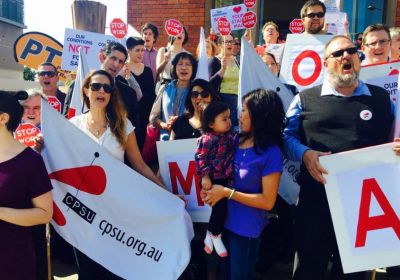
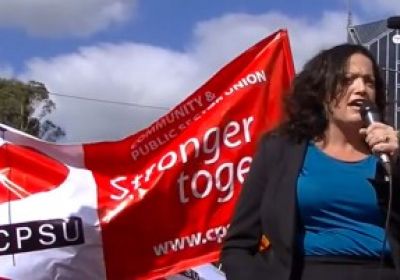 Border Force staff, who imposed work bans in support of their campaign for a new enterprise bargaining agreement on November 4, were stood down without pay by the Department of Immigration and Border Protection (DIBP), despite the industrial action being authorised by the Fair Work Commission. The Community and Public Sector Union (CPSU) condemned the department's action as a heavy-handed escalation of the long-running dispute.
 -
Over the past two weeks the Victorian Labor government has ramped up its hostile rhetoric towards rail and tram workers fighting to defend their rights. This culminated in joint legal action taken in the Fair Work Commission with rail boss Metro Trains against the Rail Tram and Bus Union (RTBU) in a bid to stop railway workers from taking strike action on September 4. It failed to stop the strike going ahead.
-
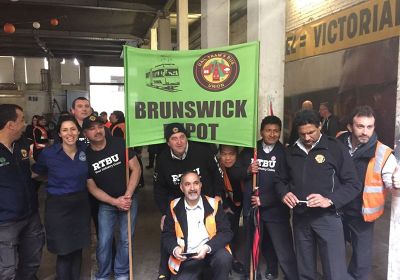 An emotional and highly charged stopwork meeting of hundreds of tram workers jammed into Trades Hall on August 27 to hear a report on their dispute with Yarra Trams. Yarra Trams and Metro Rail workers had called off a planned four-hour strike on August 21 in the hope that the companies would present the Rail Tram and Bus Union (RTBU) with a better offer. The better offer never came so the tram workers struck for four hours on August 27. This was the first tram strike since 1997.
 -
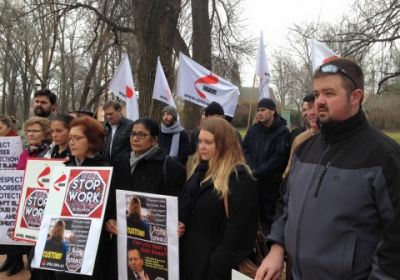 Staff of the Immigration and Border Force agency marked the first day of their newly merged federal department on July 1 by going on strike for the second time in a week. Two-hour stoppages and meetings took place at seaports, workplaces and international airports, including Sydney, Melbourne, Brisbane, Darwin, Perth and Adelaide. Significant disruption of services was reported.
 -
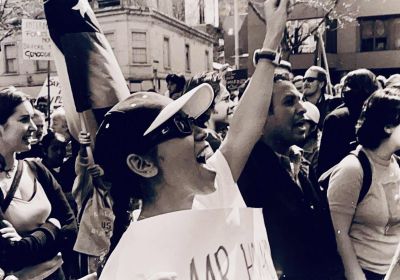
The National Tertiary Education Union released this statement on March 7.
-
Students supported teachers and staff in their one-day strike at the University of Sydney on March 7. Read a statement by the National Tertiary Education Union explaining the reason for the strike. Photos: Peter Boyle.
-
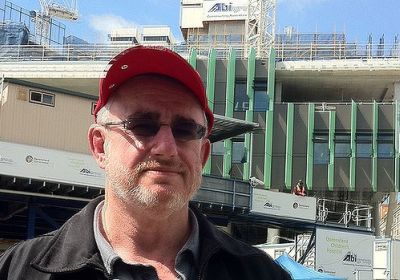 Unionist Bob Carnegie was charged with 54 counts of contempt of court on October 17 for taking part in a community protest during a dispute between builders' unions and building firm Abigroup at the Royal Children's Hospital (RCH) construction site. It is a sign of things to come for community activists. About 650 workers took strike actions against Abigroup for refusing to meet demands over working conditions, subcontractor terms and an enterprise bargaining agreement (EBA).
 -
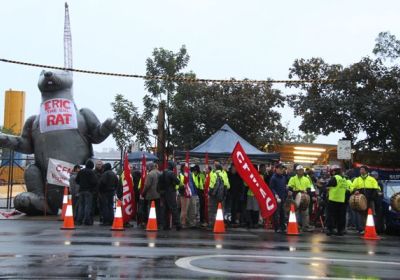 Members of building unions went on strike from July 25 at Lend Lease projects around Australia to push for a new national Enterprise Bargaining Agreement (EBA). The Construction Forestry Mining Energy Union (CFMEU) said “the main points of disagreement in the dispute relate to wages and other issues”, including job security, site allowances and adding Western Australian workers to the agreement. Construction National Secretary Dave Noonan said: “The CFMEU continues to negotiate with Lend Lease on the agreement.
 -
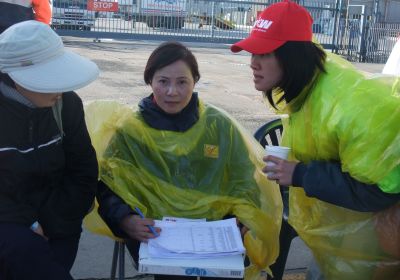
Despite Fair Work Australia putting in place an injunction banning National Union of Workers (NUW) officials from taking part in the Baiada poultry workers’ picket line, workers and community supporters were able to hold off an attempt by riot police to break the picket late on November 11.
-
 British rail unions branded Transport for London (TfL) “barefaced liars" after its management attempted to claim minimum disruption during a 24-hour strike on November 3. London Underground services were crippled by strike action called by the National Union of Rail, Maritime and Transport Workers (RMT) and Transport Salaried Staffs' Association (TSSA) over safety-critical job cuts. All 11 of the London’s Tube lines were hit by the walkout. The action was the latest in a series of strikes over plans to axe up to 2000 jobs, including 800 station staff.
 -
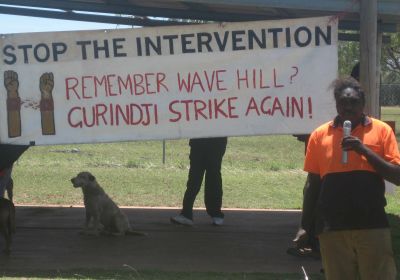 On October 20, 200 people gathered in the community of Kalkarindji to protest against the policies of the Northern Territory intervention, launched in 2007 by the Howard Coalition government. Under the intervention, Aboriginal welfare recipients in the NT have half their pay “quarantined” onto a Basics Card, which can be used only in approved stores and only for food, clothing and medical supplies.
Strikes and industrial action
Strikes and industrial action