-
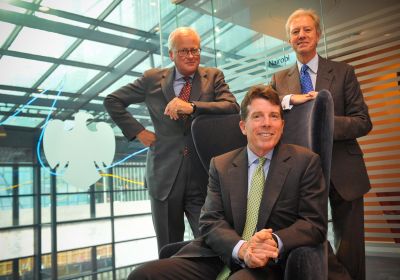
At last someone has dared to defend the oppressed people of the British banking community. Bob Diamond, chief executive of Barclays bank, who himself has to suffer the trauma of an £8 million bonus, said yesterday that the bankers’ “period of remorse and apology should be over”. And you feel his pain, because the first words to cross your mind when you see a banker are “remorseful and apologetic”. -
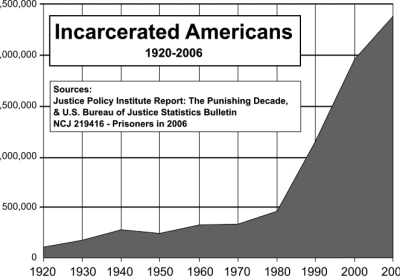
You may have read about the prison riot in England on New Year’s Day, with prisoners staging an uprising over searches for contraband booze. What received less coverage was the much bigger and more important protest by prisoners in the United States in December. Prisoners in a number of Georgian prisons began a strike on December 9, the December 20 Huffington Post said. The strike was called off after six days, “following reports of violent crackdowns and rising fears that the situation would escalate”, the article said. -
Twenty-six children in Gaza were shot by Israeli troops near the border during 2010, a Save the Children report found.
-
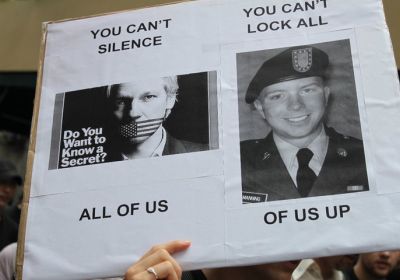
Time magazine chose to crown Facebook creator Mark Zuckerberg as its Person of the Year for 2010. But for so many people, it was Julian Assange, who won the popular vote, who was more definitive of the year that was.
-
A number of Wikileaks revelations have shown that US officials, despite their public stance, have been well aware of corruption and human rights abuses of regimes it has supported. In some cases, the US funded these regimes and trained their military. * * * Indonesia A leaked September 2009 US cable indicates that US officials are aware that in West Papua, the Indonesian military (TNI) are responsible for serious human rights abuses and corruption.
-
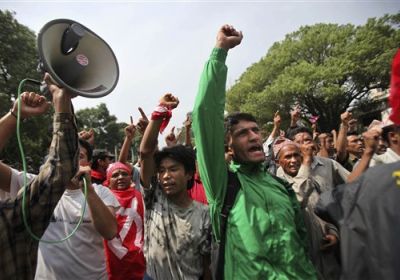
Acting Nepali Prime Minister Madhav Kumar Nepal has argued that bullets, explosives and other munitions no longer constitute “lethal military hardware” as long as they are to be used for “training and other related works”. MK Nepal was seeking to justify the decision to allow India to resume arms supplies to Nepal. He has never been elected and came to power after the Maoist-led government was brought down by a soft military coup in 2009. -
Wikileaks founder Julian Assange said that over the next six months, Wikileaks will be releasing more files related to Israel. “There are 3,700 files related to Israel and the source of 2,700 files is Israel,” he told Al-Jazeera on December 22. “The Guardian, El Pais and Le Monde have published only two percent of the files related to Israel due to the sensitive relations between Germany, France and Israel.”
-
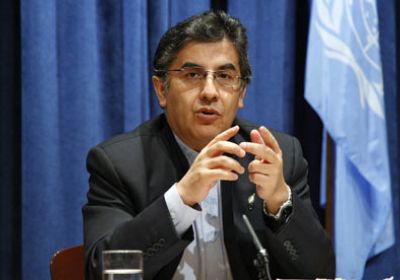
One government — that of Bolivia — stood alone against the world at December’s UN climate conference in Cancun, Mexico. It dared to reject an agreement endorsed by 191 other nations. And Bolivia was right to do so. Cancun was a step backwards for action on climate change. Pablo Solon, Bolivia’s ambassador to the United Nations, explained his country’s stance in the December 21 Guardian: “The text replaces binding mechanisms for reducing greenhouse gas emissions with voluntary pledges that are wholly insufficient. -
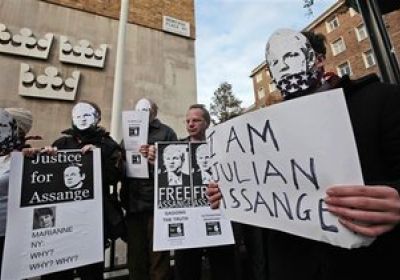
Lawyers for Wikileaks founder Julian Assange have accused Swedish authorities of secretly planning to extradite him to the US as soon as it has built a criminal case against him. Lawyer Mark Stephens told the media on January 12: “We are hearing that the Swedish are prepared to drop the rape charges against Julian as soon as the Americans demand his extradition.” -
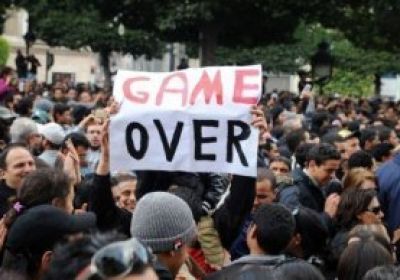
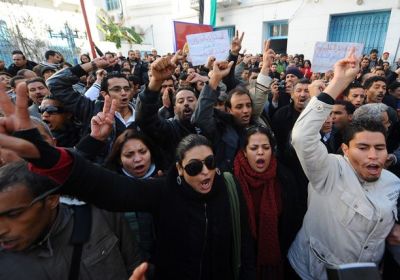
After 23 years of dictatorial rule, Tunisian President Zine El Abidine Ben Ali was forced to resign and flee to Saudi Arabia on January 14 due to a mass uprising.
-
The popular revolution that has overthrown US- and French-backed Tunisian dictator Zine El Abidine Ben Ali (in power since 1987) continues to shake the country despite repression. It has sent shockwaves through the regime, raising prospects of inspiring the democracy movements in other Arab nations. Jordan has been hit by protests against price rises. -
December 14, 2010 -- Julian Assange, a man known only to a very few in the world some months ago, is demonstrating that the most powerful empire to have existed in history can be challenged. The daring challenge did not come from a rival superpower; from a state with more than 100 nuclear weapons; from a country with millions of inhabitants; from a group of nations with vast natural resources which the United States could not do without; or from a revolutionary doctrine capable of shaking to its foundations the empire based on plunder and exploitation of the world.