
In the early hours of February 17, about 1000 police and National Intelligence and Security Service (NISS) officers conducted a violent raid of Khartoum University’s student dormitories, arresting more than 300 students.
Most were released later that day. Two students are missing, suspected kidnapped by the NISS. Some of the arrested students told a Sudan Human Rights Monitor press conference that police had used racist verbal abuse against students and many were beaten.
-
-
How will Spain’s new labour "reform" — announced on February 10 by employment and social security minister Fátima Báñez and already in force as a royal decree before adoption by parliament—affect Spain’s workers and unemployed? First, imagine the essence of 30 years of Australian anti-worker and anti-union law — from Hawke’s Accord through Keating’s enterprise bargaining and Howard’s Workplace Relations Act to Work Choices and the Fair Work Act — but all rolled into one bill.
-
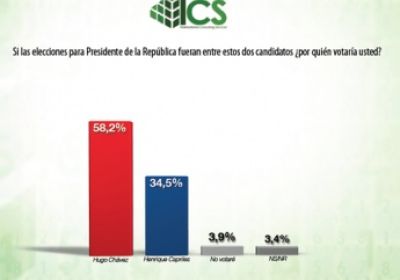 “The confrontation here isn’t between Chavez and this little man, it’s the bourgeoisie against the people, the empire against the country”, Venezuelan President Hugo Chavez said on February 16. Chavez was referring to his newly-nominated presidential opponent, Henrique Capriles Radonski. He was pointing to the class battle that lies behind the looming presidential elections scheduled for October 7.
 -
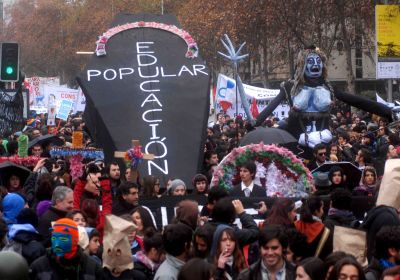 Huge student protests that broke out last year gave a tremendous jolt to Chilean society, as reflected even by public opinion polls. When La Nacion asked a group of poll takers to name the best thing about 2011, 63% answered the student and environment mobilisations, compared with just 17% who chose the University of Chile soccer team, which won the South American cup at the end of November. Just 3% chose the Cervantes Prize, the big Spanish-language literary prize, which was awarded to Chilean writer Nicanor Parra.
 -
The Cuban Institute of Friendship with the Peoples is inviting all friends of Cuba to join the sixth International Brigade of Volunteer Work and Solidarity with Cuba this May Day. The brigade runs from April 22 to May 6 this year. It aims to provide a wider understanding of Cuban reality and carry out volunteer work to support agricultural development in Cuba. The 15-day program includes visits to historical, economic, cultural and social places in Havana and the provinces of Artemisa and Pinar del Rio.
-
Six Zimbabwean socialists are charged with “inciting public violence” (which carries a maximum penalty of 10 years’ imprisonment). They were arrested on February 19 while meeting to watch video footage of democracy protests in Egypt and Tunisia. The February 16 letter from Zimbabwe below explains the latest developments. * * *
-
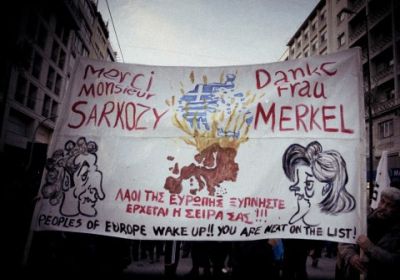
Hundreds of thousands protested around the Athens parliament on February 12. Tens of thousands protested in Thessaloniki, the country's second biggest city, and sizeable protests took place in other Greek cities. The rallies followed a 48-hour strike over February 10-11.
-
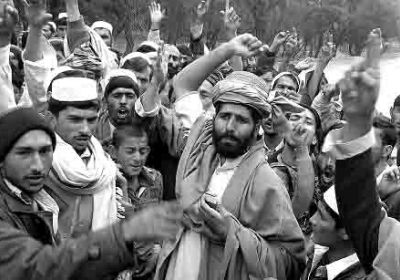 The US-led international occupation force in Afghanistan (ISAF) is in the country to fight the Taliban as the ally of the Afghan state headed by President Hamid Karzai. The ISAF’s primary mission is training and mentoring the Afghan government forces so they can take over the fight, allowing the foreign forces to leave. That is the official story. But casualties suffered by ISAF soldiers are increasingly being inflicted not by the Taliban but by the soldiers they are meant to be mentoring.
 -
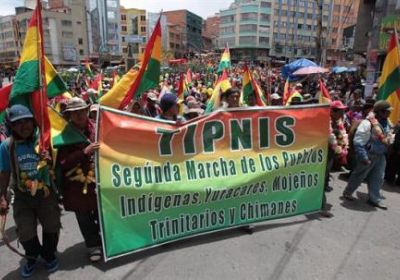 A new twist in the turbulent saga surrounding a proposed roadway through indigenous land has reignited a debate raging throughout Bolivia since the middle of last year. The controversial highway ― which would cut through the Isiboro-Secure National Park and Indigenous Territory (TIPNIS) ― has been at the centre of protests and counter-protests. It has polarised Bolivian society and divided indigenous groups that are the heart of the Evo Morales government’s social base.
 -
 Working class struggle is an important part of modern Chinese history, and is rising In a late industrialising country, the Chinese working class emerged and became organised only in the early 20th century after the country was forced to open up to global capitalism. However, shaped by harsh economic exploitation and foreign semi-colonial domination, China’s working class quickly established itself in the space of a few decades. This culminated in mass protests and strikes between 1925 and 1927.
 -
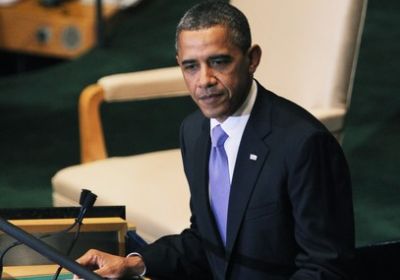 A United Nations Security Council (UNSC) motion condemning the Syrian regime's bloodshed and caling for a “transition to democracy” was vetoed on February 4 by Russia and China. United States officials condemned the move as “disgusting and shameful” and a “travesty”. The moral outrage expressed by the US was faithfully reported by the corporate Western media, which paid little attention to Washington’s own voting record in the UNSC.
 -
Residents of the Gaza City neighbourhood al-Tuffah suffered a rude awakening at 2am on February 16 when Israeli warplanes targeted what the army said was a Hamas training site. The shelling left six people injured, including members of two civil defence rescue teams. Civil defence said a firetruck and an ambulance were hit by Israeli missiles as the crew responded to earlier strikes. Israeli sources said the attacks came in response to rocket fire from Gaza into nearby Israeli towns. The crude rockets landed in open fields; no casualties were reported.