
Trouble flared across Ireland's north on the night of July 12 as sectarian Orange Order marchers insisted on marching through nationalist areas, the Morning Star said the next day.
It said serious rioting followed a unionist (supporters of Northern Ireland's union with Britain) parade through the the largely Catholic and Irish nationalist working-class suburb of Ardoyne in north Belfast.
-
-
In a split decision the United States Supreme Court largely upheld the health insurance law, the Affordable Health Care Act, passed by Congress and signed by President Barack Obama. The key provision upheld by the nine robed reactionaries in a five-to-four split decision mandated that all US citizens have to buy health insurance from the private insurance companies beginning in 2014, or pay a penalty. This approach was originally proposed decades ago by right- wing think tanks as an alternative to national health insurance for all.
-
Mohamed Morsi, the Muslim Brotherhood candidate for Egypt's presidential elections, was sworn into office on June 30. But confirmation of Morsi's win was overshadowed by protests and sit-ins at Cairo's Tahrir Square and around the country. Protesters are demanding the elected parliament be restored and extra constitutional powers the ruling junta has granted itself be rescinded. The electoral comission announced on June 24 that Morsi had beaten old-regime candidate Ahmed Shafiq in the June 16 and 17 poll with 51.7% of the vote.
-
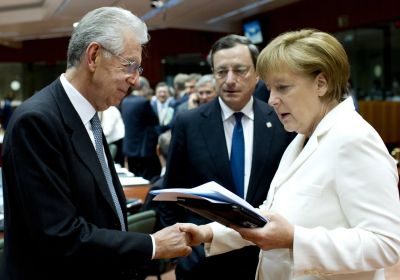 The combined Eurozone and European Council summit held in Brussels on June 28-29 was a “breakthrough” that produced “real progress”, the mainstream media insisted, because German Chancellor Angela Merkel “backed down”. For a few days post-summit, this reading was supported by market euphoria and sharp falls in the risk premium on Italian and Spanish public debt. However, once fund managers took a closer look at the decisions of the 19th gathering of European leaders since the crisis broke in 2008, they realised these won’t put the euro out of danger ― even in the short term.
 -
 A poll released in May by the Israel Democracy Index has revealed most Israeli's hold deeply racist attitudes. The findings come in the wake of race riots and a crackdown on the rights of Palestinians. The poll found 52% of respondents agreed with interior minister Eli Yishai that Africans were “a cancer on the body” of Israel, the June 7 Times of Israel said. Yishai was quoted in the June 3 Maariv as saying most “Muslims that arrive here do not even believe that this country belongs to us, to the white man”.
 -
Paraguay’s new government, which came to power in a “parliamentary coup” that removed elected President Fernando Lugo, has cut relations with Venezuela after accusing it of meddling in Paraguay’s internal affairs. However, several Latin American diplomats and media sources have cast doubt on the allegations. Paraguay's foreign ministry announced the withdrawal of its ambassador to Venezuela and declared Venezuela’s envoy to Asuncion a “persona non grata” due to “serious evidence of intervention … in the internal affairs of the Republic of Paraguay” by Venezuelan officials.
-
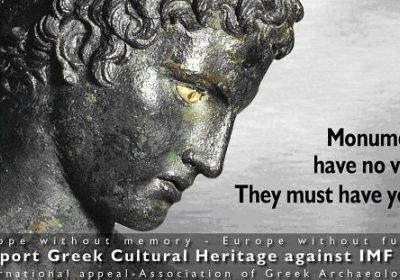 Greek archaeologists have launched an angry campaign to prevent their cultural and archaeological heritage from being destroyed by austerity measures. The campaign has attracted global support not just from archaeologists, but other anti-austerity campaigners and trade unionists.
 -
On June 28, after two days of fighting, the three main towns of Azawad ― a west African nation mostly occupied by Mali ― were captured by Salafi Islamist militias. The towns Gao, Timbuktu and Kidal had been captured on April 6 by the National Movement for the Liberation of Azawad (MNLA). It unilaterally declared the independence of Azawad from Mali, a move met with hostility by regional and global powers. The Islamist groups ― the Defenders of the Faith (Ansar ad-Din) and the Movement for Oneness and Jihad in West Africa (MOJWA) ― are opposed to the independence of Azawad.
-
 Throughout June, the United States was hit by freak storms, intense heatwaves, prolonged drought, huge floods and out-of-control bushfires that have burnt out more than 2.1 million acres.
 -
 The final official results in Mexico's July 1 presidential election were published in the early hours of July 4, claiming Enrique Pena Nieto had won. However, his victory had been proclaimed within just a few hours of the voting centres being closed and 1% of the ballots counted. Pena Nieto, the candidate from the Institutional Revolutionary Party (PRI), was declared the winner with a 6.5% margin over progressive candidate Andres Manuel Lopez Obrador.
 -
Coalminers in north-west Spain have maintained a large-scale strike against government plans to cut subsidies to the industry. The cuts could result in thousands of job losses and the destruction of communities. The strike began on May 29 when the Asturias region's 8000 miners voted to walk off the job indefinitely. A small number of miners locked themselves underground for weeks, while many others occupied public spaces. Miners have come under intense attack by police and civil guard, who used tear gas, rubber bullets and batons to break up the strike.
-
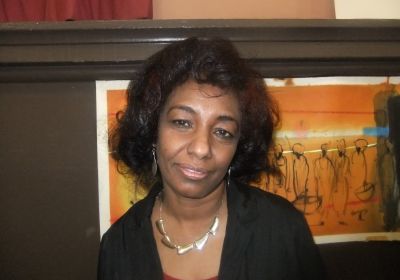
Sudan’s new uprising, which began on June 16, has continued with daily protests around the country, revealing the widespread and deep-seated hatred of the National Congress Party (NCP) regime.