
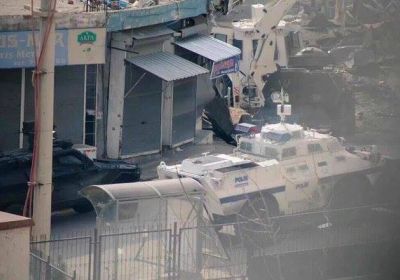
The Turkish government has declared all-out war against the residents of the Kurdish-majority town of Silvan (Farqin) in Diyarbakir (Amed) province. The town has been under curfew and siege since November 2.
Artillery and military aircraft have been deployed by Turkish military and paramilitary forces. Residents have reported Arabic-speaking bearded terrorists — presumed to be ISIS — taking part in the attacks.
Hopes that such government violence would end after the November 1 Turkish elections have been shattered.
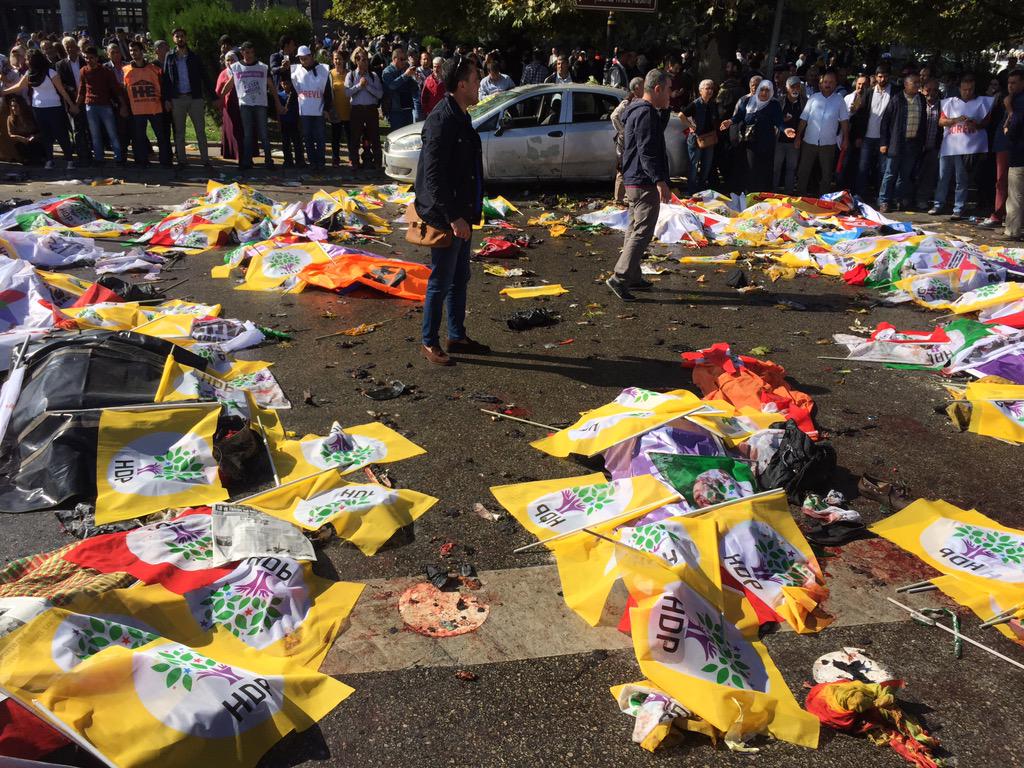 Erdoğan’s electioneering: aftermath of October 10 bombing in Ankara.
In Turkey’s November 1 election, Recep Tayyip Erdoğan’s Justice and Development Party (AKP) increased its votes from 41% to 49% in the five months (143 days) from the election in June. The AKP won a majority of seats — 317 out of 550.
The governing party gained 5 million extra votes. It adopted very risky policies to get this result, but was determined to win the elections — no matter how many lives were lost.
Erdoğan’s electioneering: aftermath of October 10 bombing in Ankara.
In Turkey’s November 1 election, Recep Tayyip Erdoğan’s Justice and Development Party (AKP) increased its votes from 41% to 49% in the five months (143 days) from the election in June. The AKP won a majority of seats — 317 out of 550.
The governing party gained 5 million extra votes. It adopted very risky policies to get this result, but was determined to win the elections — no matter how many lives were lost.
 The moment the bomb detonated. Ankara, October 10, 10:04am.
The following statement was released by Selahattin Demirtaş and Figen Yüksekdağ, co-chairs of the Peoples Democratic Party (HDP), on October 12 in response to the October 10 bombing of a peace rally in Ankara organised by the HDP, trade unions and civil society organisations. Following the attack, police blocked ambulances and attacked survivors.
The moment the bomb detonated. Ankara, October 10, 10:04am.
The following statement was released by Selahattin Demirtaş and Figen Yüksekdağ, co-chairs of the Peoples Democratic Party (HDP), on October 12 in response to the October 10 bombing of a peace rally in Ankara organised by the HDP, trade unions and civil society organisations. Following the attack, police blocked ambulances and attacked survivors.
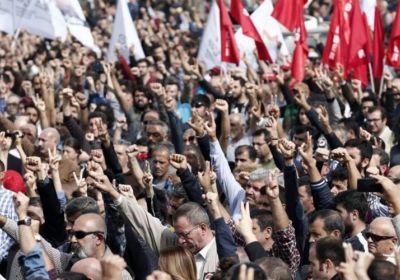
 Turkish police repress protests against Erdogan's renewed war.
The outcome of Turkey’s June 7 parliamentary elections promised so much.
Turkish police repress protests against Erdogan's renewed war.
The outcome of Turkey’s June 7 parliamentary elections promised so much.
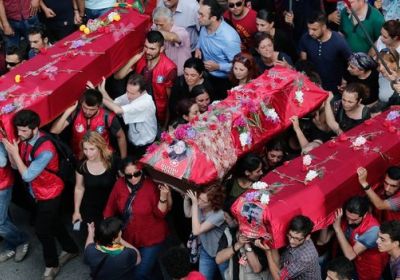
 Turkish-backed terrorists have massacred civilians in Kobanê. Photo: Kurdish Resistance & Liberation/Facebook.