-
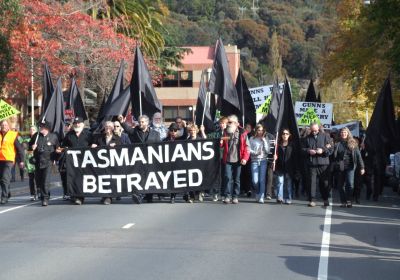
The deal to restructure the collapsing timber industry in Tasmania is struggling to make headway. Logging continues in old-growth forests at the same time as sawmills and woodchip mills close and more workers lose their jobs. Anti-logging protests are being held weekly outside the premier’s office in Hobart, and the talks between environment and industry groups continue despite a key player pulling out in frustration. The Wilderness Society (TWS) suspended its involvement in the Tasmanian Forest Agreement on May 18, citing a failure of leadership from state and federal governments. -
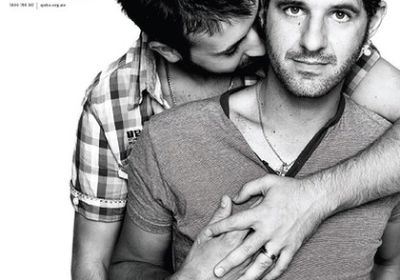
Safe sex advertisements are being returned to the city's bus shelters after widespread protests forced a ban to be overturned. Adshel, one of Australia's largest outdoor advertising companies, had taken down the ads on May 31 after a concerted campaign of complaints by the Australian Christian Lobby.
-
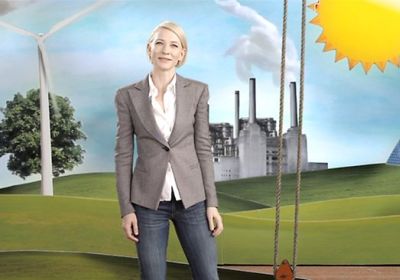
A big ad campaign — “Australia says yes” — began this month to support the federal government’s proposed carbon tax. The campaign has been organised by a coalition of peak environment and social justice organisations including GetUp!, the Australian Conservation Foundation and the Australian Council of Trade Unions. One of the people featured in the advertisements is actor Cate Blanchett. Her presence attracted the ire of conservative politicians and commentators as soon as the commercials aired. -
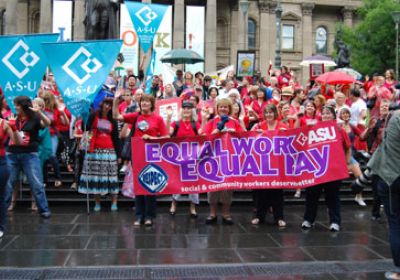
Forty years after the first equal pay test case, the gap between male and female wages continues to widen. Australian Bureau of Statistics figures, released on May 20, 2010, put the pay gap (as of February 2010) at 18%. Women on average now earn $239.30 a week less than men. The pay gap increased 0.5% over the past quarter (from 17.5%) and 1.5% over the past year (from 16.5%). The gap is now at its highest level since August 1994. This pay gap means, on average, Australian women have to work an extra 66 days to earn the same as men. -
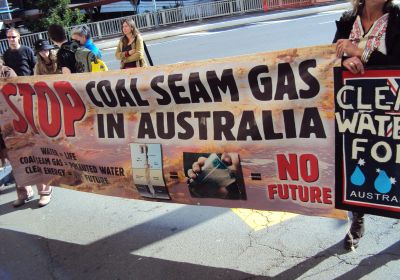
“This is going to be the biggest environmental campaign this country has ever seen,” Drew Hutton, acting president of the Lock the Gate Alliance, told a rally of several hundred people outside the Sofitel Hotel on May 31. He was addressing the crowd outside a major conference of the coal seam gas (CSG) industry. “The coal seam gas sector and governments are hungry for cash, and are quite willing to tear up our countryside to get it. Every part of the country will be affected,” he said. -
Toowoomba’s Catholic community expressed shock at the sacking of Bishop William Morris after a five-year Vatican investigation. But Father Peter Kennedy, of South Brisbane church St Mary’s in Exile, wasn’t surprised. Sacked from the church in 2009 for “unorthodox practices”, Father Kennedy continues to front his congregation at the Trades and Labour Council building courtesy of the Queensland Council of Unions. He, along with many others in the St Mary’s community, is responsible for Micah Projects, now one of Australia’s most respected homelessness projects. -
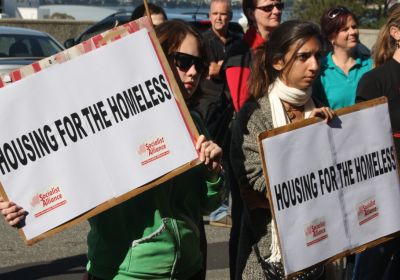
More than 60 people rallied outside parliament house on June 2 in support of rights for homeless people. This was the largest of three protests organised since the issue was raised in state parliament in April in relation to the upcoming Commonwealth Heads of Government Meeting (CHOGM).
-
More than 40 people attended a meeting on May 22 in the Wollongong suburb of Corrimal titled, “The future of local government in Wollongong; can it be community driven and democratic”?
-
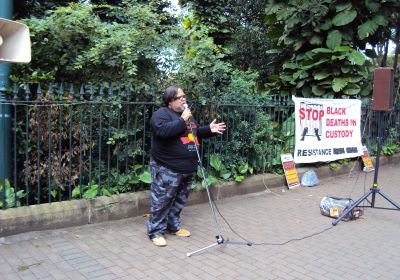
Aboriginal community leader Sam Watson called a rally outside state parliament on June 1 to demand a new Royal Commission into Aboriginal deaths in custody. The rally also condemned the Queensland Police Union (QPU), who have demanded the Queensland government pay the legal costs incurred by Senior Sergeant Chris Hurley during his defence case about the 2004 death in custody of Palm Island man Mulrunji Domadgee. Watson told the rally: “We as taxpayers should not be paying for the legal costs of Hurley and the QPU. -
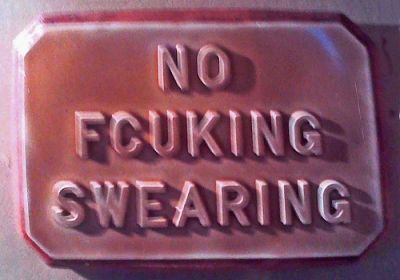
About 200 people gathered on the steps of Victorian parliament house on June 3 for a “Swear In” to protest against new laws that give police the power to fine people for swearing. Colleen Hartland, Greens member of the legislative council, spoke of the civil liberties implications while protesters chanted potty-mouth slogans in a show of defiance to police. The protest was organised through Facebook and was called on May 31. By June 3, the event invitation had been circulated to more than 10,000 people. This demonstrates just how unpopular the laws are. -
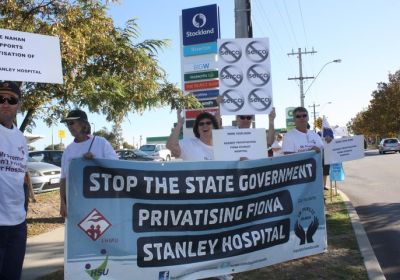
Members of various activist groups joined a roadside anti-privatisation protest in Booragoon, Western Australia on June 3. The groups responded to the call by the “In Public Hands” campaign group to campaign for public ownership of the soon-to-be-built Fiona Stanley Hospital. Protesters held placards reading “Don’t privatise our hospitals” and “Honk if you support anti-privatisation”, which received plenty of responses from passers-by. -
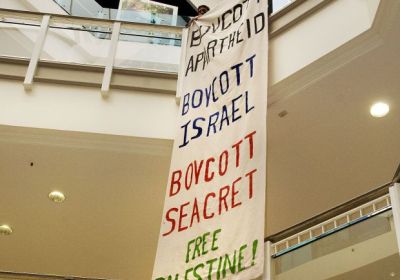
About 40 people joined a “flash mob” action in the Myer Centre, Queen Street Mall, on June 3 to protest Seacret, as an Israeli company operating in Australia. Seacret is a cosmetics firm that uses minerals from the Dead Sea, which is part of the Palestinian territory stolen by Israel over decades of invasion and oppression. Participants in the flash mob occupied tables in the food court at Myers and chanted a song, beginning with the refrain, “We will boycott Israel! We will boycott Israel!” They then trooped through the centre, chanting, “Free, free Palestine!”