-
Cuba solidarity activists, members of Australia’s Latin American community and leftists from around the country will take part in a two-day conference in Sydney to pay homage to Cuban revolutionary Fidel Castro. Video messages of support for Fidel from renowned leftist personalities will be screened alongside a full agenda of talks focused on Castro’s ideas, thoughts and legacy for the 21st century. -

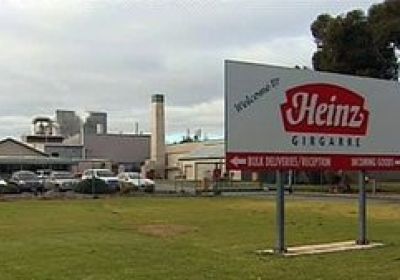
A large public forum was held in Victoria’s Goulburn Valley on May 16 to officially launch a community cooperative that local people hope will become an example for the rest of the country. The launch came almost a year since Heinz announced it would shut down its tomato processing plant in the nearby town of Girgarre. The closure left 146 workers without a job and affected about 600 people whose livelihoods depended on the factory. -
Like all wars, the “price war” between the two big supermarket chains — Woolworths and Coles — has its casualties. It is in the countryside and ordinary households that the toll is being counted, not in the profits of the two giant corporations.
-
Far from taking the closure of the Heinz tomato factory sitting down, workers and community members from the 150-strong rural Victorian town of Girgarre are getting organised.
-
Behind the hype of Australia’s mining boom and “economic stability” lies the very real crisis affecting rural Australia.
-
Australian Treasurer Wayne Swan said on March 20 that his government’s Minerals Resource Rent Tax (MRRT) was “central to the government’s plan to spread the benefits of the mining boom to more Australians for generations to come”. Lauding the tax, which had passed through parliament the day before, he said the MRRT was about “ensuring all Australians share in the benefits of the mining boom, not just a fortunate few”. -
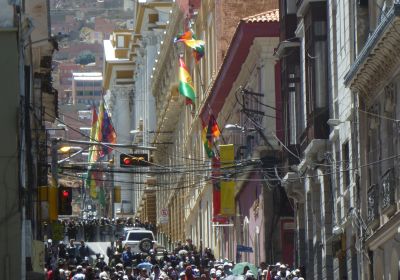
September 25 will go down as one of the darkest days in Bolivia since Evo Morales was elected as the country’s first indigenous president almost six years ago. After more than 40 days of indigenous protesters marching, police officers moved in to repress those opposed to the government’s proposed highway that would run through the Isiboro-Secure National Park and Indigenous Territory (TIPNIS). The controversial highway has met with both opposition and support from the many indigenous and social organisations that form the Morales government’s support base. -
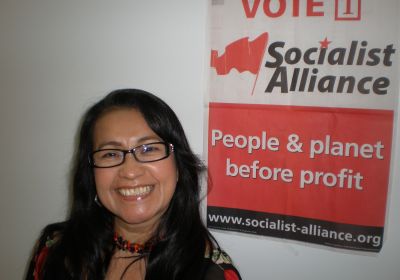
Daicy Olaya, a resident of Fairfield for 18 years, explained why she decided to stand as a candidate for Socialist Alliance in the March 26 NSW elections. “Politicians from both major parties have failed miserably in representing the interests of migrants and women here in New South Wales,” she said.
-
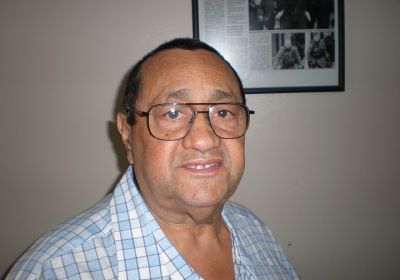
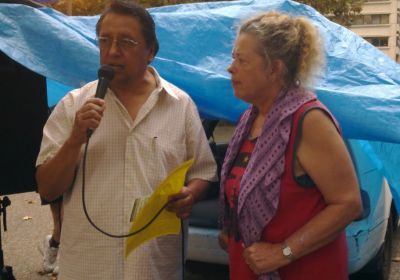
Two long-time ALP members, Luis Ernesto Almario and Rosendo Duran, announced their resignation from the ALP on February 17. Both will stand as Socialist Alliance (SA) candidates for the Legislative Council in the March NSW state elections. Almario and Duran are both political exiles from Colombia, forced to leave because of political persecution. Arriving in Australia in the mid-’80s, Almario joined his local branch of the ALP in Blacktown, and was later active in the ALP Parramatta branch. -
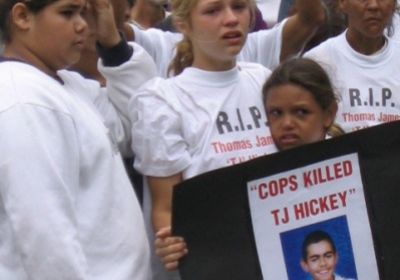
Aboriginal leaders in Sydney and around Australia, together with the Indigenous Social Justice Association (ISJA) and other community organisations, have called for a memorial to be built in the Block in Redfern, for all Aboriginal people who have died in custody. To this end, a march will be held on February 14, seven years to the day that a young Aboriginal boy, TJ Hickey, was allegedly rammed by a police vehicle during a pursuit and killed. -
Latin America Social Forum (Sydney) co-founder and respected Latin American community activist Victor-Hugo Munoz was awarded a Diploma of Honour on December 4 by the Guatemala Network for Peace and Development. The award acknowledged Munoz’s tireless, decades-long work in defence of human rights in Guatemala. -
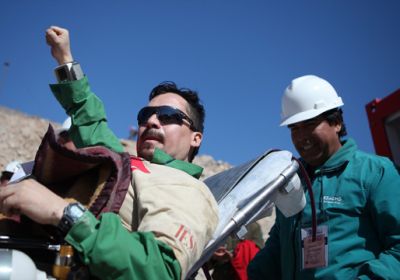
Media fanfare has subsided around the October rescue of 33 miners from the San Jose mine in Chile — an event watched by an estimated 1 billion people across the globe. But could this event at least help bring about change for miners’ rights and conditions? Unfortunately, if we look behind all the commotion and government rhetoric about making big changes for the lives of miners in Chile, the answer seems to be no. On November 7, two miners were killed in an accident in the Los Reyes mine near Copiapo, close to where the San Jose mine accident took place.