
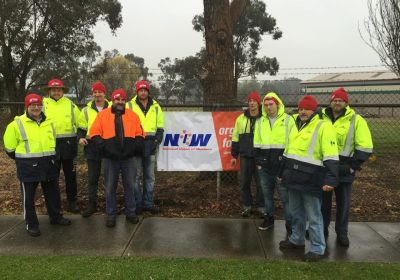
Nearly 70 staff at eheadspace — the national youth mental health service headspace's round-the-clock telephone and online counselling provider — were told they had just 24 hours to sign on to individual agreements that locked in year-long wage freezes, or they would lose their jobs.
A dispute has been listed in the Fair Work Commission after headspace refused requests to extend the deadline.
"For an iconic healthcare service, they don't treat their staff with any better respect than 7-Eleven or Grill'd," Health and Community Services Union organiser Serena Ho said.




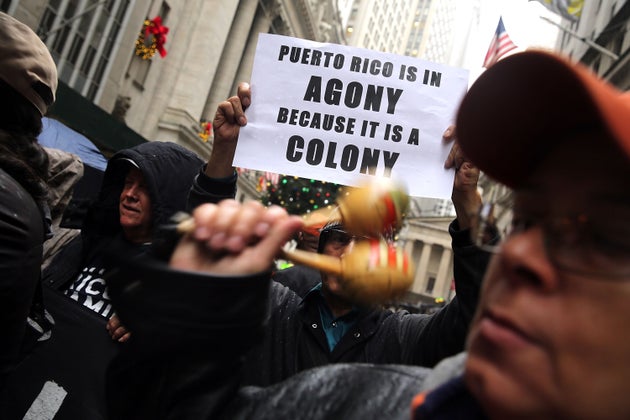 The Congressional, executive and judicial wings of the United State government recently clarified for all — despite Washington's claims to the contrary — that Puerto Rico is a US colony.
A law known as PROMESA was passed by Congress with bipartisan support and signed by President Barack Obama on June 30. It creates an unelected seven-person control board that has sweeping powers to take over Puerto Rico's economy.
The Congressional, executive and judicial wings of the United State government recently clarified for all — despite Washington's claims to the contrary — that Puerto Rico is a US colony.
A law known as PROMESA was passed by Congress with bipartisan support and signed by President Barack Obama on June 30. It creates an unelected seven-person control board that has sweeping powers to take over Puerto Rico's economy.

 Representatives from the CNTE attend talks in Mexico City, June 22, 2016.
A second hours-long meeting between striking teachers and the government in Mexico City wrapped up in the early hours of June 28 as authorities called on unions to end the blockades in the southern state of Oaxaca, the Mexican news agency Notimex said.
Representatives from the CNTE attend talks in Mexico City, June 22, 2016.
A second hours-long meeting between striking teachers and the government in Mexico City wrapped up in the early hours of June 28 as authorities called on unions to end the blockades in the southern state of Oaxaca, the Mexican news agency Notimex said.