-
"Venezuela: The revolution continues," was the theme of a solidarity conference held at Redfern Town Hall here on October 6. About 120 people attended the conference, which was organised by the Embassy of the Bolivarian Republic of Venezuela, in conjunction with the Australia-Venezuela Solidarity Network (AVSN), the Bolivarian Circle, the Latin American Social Forum (LASF), other solidarity organisations, unions, and political groups, including Socialist Alliance. -
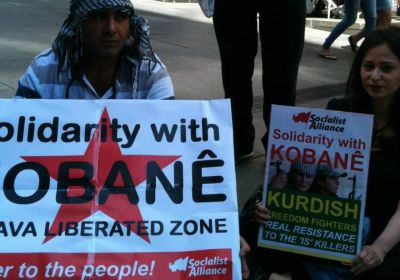
Below is the first part of a statement initially released by Socialist Alliance in Australia on September 24 and updated on October 4. In Sydney, on Friday morning (October 10), members of the community will a protest fast in Sydney Town Hall Square from 9am.
-
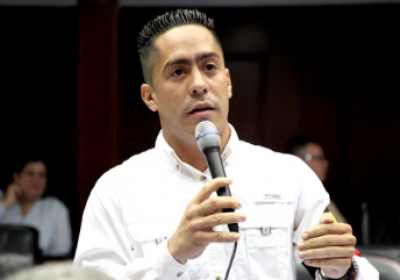
Robert Serra, a 27-year-old legislator of the governing United Socialist Party of Venezuela (PSUV), and the National Assembly's (AN) youngest parliamentarian, was found dead in his Caracas home yesterday. Authorities confirmed last night that Serra and his partner Maria Herrera had been murdered in their residence. According to daily newspaper Ultimas Noticias, unofficial reports say that Serra’s body showed signs of torture before he was killed. -
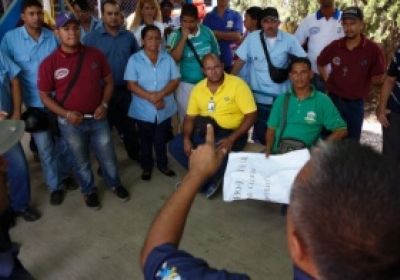
The Venezuelan government initiated a takeover of the abandoned Clorox factory on September 25, with Venezuelan Vice-President Jorge Arreaza calling an assembly of the company's 475 workers to reactivate the plant's activities. Clorox Venezuela called workers and left voicemails stating that their jobs were liquidated due to the company's decision to leave the country. The US-based company claims that economic challenges influenced its decision to close the factories doors. -
After speaking at the United Nations climate change summit on September 23, Venezuelan President Nicolas Maduro seized the chance to visit community leaders, local activists and grassroots groups in an event hosted by Hostos Community College of the South Bronx in New York City. About 1000 people attended the event, which was organised by Citgo, a subsidary of Venezuela's state-own oil company. Many arrived early to wait outside for good seats and to hold signs welcoming Maduro as “president of the people”. The Bronx community
-
Those who were expecting to see the supporters of Scottish independence dispirited ― and who hoped that the issue of independence was settled for at least a generation ― were quickly disappointed after the September 18 referendum. This defeat, in which the pro-independence vote lost by roughly 45% to 55%, bears the seeds of future victory ― for at least three reasons. -
Cables from the first term of Ecuadorian President Rafael Correa show how the US sought to defend the interests of US companies in Ecuador, and protect the position of foreign investors in general. Moves against the power of transnational corporations by Correa's government, first elected in 2006, were seen as attempts to increase control over the economy, which the US government views as the domain of private interests. The US Embassy in Quito therefore tried to influence Ecuadorian economic policy in conjunction with allies from other embassies and from within the private sector.
-
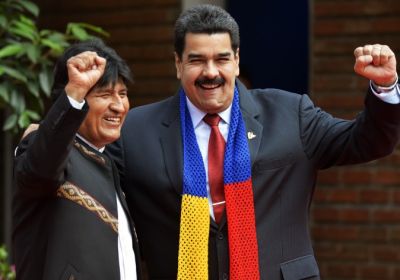
“The excessive focus on profits neither respects Mother Earth, nor takes human needs into account,” Bolivian President Evo Morales said in his speech to Untied nationals climate summit on September 23. “The continuation of this unequal system only leads to greater inequalities.” Prensa Latina said that day that Morales called for incentives to respect Mother Earth and exhorted the developed countries to live up to their promises. -
In her previous books The Shock Doctrine: The Rise of Disaster Capitalism (2007) and No Logo: No Space, No Choice, No Jobs (2000), Canadian author and activist Naomi Klein took on topics like neoliberal “shock therapy,” consumerism, globalisation and “disaster capitalism”. Klein extensively documented the forces behind the dramatic rise in economic inequality and environmental degradation over the past 50 years. -
On September 24, one day after the United Nations climate summit in New York once more failed to come up with any form of serious action to confront the climate crisis, Filipino socialist group Party of the Labouring Masses released the statement below. * * * Philippines President Benigno Aquino concluded his United Nations speech in New York on September 23 by posing the question: What more can we do? The question is rhetorical, even hypocritical, as the president well knows what needs to be done: to address the demands of the mass movements, which he has heard, but not heeded.
-
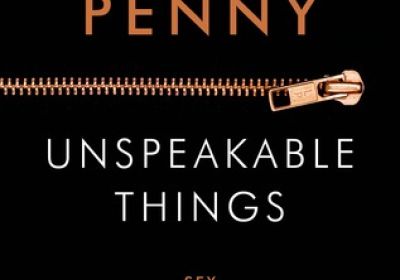
Unspeakable Things: Sex, Lies & Revolution Laurie Penny Bloomsbury, 2014 English author Laurie Penny describes herself as a “journalist, activist, feminist, troublemaker, nerd and net denizen”. Her book, Unspeakable Things, is a collection of polemical essays in which Penny takes aim at mainstream (liberal) feminism, which she says “remains tepid and cowardly”. -
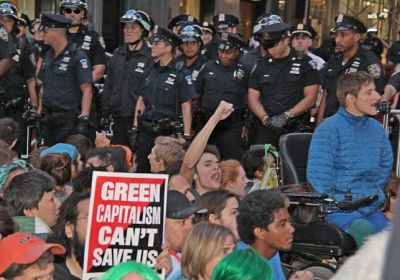
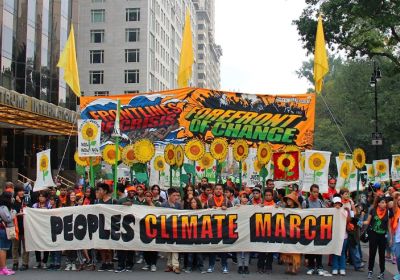
The largest demonstration to date on the need to stop global warming was held in New York City on September 21. It was the largest of the global demonstrations in more than 160 cities that day ahead of a United Nations climate summit held on September 23 in New York. The historic protest brought together a wide range of groups and individuals in a march through Manhattan, two days before heads of states gathered to discuss the issue.