
The Australian government has made it clear that it will not offer consular help to activists on the West Papua Freedom Flotilla if they are arrested by Papua New Guinea NG or Indonesian authorities.
The flotilla is expected to enter Indonesian territory early next month. Carrying West Papuan and Australian Aboriginal activists, its aim is to raise awareness about the occupation of West Papua by Indonesia.
-
-
The Palestinian prisoners holding Jordanian citizenship have suspended their hunger strike following concessions from the Israeli prison authorities to allow them regular family visits from their family members in Jordan. This was reported in a press conference held in Amman by family members of the prisoners on August 11. The five Jordanian hunger strikers are Abdullah Barghouthi, Mohammad Rimawi, Muneer Mar'i, Hamza Othman al-Dabbas and Alaa Hammad. They had been striking since May 2 for 100 days.
-
 “I want all the people to come to the court and see what democracy in Israel really is,” said the mother of Palestinian youth Ali Shamlawi, being held in jail by Israel on fabricated charges. On March 14, there was an accident near Salfit in the West Bank when an Israeli settler’s car crashed into the back of Israeli truck. Four people in the car were hurt, one seriously. The truck had stopped on the road due to a flat tire. Later, this accident was described by the car's settler driver as a stone throwing attack by Palestinian youths.
 -
The Bracegirdle Incident: How an Australian Communist Ignited Ceylon’s Independence Struggle Alan Fewster Arcadia/Australian Scholarly Publishing, 2013 173 pages, $39.95 (pb) In 1937, Ceylon’s British Chief of Police reported that “it is clearly dangerous” to allow the Australian communist Mark Bracegirdle, to remain in the country “stirring up feelings against employers of labour and against the British Government”.
-
Palestinian families celebrated on August 14 as Israel released 26 prisoners on the eve of long-stalled peace talks. Buses carrying the inmates left the Ayalon prison in central Israel late on August 13. Celebrations erupted in the West Bank and Gaza Strip, where thousands of Palestinian well-wishers awaited the buses' arrival. Fireworks lit the sky in Gaza, where rival Hamas and Fatah supporters alike celebrated to the beat of drums. Some danced while others flashed victory signs and waved flags of the Palestinian factions.
-
In April last year, many Palestinian political prisoners in Israel went on hunger strike calling for rights to family visits and the end of solitary confinement. Israel eventually conceded their demands. But now Israel says the deal did not apply to the Palestinian political prisoners who held Jordanian citizenship. These prisoners are still prohibited from family visits and various other basic rights.
-
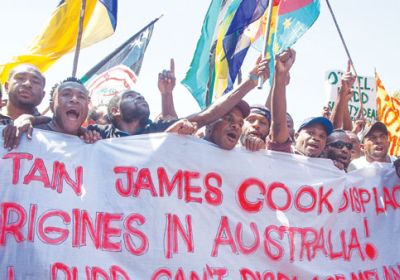
Prime minister Kevin Rudd’s announcement of the “PNG solution” — where refugees who arrive in Australia by boat will be denied resettlement and sent to Papua New Guinea — has sparked the largest refugee rights rallies in Australia since John Howard was in power, as well as opposition from within PNG itself.
-
Cuban Vice-President Jose Ramon Machado Ventura praised Ecuadorian President Rafael Correa and Venezuelan President Nicolas Maduro on July 31 for their fight against US imperialism. Machado said greater Latin American integration was aiding development across the region during the closing session of the 12th summit of the Bolivarian Alliance for the Peoples of Our America (ALBA) in Ecuador. But he stressed that social movements should lead the charge.
-
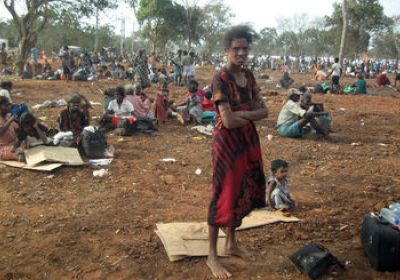 Towards the end of 2008, I joined thousands in Toronto to protest Israel’s attack on Gaza. At York University, where I was a student, we mobilised the campus to defend Palestinian rights. A few months later, bombs were falling on my own people ― in the predominantly Tamil Vanni region of northern Sri Lanka. And once again, we hit Toronto’s streets in protest. I realised then that even though our homelands are oceans apart, Palestinians and Tamils have much in common. Through the “war on terror”, the Israeli and Sri Lankan armies have waged war on civilian populations.
 -
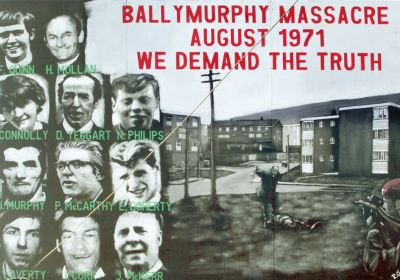 August 9, 1971 is a date firmly etched in the minds of many people in six counties in Ireland's north occupied by Britain. It was the date of the start of the occupying British Army's Operation Demetrius — more commonly known as the start of internment. Internment was the military response to a popular uprising against a politically bankrupt Stormont regime. As part of Operation Demetrius, thousands of British soldiers descended on nationalist areas, smashed into homes and dragged hundreds of men away to be incarcerated in prison camps without charge or trial.
 -
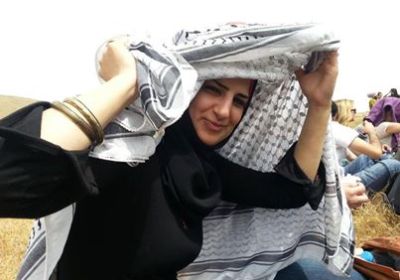 Palestinian teacher and activist Sireen Khudiri, 25, was released from an Israeli prison on July 15 after two months in jail. A court decision was made to release her on bail worth 7000 shekels ($2483). Khudiri is now home with her family. Many people wrote letters and signed petitions to protest Khudiri’s jailing, promoted awareness of her situation or posted or wrote messages of support. It is likely these efforts had an impact in helping free Khudiri.
 -
Since it was founded in 1948, the Israeli state has neglected the rights of Palestinian children, who have been deliberately ill-treated. Many Palestinian children have been killed, injured, jailed, tortured or used as human shields by Israel.