
 The moment the bomb detonated. Ankara, October 10, 10:04am.
The following statement was released by Selahattin Demirtaş and Figen Yüksekdağ, co-chairs of the Peoples Democratic Party (HDP), on October 12 in response to the October 10 bombing of a peace rally in Ankara organised by the HDP, trade unions and civil society organisations. Following the attack, police blocked ambulances and attacked survivors.
The moment the bomb detonated. Ankara, October 10, 10:04am.
The following statement was released by Selahattin Demirtaş and Figen Yüksekdağ, co-chairs of the Peoples Democratic Party (HDP), on October 12 in response to the October 10 bombing of a peace rally in Ankara organised by the HDP, trade unions and civil society organisations. Following the attack, police blocked ambulances and attacked survivors.
-
The moment the bomb detonated. Ankara, October 10, 10:04am.
The following statement was released by Selahattin Demirtaş and Figen Yüksekdağ, co-chairs of the Peoples Democratic Party (HDP), on October 12 in response to the October 10 bombing of a peace rally in Ankara organised by the HDP, trade unions and civil society organisations. Following the attack, police blocked ambulances and attacked survivors.
-
 Activists from France's Left Front. The Left Front is divided by strategic debates over how to confront Europe-wide austerity.
Five key figures of the European left have launched a new initiative “for a Plan B in Europe”.
Activists from France's Left Front. The Left Front is divided by strategic debates over how to confront Europe-wide austerity.
Five key figures of the European left have launched a new initiative “for a Plan B in Europe”.
-
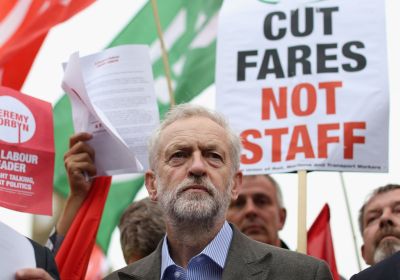
Jeremy Corbyn's successful leadership campaign team launched a new group of the left on October 7 to transform Labour into a “mass movement.”
-
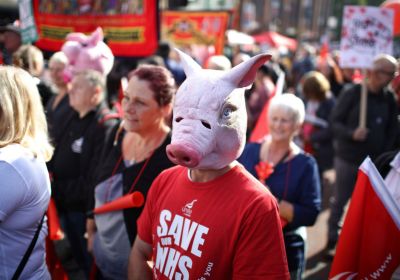 A desperate Conservative Party launched a vicious attack on Labour and the tens of thousands who have protested against its October 4-7 conference in Manchester — highlighting the government's fear of growing mass opposition. Wales Secretary Stephen Crabb accused protesters of spouting “venom and bile” because they dared to speak out against Tory cuts and oppose privatisation of public services and attacks on workers' rights.
 -
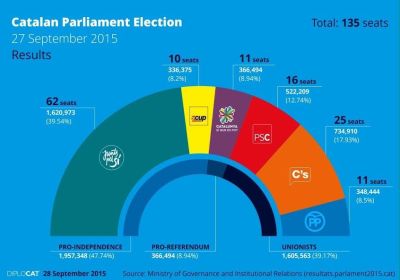 Who won the September 27 elections for the Catalan parliament, called as a substitute for the Scottish-style independence referendum that the Spanish People's Party (PP) government refuses to allow? It depends who you ask. On the night, most commentators on Madrid-based TV and radio called the result a defeat for the pro-independence camp: its two tickets — the mainstream nationalist Together for Yes and the anti-capitalist People's Unity Candidacies (CUP) - won only 47.74% of the vote against 52.26% for “the rest”.
 -
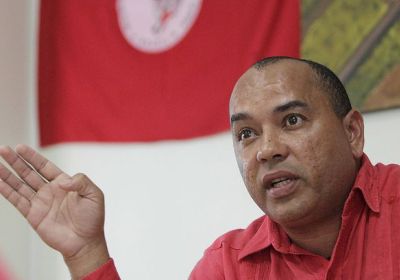
South America’s largest country, Brazil, has been rocked in recent months by a political crisis, partly fuelled by mass protests calling for the removal of centre-left President Dilma Rousseff. The protests come as the country officially moves into recession, with Brazil’s economy expected to contract by 2% this year. Brazil has been governed by a Workers’ Party (PT)-led coalition for over a decade, firstly under Luiz Ignacio “Lula” da Silva and now Dilma, as she is commonly known.
-
 Workers from Venezuela's 'housing mission', which is building large numbers of public housing, march on Venezuela's independence day, July 5. Photo from Venezuela Analysis.
Venezuela's Bolivarian revolution has transformed the country since the rise to power of late socialist president Hugo Chavez in 1998 on a platform of tackling poverty and promoting participatory democracy.
Workers from Venezuela's 'housing mission', which is building large numbers of public housing, march on Venezuela's independence day, July 5. Photo from Venezuela Analysis.
Venezuela's Bolivarian revolution has transformed the country since the rise to power of late socialist president Hugo Chavez in 1998 on a platform of tackling poverty and promoting participatory democracy.
-
 SYRIZA pulled off a remarkable victory at the September 20 Greek election. Although burdened by its acceptance of the draconian austerity measures in the third memorandum imposed by Greece's creditors and eight months of rule in the midst of recession, closed banks and capital controls, SYRIZA's vote fell by only 0.88% and its parliamentary seats by just four.
-
 More than 1 million people took part in a pro-independence march in Barcelona on September 11, Catalonia's national day.
A year has passed since the British establishment won the September referendum on Scottish independence with a final campaign week of blackmail, dirty tricks and multi-party sworn promises yet to be kept.
More than 1 million people took part in a pro-independence march in Barcelona on September 11, Catalonia's national day.
A year has passed since the British establishment won the September referendum on Scottish independence with a final campaign week of blackmail, dirty tricks and multi-party sworn promises yet to be kept.
-
 Campaigning kicked off on September 8 for the first competitive elections in Myanmar (Burma) since the 1950s. The November 8 poll will pit the ruling Union Solidarity and Development Party (USDP) against more than 100 opposition parties, including Nobel laureate Aung San Suu Kyi’s National League for Democracy (NLD). Myanmar’s military ceded power to a quasi-civilian government through 2010 elections that were boycotted by the NLD, ending a military dictatorship that spanned from 1962.
 -
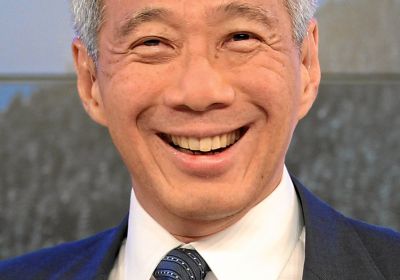 Singapore's general election on September 11 returned the ruling People’s Action Party (PAP), led by Lee Hsien Loong, to office with 69.9% of the vote and 83 out of 89 elected seats. This is an increase of almost 10% on their vote in 2011. This result, which went against the predictions, was a huge setback to the opposition parties. Only the Worker’s Party (WP) was able to hold onto one Single Member Constituency (SMC) seat, Hougang, and one five-seat General Representative Constituency (GRC), Aljnunied. Even in Aljunied the WP only just held on with 50.1% of the vote.
 -
 Nicolas Del Cano.
Initiated just over four years ago, the Left and Workers Front (FIT) in Argentina has scored some breakthroughs, quickly earning its place on the national political scene.
Nicolas Del Cano.
Initiated just over four years ago, the Left and Workers Front (FIT) in Argentina has scored some breakthroughs, quickly earning its place on the national political scene.