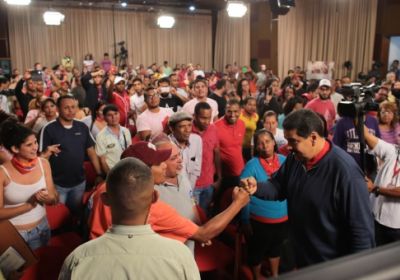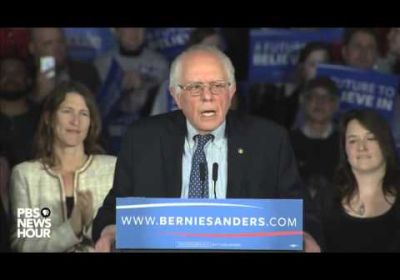
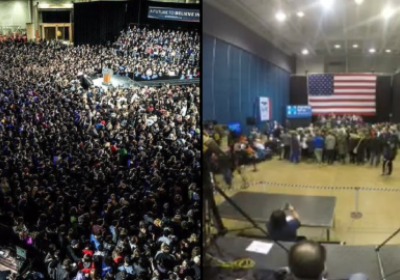
In a speech to supporters on the night of February 1, after the narrowest of losses to Hillary Clinton in the Iowa caucuses,, self-described democratic socialist candidate in the Democratic primaries Bernie Sanders hailed his strong result as the "launch of a political revolution".
-
-
Vermont Senator and Democratic presidential candidate Bernie Sanders called for a “political revolution” while Hillary Clinton emphasised pragmatism and experience in the final town hall meeting before the February 1 Iowa caucuses, TeleSUR English said on January 26. -
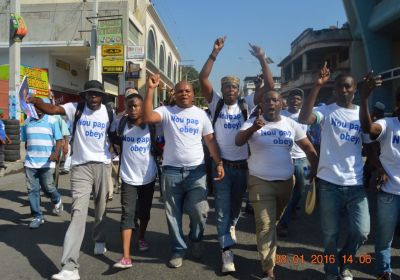
Sixty-eight grassroots groups in Haiti have issued an urgent call for solidarity with their struggle for free and fair elections, dignity and justice. The statement was written right before the postponement of the planned presidential “run-off” elections on January 24.
-
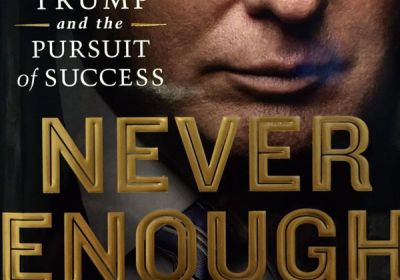
Never Enough: Donald Trump & the Pursuit of Success Michael D’Antonio St Martin’s Press, 2015 389 pages What will the United States and the world be getting from “President Donald Trump” if such a frightful prospect comes to pass? Michael D’Antonio’s biography of the Republican Party’s front-running presidential candidate gives us some clues — denial of global warming, vaccination, marriage equality and abortion; insults and worse for religious and ethnic minorities, and for women and the disabled; and a turbo-charged US imperial power. -
Bernie Sanders.
Self-described democratic socialist and Democratic presidential hopeful Bernie Sanders used a January 5 speech to call for structural reforms to the US financial system, calling Wall Street's business model as fraudulent, TeleSUR English said on January 5.
-
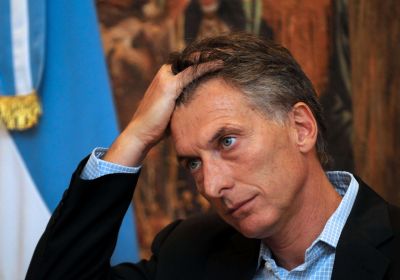
Every year from around Christmas through to February, Argentina is wrapped in a summer trance. The usual, frenzied pitch of city centres is muffled as if by vast blankets of cotton and sticky heat. Families find reprieve from work by travelling to the coast and mountains, visiting distant family and towns in the interior. This lull often translates into a dialling-down of class struggle. There are fewer and smaller mobilisations, strikes and political activism. -
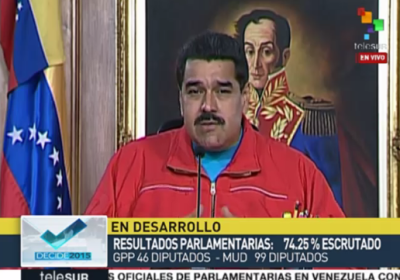
In the aftermath of Venezuela's right-wing US-backed opposition securing its electoral win over President Nicolas Maduro's United Socialist Party of Venezuela (PSUV) in the December 6 National Assembly elections, the South American country is heading for two confrontations, each reinforcing the other — a political and an economic one. The future is very uncertain. -
Facing possible austerity and a return to neoliberalism at the hands of a right-wing parliament, will the millions involved in Venezuela's Bolivarian revolution that has cut poverty and empowered the poor radicalise further and protect their 15 years of gains? Or will this be the blow that finally dampens their revolutionary joy and collective ambition? -
Artillery bombardment of Diyarbakır neighbourhood of Sur. Photo: Jinhahaber.link.
It is freezing cold in Amed, as the city of Diyarbakır is known to its residents. More than 10 centimetres of snow blankets the ground, something that happens only every three or four years. And at exactly this moment, fighting is escalating in Amed's old neighbourhood of Sur and in the cities of Cizre and Silopi, in Şırnak province.
-
One of Tony Abbott’s first acts as Prime Minister was to announce a Royal Commission to “shine a spotlight” onto the so-called “dark corners” of the trade union movement. The commission would expose the criminality and impropriety that allegedly blights Australia’s trade unions. Led by former High Court Judge John Dyson Heydon, the Royal Commission into Trade Union Governance and Corruption officially began in February 2014. -
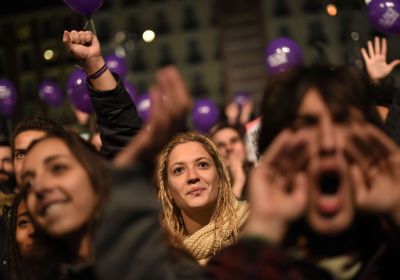
What was the central message of the December 20 Spanish general elections, which was “won” by the governing conservative People's Party (PP) of Prime Minister Mariano Rajoy with only 28.72% of the vote, 3.6 million votes less than the last national poll in 2011? Why did the opposition Spanish Socialist Workers Party (PSOE) greet its worst ever result —22.01%, 1.4 million votes less than 2011 — with a sigh of relief? -
On December 6, Venezuela held its 20th election in 17 years and one of its most difficult yet. With the opposition upping the ante in terms of media attacks and sabotage, 2.5 years of economic difficulties and since the passing of revolutionary leader Hugo Chavez, not to mention a recent right-wing victory in Argentina, the left and right around the world turned anxious eyes to Venezuela.