-
Ahead of the climate talks in Paris in December, it is important that people mobilise and demand strong action on climate change. Without a clear message from ordinary people, the demands that business and polluting industries make of governments are more likely to dilute the outcomes. Remember Rio? Kyoto? Copenhagen? At the Conference of Parties (COP) 21 conference in Paris, our leaders need to do more, and fast. -
With the Paris climate talks just around the corner it is timely to consider what effective policies to cut emissions might look like. Nationalisation and direct public investment are key policies that have historically been “bread and butter” political demands both for socialists and for the more radical voices within social democratic parties. Climate activists from the Greens and Labor Environment Action Network should revisit these ideas, as they are a useful alternative to the dead end that is carbon trading. Direct public investment -
Kiribati, a nation made up of 33 islands in the South Pacific, is predicted to be one of the first countries to vanish beneath the sea before the end of the century. The government has already bought 2400 hectares of land in Fiji in case they need to more the entire population. -
The appointment of nuclear power advocate Alan Finkel as Australia's next Chief Scientist led to speculation that the federal government might be softening up Australians for the introduction of nuclear power. But that speculation is likely misplaced. Finkel is not the first Chief Scientist to support nuclear power. It goes with the turf: boys like toys and Chief Scientists like nuclear power. Finkel's comments were actually quite nuanced and at least as supportive of renewables as nuclear power. -
The campaign against fracking in the Northern Territory ramped up a few notches last week, with the government announcing a successful bidder in the North East Gas Interconnector project coming amid allegations of a conflict of interest for a key NT government advisor.
-
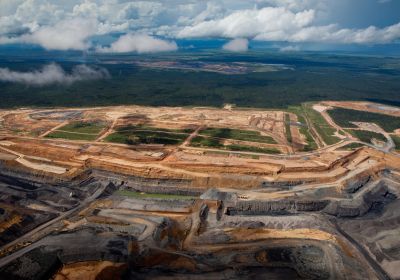
About 200 people rallied outside the NSW Supreme Court building on November 12 to demand justice for the small community of Bulga, in the upper Hunter Valley, and an end to the expansion of the Rio Tinto Warkworth coalmine that is threatening the future of their village.
-
Should the climate movement call for the restoration of a safe climate, rather than just zero emissions? According to a recent paper, Striking Targets, by climate writer Philip Sutton, greenhouse gas concentrations are already too high to avoid dangerous global warming, so the zero emissions goal is inadequate. -
After seven years of intense public campaigning on the Keystone XL, a pipeline that would have bisected the United States carrying the world's dirtiest oil, US President Barack Obama denied Canadian oil company TransCanada a presidential permit for construction on November 6.
-
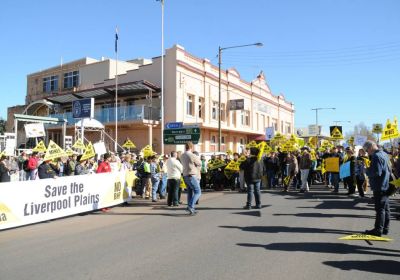
More than 600 people gathered on a farm near the small town of Breeza on November 7 and 8 to celebrate the Liverpool Plains "Harvest Festival against Shenhua” in opposition to the proposed Watermark open cut coalmine. They declared they will return to continue peaceful protest at the site if the mine goes ahead.
-
The federal government has now spent $1.22 billion on its “Direct Action” policy that is supposed to reduce greenhouse gas emissions but will actually allow them to increase. The results of the government's second round of emissions reverse auctions under the Direct Action scheme were released on November 12, revealing that the Clean Energy Regulator had paid $557 million to companies in return for emissions cuts of 45 million tonnes of CO₂. The first auction, in April this year, spent $660 million to buy 47.3 million tonnes. -
Fossil Free UTas began a sit-in on October 14 outside the office of University of Tasmania's vice-chancellor, Peter Rathjen. The sit-in lasted a marathon 15 days. The University of Tasmania has not yet committed to divesting from fossil fuels, but negotiations between the university and Fossil Free UTas are now underway. The sit-in gained community awareness and support for the campaign. The students received national and international media attention, and their actions sparked similar campaigns in other parts of the country. -
The text of the controversial Trans-Pacific Partnership — negotiated by 12 Pacific rim nations including Australia — was released on November 5 after a negotiating process shrouded in secrecy. The release of the much-guarded text of the deal has renewed calls for action to stop the TPP as a “toxic deal” and “disaster for democracy”.