-
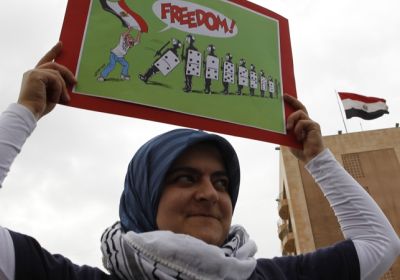
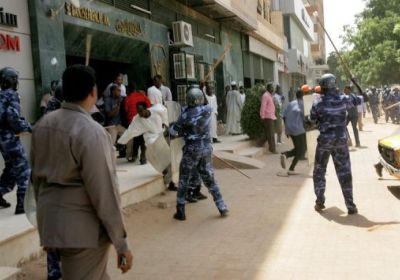
Thousands of students braved the notoriously brutal Sudanese police and security forces on January 30 in anti-government protests inspired by the Tunisian and Egyptian uprisings, SudaneseTribune.com reported that day. Rallies took place at three universities and other sites across the capital, as well as in east and west Sudan. Students called for General Omar al Bashir’s National Congress Party government to resign and condemned recent austerity measures and ongoing attacks of democratic rights. -
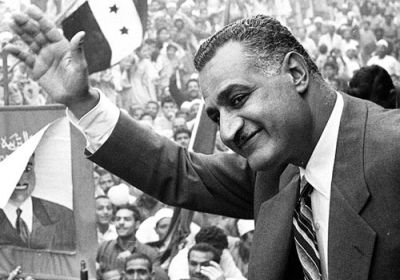
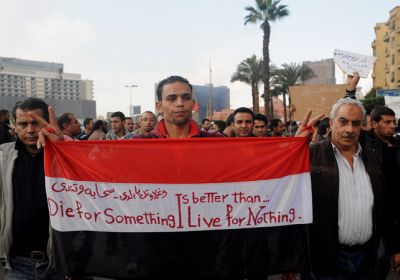
The popular uprising which has swept Egypt over the past two weeks, inspired by the revolt which drove the Tunisian dictator from power in mid-January, is the expression of a people’s power movement in the Arab world which has been 40 years in the making. I have been waiting for this for a long time. I lived in Cairo for six months in the first half of 1967, until the so-called Six Day War forced my family to leave Egypt for Britain. My father was a meteorological scientist working through the United Nations with the Eqyptian agriculture department for a time. -
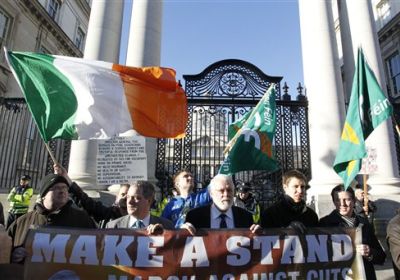
For a decade, Ireland was heralded by the most ardent partisans of neoliberal capitalism as a model to be imitated. The “Celtic Tiger” had a higher growth rate than the European average. Tax rates on companies had been reduced to 12.5% and the rate actually paid by the transnational corporations that had set up business there was between 3 and 4% — a CEO’s dream! By comparison, the company tax rate is 39.5% in Japan, 39.2% in Britain, 34.4% in France and 28% in the US. Ireland’s budget deficit was nil in 2007. In this earthly paradise, everybody seemed to benefit. -
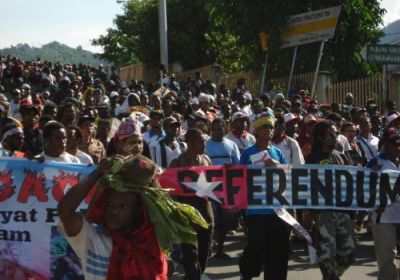
West Papuan refugees in Papua New Guinea have been terrorised and arrested by police, West Papua Media Alerts said on January 28. They were allegedly arrested on behalf of the Indonesian military and local logging interests. Police and soldiers rounded up 79 refugees living in camps around Vanimo, on PNG’s north coast near the border with West Papua, in the early hours of January 23. The soldiers burned down at least 30 refugee houses, destroyed crops and food, and assaulted people, WPMA said. Other refugees have reportedly fled to the jungle. -
All those scenes from Cairo of mass demonstrations look like the perfect expression of the big society. So we can only assume British PM David Cameron wants us to try something similar here. It would certainly encourage more people to take an interest in politics.
-
Cuban Revolution leader Fidel Castro said on February 1 that not even the support of the United States will be able to save the Egyptian government. Likewise, he pointed out that for the first time the world is simultaneously facing three problems: climate crises, food crises and political crises. * * * Reflections by Fidel Castro: Mubarak's fate is sealed Egyptian President Hosni Mubarak’s fate is sealed, not even the support of the United States will be able to save his government. -
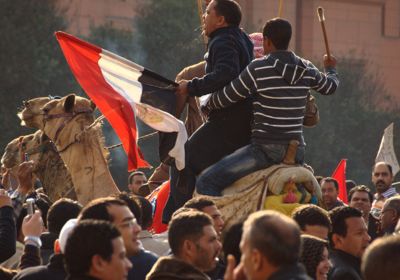
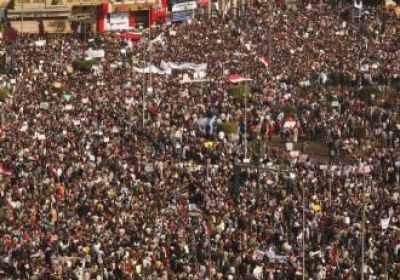
After as many as 2 million people took over Tahrir Square and the streets of Cairo, with millions more across Egypt, on February 1 to demand on end to the US-backed dictatorship of Hosni Mubarak, the regime responded with a violent assault on protesters continuing to occupy the square.
-
International Socialist Review editor Ahmed Shawki reports from Cairo on the latest mass protests against Hosni Mubarak--and what the future holds for Egypt's uprising.
-
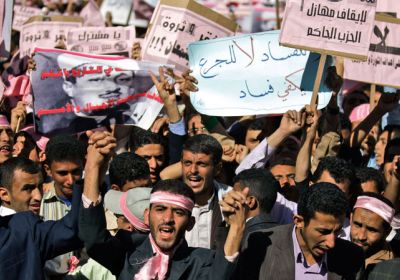
Al Jazeera.net reported on January 29 that new protests had erupted in the Middle Eastern nation of Yemen, which sits at the bottom of the Arab peninnsular, demanding an end to the regime of President Ali Abdullah Saleh. The site reported on January 28 that thousands had also taken to the streets in anti-government protests in Jordan, with people angry over price rises and unemployment.
-
The trials of the creator of WikiLeaks, Julian Assange, and of international terrorist Luis Posada Carriles began with less than a 24-hour difference on January 10 and 11. One took place in London and the other in El Paso, Texas. While the champion of freedom of information, Assange, was being accused by US officials of the very serious crime of terrorism, the confessed terrorist, Posada, was simply tried for immigration law violations. -
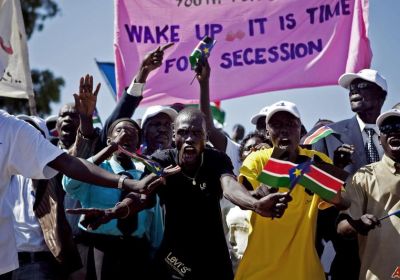
The January 9-15 referendum on self-determination in south Sudan looks certain to result in the division of Sudan into two countries. About 96% of the 3.9 million registered voters took part, well exceeding the required 60% turnout. The final result will be announced in February. But with 80% of the vote counted, the South Sudan Referendum Commission reported a landslide vote of almost 99% in favour of independence. The Republic of South Sudan is expected to be officially declared in July. -
Ongoing mass demonstrations, strikes and riots have rocked Egypt since January 25. Tens of thousands of people took to the streets in national protests on January 25 to demand an end to the United States-backed dictatorship of Hosni Mubarak.