
 Ireland passed a new Gender Recognition Bill on July 15 that will allow transgender people to change their birth certificates and other documents, and achieve full legal recognition of their preferred gender. The bill is an elaboration on a previous one that allowed the legal changes, but only with a supporting statement from a doctor.
-
Ireland passed a new Gender Recognition Bill on July 15 that will allow transgender people to change their birth certificates and other documents, and achieve full legal recognition of their preferred gender. The bill is an elaboration on a previous one that allowed the legal changes, but only with a supporting statement from a doctor.
-
 Colombian Indigenous refugees in Ecaudor.
Migrant rights bill says 'no one is illegal'
Ecuadorian National Assembly deputy Esteban Melo said that under a new migration bill presented to the Ecuadorian National Assembly on July 16, “No human being will be considered illegal”.
Colombian Indigenous refugees in Ecaudor.
Migrant rights bill says 'no one is illegal'
Ecuadorian National Assembly deputy Esteban Melo said that under a new migration bill presented to the Ecuadorian National Assembly on July 16, “No human being will be considered illegal”.
-
 Child killed by Saudi bombing of Yemen.
Twenty million people in Yemen, the poorest country in the Arab world, are at risk of dying from hunger or thirst. That’s 80% of the country’s population, which, according to UN agencies, badly needs emergency supplies of food and water, along with fuel and medicine.
This almost unimaginable crisis sounds like something out of a disaster movie. But the cause is not an earthquake or a tsunami.
Child killed by Saudi bombing of Yemen.
Twenty million people in Yemen, the poorest country in the Arab world, are at risk of dying from hunger or thirst. That’s 80% of the country’s population, which, according to UN agencies, badly needs emergency supplies of food and water, along with fuel and medicine.
This almost unimaginable crisis sounds like something out of a disaster movie. But the cause is not an earthquake or a tsunami.
-
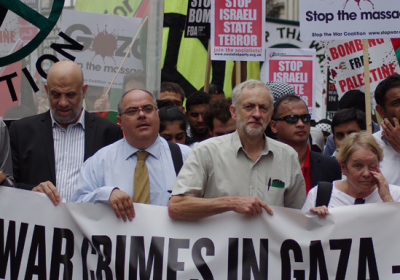 Private polling shows veteran left-wing Labour MP Jeremy Corbyn, who takes a strong stand against austerity and has a history of backing supporting popular movements, ahead in the first round of voting, the New Statesman said on July 15. The New Statesman said the success of Corbyn's campaign surprised observers. Corbyn collected 40 nominations from local parties, just eight less than the bookmakers' favourite, Andy Burnham.
 -
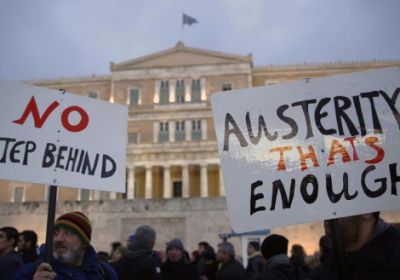 An historic betrayal has consumed Greece. Having set aside the mandate of the Greek electorate, the Syriza government has willfully ignored last week's landslide "No" vote and secretly agreed a raft of repressive, impoverishing measures in return for a "bailout" that means sinister foreign control and a warning to the world. Prime Minister Alexis Tsipras has pushed through parliament a proposal to cut at least 13 billion euros from the public purse - 4 billion euros more than the "austerity" figure rejected overwhelmingly by the majority of the Greek population in a referendum on 5 July.
 -
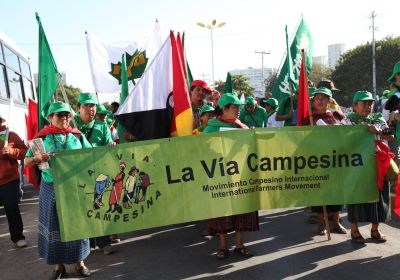
The world’s largest social movement, La Via Campesina, has slammed the power of transnational companies for undermining democracy and stifling people’s voices on a global scale.
-

The deal between the five permanent members of the UN Security Council and Iran over the latter’s nuclear program lifts an ominous shadow from a region already ravaged by bloodshed and conflict.
-
 More than 60 lawmakers from Germany’s Die Linke (The Left) party voted against the proposal for further austerity for Greece on July 17. They accused the German government of “destroying Europe” by forcing Greece to accept hard-hitting austerity measures required by the eurozone for a third bailout deal.
 -
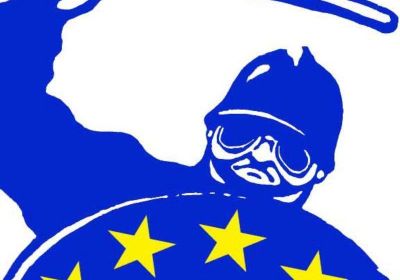
Europe, as we know it, may well be over. The promise of a peaceful integration of equals with a capitalist framework lies tattered on the floor of a negotiation room in Brussels.
-
 As the left in Australia faces the need to organise against escalating racism from mainstream politicians and the far right, important lessons can be learned from anti-racist struggles across the world. Sibylle Kaczorek is a Socialist Alliance activist now living in Melbourne who was active in anti-racist campaigns in Germany. She spoke to Green Left Weekly's Nick Fredman. * * * Despite Germany officially becoming an anti-fascist state after World War II, there have been continuing connections between the far right and the state haven’t there?
 -
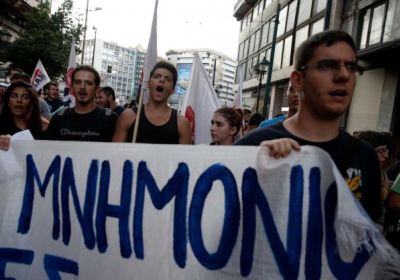 New strikes have hit Greece as anger flares over the latest deal pushed onto Greece by the Troika of European Commission, European Central Bank and International Monetary Fund. Thousands of public sector workers from the ADEDY union took to the streets on July 15 as part of a general strike calling for the rejection of a raft of new austerity measures being put to the parliament by Prime Minister Alexis Tsipras.
 -

In the early hours of July 16, Greek parliament voted to accept the punitive July 12 funding deal put forward by eurozone lenders.