
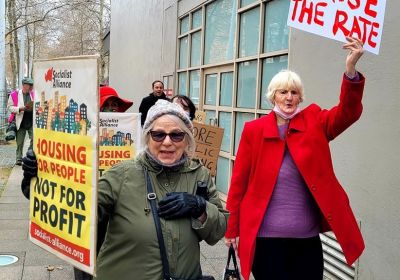
The federal Treasurer tells us that cost-of-living pressures are only going to get worse before they get better. Angela Carr argues that Labor must abandon its neoliberal approach.
The federal Treasurer tells us that cost-of-living pressures are only going to get worse before they get better. Angela Carr argues that Labor must abandon its neoliberal approach.

Leading Socialist Alliance member Peter Boyle joins the Green Left Show to discuss the manufactured outpouring of pro-monarchist propaganda, the push for a republic and what real democratic change would look like.
The Brisbane Exhibition Centre is about to play host to Land Forces, a weapons expo. As Miriam Torzillo and Lilli Barto report, it is not not about defence but the business of war.
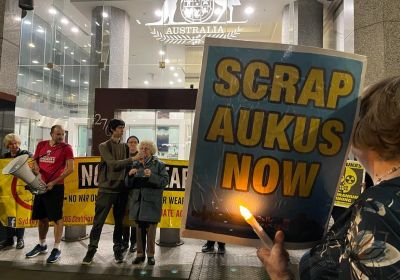
Australia’s operation of nuclear-powered submarines will make it the first non-nuclear weapon state to manipulate a loophole in the International Atomic Energy Agency inspection system. Binoy Kampmark reports.

Qantas CEO Alan Joyce’s aggressive cost-cutting program at the start of the pandemic has been blamed for Qantas’s poor performance. Jim McIlroy argues Labor’s decision to privatise Qantas in the early 1990s is the root cause.
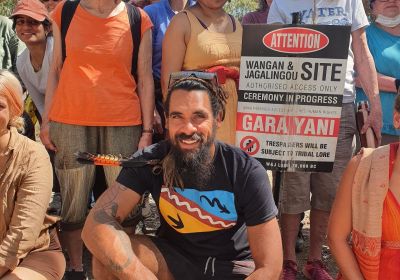
Wangan and Jagalingou man Coedie MacAvoy outlined the strategy to take back country in Western Queensland and to stop the Adani Carmichael coal mine.
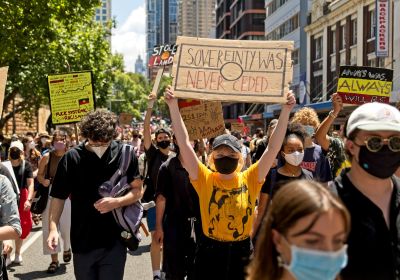
The proposed Voice to Parliament would mean little “meaningful change” for First Nations people, according to the Tasmanian Aboriginal Centre president Graeme Gardner. Isaac Nellist reports.
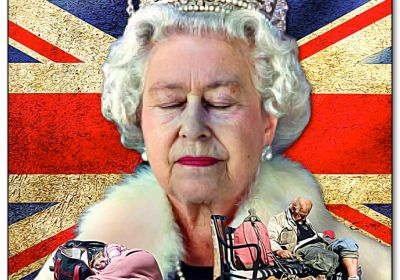
William Briggs argues the propaganda effort since the Queen's death shows how the state has the power to evoke a sense of unity between vastly different classes.
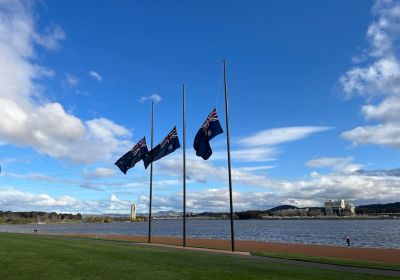
Aleks Wansbrough argues that the queen's passing shows how modern capitalism has a tendency to uproot and decontextualise forms of cultural kinship and care, relativising everything as a commodity.
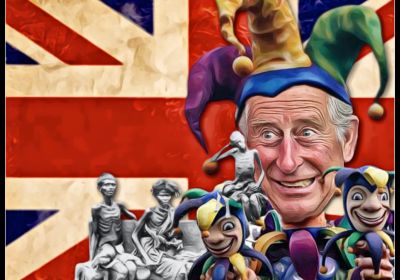
The Australian republican movement’s great mistake was to banish from discussion any reason beyond symbolism to be a republic. Aleks Wansbrough argues it effectively treated the royals as beyond reproach.

Many people in Anglo societies seemingly can’t imagine that the fairytale queen they recognise might look different to those who live in the countries from where the shining jewels in her crown and sceptre were stolen, writes Carlo Sands.
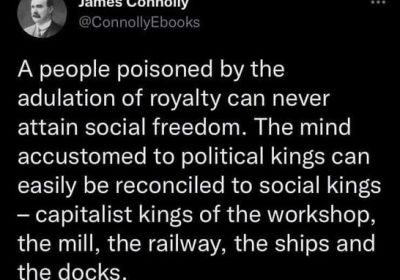
There is nothing better in these times than reading the words of James Connolly, the Irish republican, socialist and trade union leader, executed by the British firing squad on May 12, 1916, writes Sam Wainwright.