-
-
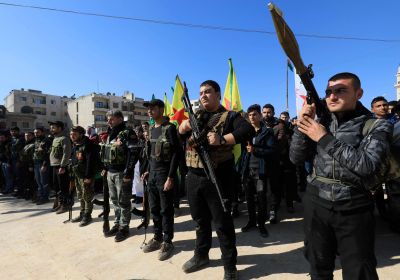
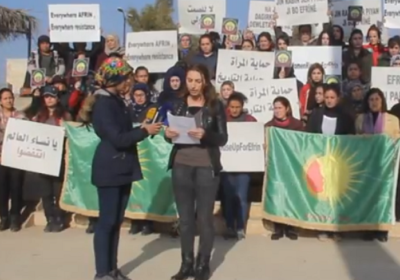
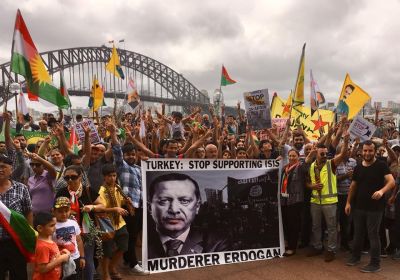
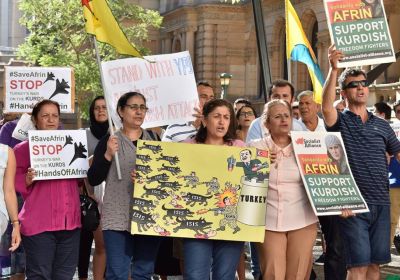
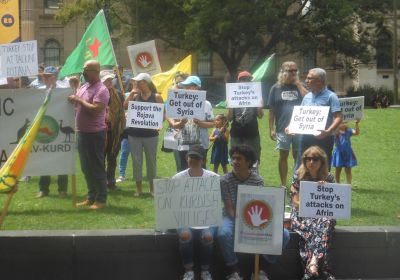
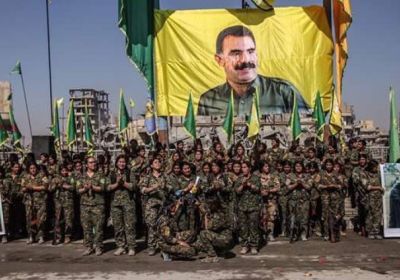
On January 20, Turkey launched an invasion of Afrin, one of the three cantons that make up the Democratic Federation of Northern Syria (also known as Rojava), the site of a profound, Kurdish-led social revolution based on multi-ethnic participatory democracy and women’s liberation.
The invasion has killed dozens of civilians in an area that has welcomed hundreds of thousands of refugees from Syria’s conflict. Turkey’s actions would be impossible without at least passive acceptance from several great powers active in Syria. Cihad Hammy looks at the motivations for various major players.
-
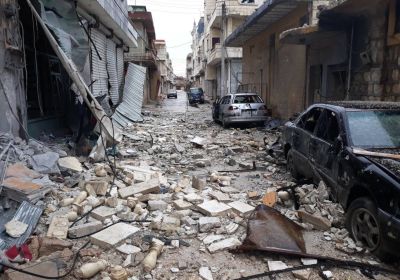
The dark clouds of 21st-century fascism are once again hanging over the heads of the people of northern Syria. As if the inhabitants of the region often referred to as Rojava haven’t suffered enough over the course of the past 7 years of war, the Turkish state has come to the conclusion that the time is ripe to pick up the fallen, bloodied sword from the corpse that is Islamic State.
Together with Salafist mercenaries carrying flags of the Syrian ‘rebels’ – one of the many components of what at one historical juncture seemingly all so long ago was a cohesive ‘Free Syrian Army’ – Erdogan’s regime vows a ‘swift operation’ to destroy ‘terrorism’ in Afrin.
-
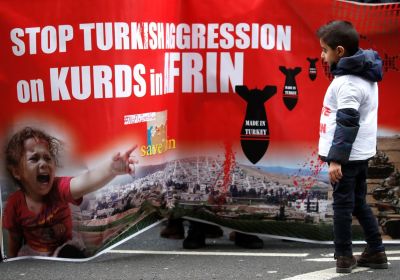
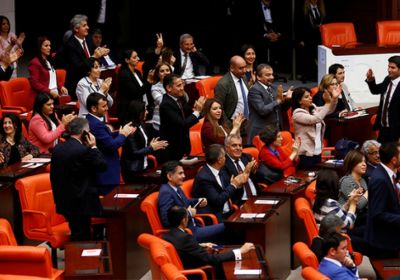
The left-wing Peoples’ Democratic Party (HDP) has condemned Turkey’s invasion of the Afrin region in northern Syria (known as Rojava in Kurdish) in collaboration with mostly jihadi Syrian militias.
The HDP, with strong roots in Turkey’s Kurdish minority, has itself faced worsening repression from the regime of President Recep Tayyip Erdogan.
-
-
-
-
-
-
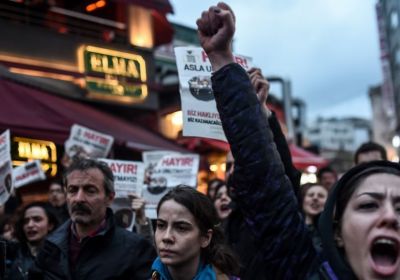
Hundreds of thousands of people rallied in the Turkish city of Istanbul after a 280-mile Justice March against Turkish President Recep Tayyip Erdogan.
The demonstration was in response to the widespread jailings and dismissals authorised by the Turkish government after last year’s failed coup attempt.
-

The media crackdown in Turkey by the regime of President Recep Tayyip Erdogan has grown in the aftermath of a failed coup in July last year.
Jailed reporters find themselves caught in a quagmire as they face legal limbo and deal with made-up charges, inhumane treatment and solitary confinement.
-
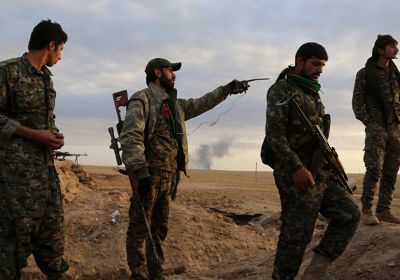
Raqqa, the de facto ISIS capital in Syria, is on the verge of falling. The rapid advance of the left-wing Syrian Democratic Forces (SDF) since they entered the city on June 6 contrasts with the slower advance of forces of the Iraqi and Iraqi Kurdistan governments in Mosul, the ISIS capital in Iraq, which the pro-government forces entered in February.
However, the June 18 downing of a Syrian fighter jet by a US war plane, after the former attacked SDF positions near Raqqa, is just one indication that eliminating ISIS will not end the violent multi-sided war in Syria that spawned it.
Turkey
Turkey