-
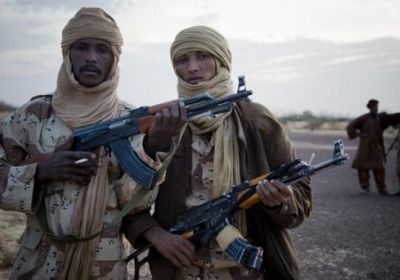
France, the former slave power of west Africa, has poured into Mali with a vengeance in a military attack launched on January 11. French warplanes are bombing towns and cities across the vast swath of northern Mali, a territory measuring some one thousand kilometres from south to north and east to west. French soldiers in armoured columns have launched a ground offensive, beginning with towns in the south of the northern territory, some 300 kilometres north and east of the Malian capital of Bamako. -
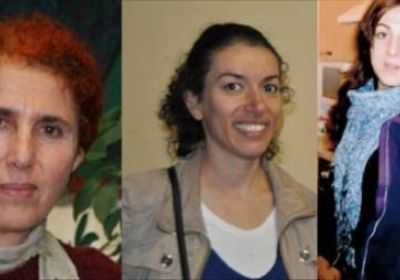
The statement was released the Kurdish Association of Australia on January 11 condemning the assassination of three Kurdish activists in Paris. The Kurdish people have long struggled for self-determination in Turkey, and other states that claim parts of historic Kurdistan. Turkey has responded to the Kurdish struggle with brutal repression and moves to wipe out the Kurdish identity. * * * On the 9th of January, 2013 three Kurdish women activists ― including a co-founder of the Kurdistan Workers Party (PKK) ― were shot dead in the Kurdish Institute of Paris. -
A general strike was launched across Europe on November 14 as millions are protesting spending cuts and tax hikes they say have deepened the region’s economic crisis. Spanish and Portuguese workers are coordinating their strike with work stoppages underway in Greece, Italy, France and Belgium. -
French car-maker Peugeot-Citroen announced a drastic cost-cutting plan on July 12 to slash 8000 jobs in France and close a major factory in Aulnay-sous-Bois north of Paris. Hundreds of workers at the Aulnay plant walked off the job and staged a protest in front of the site, which is one of France's biggest car factories and a bastion of car workers' trade unions. "It's a show of disgust because Peugeot has played with us for a year, over a year now, saying that it's not certain, we're not going to close," said Khenniche of the SUD union, who has worked at the plant for 17 years.
-
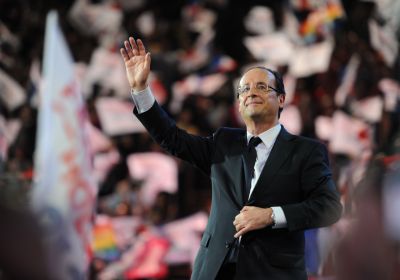
In what marks a significant shift in the balance of European politics, in the final round presidential election on May 6, Socialist Party candidate Francois Hollande defeated right-wing incumbent Nicolas Sarkozy of the centre-right Union for a Popular Movement by almost 52% to 48%. Hollande is France's first president from the social democratic Socialist Party in France in 17 years. Sarkozy is the first president since 1981 not to win a second term. -
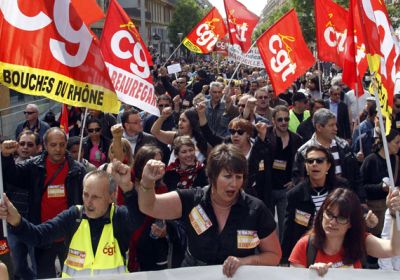
People from all sides of politics came out on the streets of Paris in great numbers on May 1. Ahead of the second round of the French presidential poll on May 6, it was a highly politicised May Day. In the first round on April 22, the Socialist Party's Francois Hollande beat the right-wing incumbent Nicolas Sarkozy. The far right National Front's candidate Marine Le Pen scored a record vote of about 18%. The Left Front's Jean-Luc Melenchon took about 11% of the vote. -
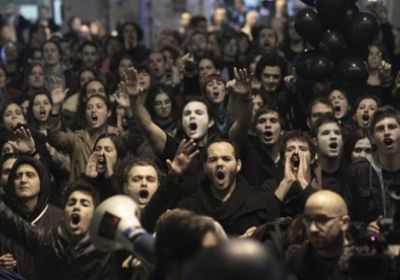
The results of the first round of the French presidential elections on April 22 shone a powerful spotlight on a society polarised by economic crisis and the austerity regime of president Nicolas Sarkozy and his ruling Union for a Popular Movement government.
-
Presidential elections in France are a media spectacle rivalled perhaps only by those in the United States. In day-to-day life, there is also a real buzz as people argue and discuss the race on worksites, the street and, habitually, in cafes. Streets are plastered with posters of candidates and clever activist propaganda (over the top of some street signs here, activists have put up “Impasse Sarkozy”). -
There’s no election quite like a French presidential contest. It is a six-month-long race in which nearly every political stable usually has a runner and where the handicapping system is less rigged against “outsiders” than in many other countries.
-
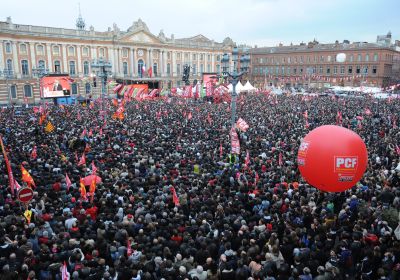
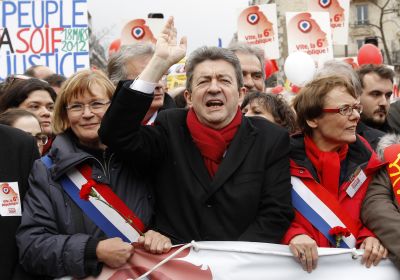
A huge rally was held at Paris's Bastille monument in support of Left Front presidential candidate Jean-Luc Melenchon on March 18, the Morning Star said the next day. More than 100,000 trade unionists, members of the French Communist Party (PCF) and disaffected former members of the Socialist Party (PS) marched under red balloons and flags. Melenchon said: "We're going to make this election on April 22 a civic insurrection. "The insurrection is ... the most indispensable of duties in this France disfigured by social, territorial, cultural and gender inequality."
-
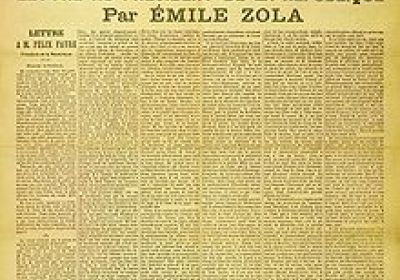
The Man on Devil's Island: Alfred Dreyfus & the Affair that Divided France By Ruth Harris Allen Lane, 2011 542 pages, $26.95 (pb) The Dreyfus Affair in France a century ago shows how little has changed. “National security” was on the lips of politicians and military officers as an innocent man from a vilified group was framed for treason in a rigged military court and sent to rot in a prison hell-hole to serve political ends amid war hysteria. Make the name “Alfred Dreyfus” or “David Hicks” and the template fits. -
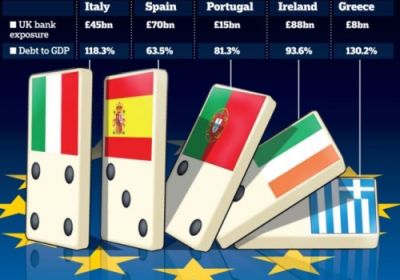
The euro will survive for now — but only because working people in Greece and other European countries face greater suffering. That’s the not-so-hidden agenda behind the new US$227 billion bailout of Greece organised by the most powerful countries of the European Union, mainly France and Germany.