
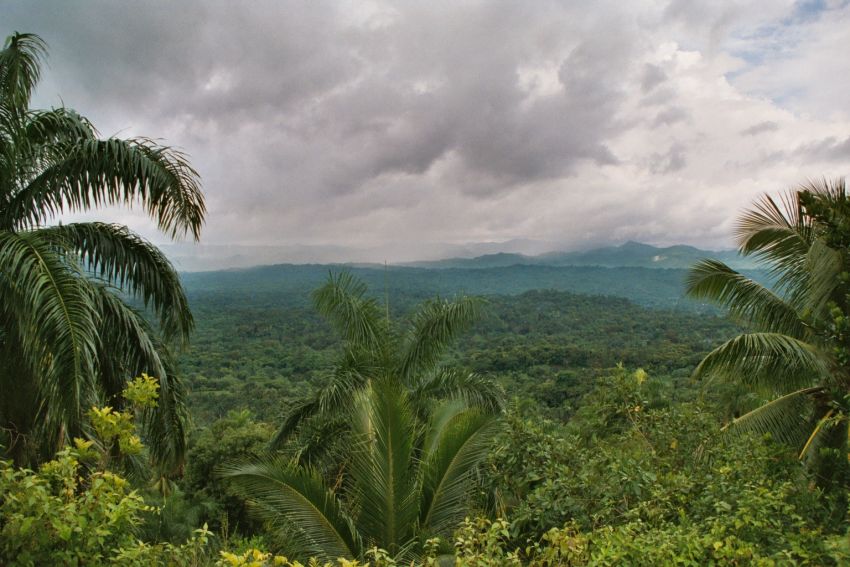
Forests in Cuba now make up 30.6% of the country's land area, thanks to a reforestation initiative carried out by the socialist government, a new report has found.
Titled Environmental Outlook: Cuba 2015, the National Office of Statistics and Information report details recent improvements in Cuba's forest coverage, up from 27.6% in 2010.
Cuba started the reforestation program in 1998. It is part of a select group of developing countries that have been able to maintain sustained forest growth.
A report from the Food and Agriculture Organisation of the United Nations in 2011 said that Cuba has the highest proportion of its forest designated for protective functions in Latin America and the Caribbean.
Before Spanish colonisation, Cuba was estimated to have forest coverage of 90%. At the time of the Cuban Revolution in 1959, only 14% of Cuba was thought to be covered in forest. Both the foreign-owned timber and sugarcane industries played significant roles in destroying much of Cuba's lush forest areas.
Increased forest coverage has been proven to help fight against pollution, improve air quality and health for humans and animals. Deforestation is a major contributor to increased greenhouse gas emissions.
[Abridged from TeleSUR English (archived by Internet Archive).]