-
Independent Andrew Wilkie won the Tasmanian seat of Denison at the recent federal elections. Previously, the seat had been held by Duncan Kerr for 23 years and was considered a safe Labor seat. Wilkie came to prominence in 2003 when he resigned from his job at the Office of National Assessments in public protest against the then Liberal/National Coalition government's decision to invade Iraq. The invasion was based on the claim Iraq had weapons of mass destruction, a claim that later proved false. -
On September 1, Luke Foley, the newest Labor member of the New South Wales Legislative Council, rose to make his inaugural speech to the chamber. Foley began: “It is with pride and humility that I enter this place, Australia’s oldest Parliament, as a representative of Australia’s oldest, and greatest, political party — the Australian Labor Party.” Oh dear. What a day for Foley to praise the ALP in NSW. -
The United Nations Committee on the Elimination of Racial Discrimination (CERD) slammed the policies of the Northern Territory intervention in a report released on August 27.
-
In 2007, federal election candidates made much of the seven vultures that were feeding on the carcass of the Howard government as it flailed around shifting further and further to the right. Those seven vultures were: • the denial of climate change; • touting of the war in Iraq; • Work Choices; • policy failure on education spending; • poor vision of infrastructure; • destruction of research and development; and • persecution of refugees with the Pacific Solution. -
The Socialist Alliance national office has produced its analysis of the August 21 federal election. It traces the precise mix by electorate of the increased Green, Coalition, independent and informal vote, produced as voters deserted Labor. The differences among the seat-by-seat contests in an Australian federal election have never been so great. The general disillusionment with the two major parties expressed itself in quite different ways in different electorates and areas.
-
Undoubtedly the best thing about the election result was that people — everywhere — were talking about politics. Some of the discussion was about the hung parliament where neither major party won majority support. Because the result wasn’t clear, it gave everybody an opening to form and express an opinion about what should happen next. Other parts of the discussion surrounded the sudden emergence of political issues that had been completely ignored in the “boring” election campaign. The war in Afghanistan is the best example.
-
The 2010 federal election campaign was notable as being one of the most tedious in the history of modern elections — at least the campaigns the two major parties dished up were. The field of youth affairs was among the direst, with both the Coalition and ALP using young people as a political football to appeal to older and more conservative sections of the population. Coalition leader Tony Abbott reconfirmed his status as an out-of-touch, patronising, old white man, encouraging young people to conform to conservative values.
-
Adam Bandt, the MP elect for the seat of Melbourne (long considered a “safe Labor seat”), and the Greens' first House of Representatives member to be elected in a general election has been very busy since August 21. He says he left the triumphant Greens' election night party at 11pm thinking that he would have to do some media the next day so should get a good night's sleep. He woke up the next morning and after a couple of hours having coffee and reading the paper, the situation sunk in. -
The federal election result was a breakthrough for all who dream of being liberated from the Tweedle Dum and Tweedle Dee politics that has been foisted on Australia for many years. By denying the major parties a majority mandate, and by swinging strongly to the Greens, the possibility for a very political future has been opened up. Of course, there are many challenges ahead.
-
In April 2009, Kevin Rudd, then Labor prime minister, announced the National Broadband Network (NBN), a massive infrastructure project to provide high-speed network access to 93% of Australia, with satellite access for the rest. Rollout of the network began in Tasmania in July. 2009. Operations began in some other areas in July 2010. -
Voters’ stunning rejection of both major parties has left neither likely to form a government in its own right. Whichever party governs, it will have to rely on the support of at least three and probably four independents, with Andrew Wilkie's chance of taking Denison from Labor firming. -
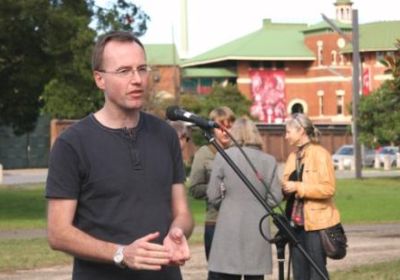
"It seems that the whole narrative of politics is going through a seismic shift”, said Greens lead candidate for the NSW upper house at the 2011 state election, David Shoebridge at an August 25 forum discussing the post-election political landscape. Shoebridge told the meeting, which was organised by Socialist Alliance, that the result would impact on upcoming state elections in Victoria and NSW. In NSW, Labor is particularly hated.