
“I saw men, women and children die during that time,” former US drone pilot Brandon Bryant told the December 10 Der Spiegel. “I never thought I would kill that many people. In fact, I thought I couldn’t kill anyone at all.”
-
-
Protests against the Al-Khalifa regime have escalated in Bahrain ahead of the two-year anniversary of the uprising's start in mid-February and planned national talks between the opposing camps. The protests were spurred on by court rulings against jailed activists and more deaths caused by security forces. On January 13, 88-year-old Habib Ibrahim Abdullah died after inhaling tear gas fired by security forces at a protest in Malkiya, sparking protests in the capital. Security forces attacked demonstrators at his funeral the same day.
-
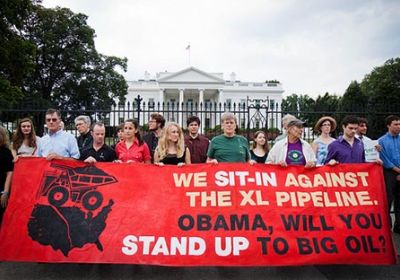 For a moment he lost himself in the old, familiar dream. He imagined that he was master of the sky, that the world lay spread out beneath him, inviting him to travel where he willed. It was not the world of his own time that he saw, but the lost world of the dawn -- a rich and living panorama of hills and lakes and forests. He felt bitter envy of his unknown ancestors, who had flown with such freedom over all the earth, and who had let its beauty die. -- Arthur C. Clarke, The City and the Stars Capitalism stands as a death sentinel over planetary life.
 -
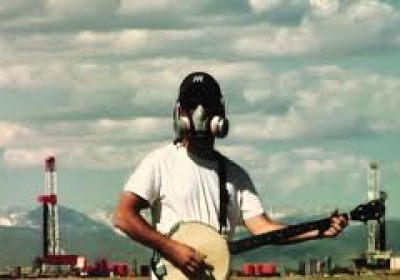 The shale gas industry-commissioned white paper, The Global Anti-Fracking Movement: What it Wants, How it Operates and What’s Next, makes for some very interesting reading. It was produced late last year by Control Risks, an “independent, global risk consultancy specialising in helping organisations manage political, integrity and security risks in complex and hostile environments”.
 -
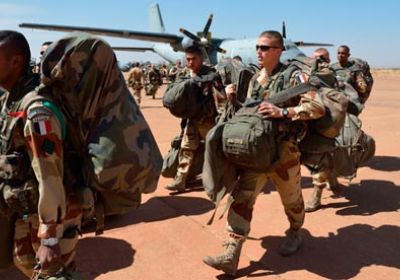 Statement on the military intervention in Mali by the Africa Network of the Committee for the Abolition of the Third World Debt (CADTM), January 29. * * *
 -
“France is in Mali for the long haul.” That was the headline of France’s daily newspaper Le Monde on February 4. The newspaper's front page, as well as pages 2 and 3, were devoted to a discussion over “what next” for France in Mali.
-
President Barack Obama's nomination of John Brennan to head the CIA underscores the administration's drive to assert absolute executive power in the “war on terrorism” without any outside constraints or possibility of review. Brennan was a public defender of the use of torture and "special rendition" under the Bush administration.
-
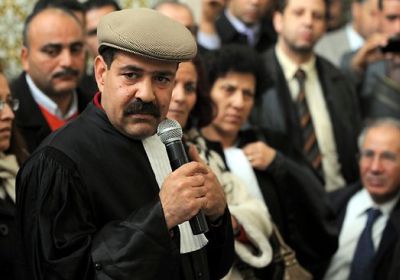 Furious protests have exploded onto Tunisia's streets and a general strike has been called after the assassination of left-wing politician and lawyer Chokri Belaid on February 6. Belaid was head of the far-left Party of Democratic Patriots (PPD). His killing is Tunisia's first reported political assassination since independence.
 -
 Minister of State for Finance Saleem Mandviwalla confirmed on January 23 that murder charges against the owners of the Baldia Town factory that caught fire on September 11 last year had been withdrawn. The investigation officer was also changed. On January 24, there was no general strike. The apparent silence of the working class was a result of the systematic targeting of unions by the state apparatus. With over 259 workers killed in the fire, the final death toll is still unavailable.
 -
Hashim bin Rashid is the general secretary of the Lahore branch of Pakistan'sAwami Workers Party, which was recently formed by three left-wing groups uniting. Hasmim was a special guest at the Socialist Alliance national conference in Geelong 18-1-13, where the gave the talk in this video. The video is by Green Left TV.
-
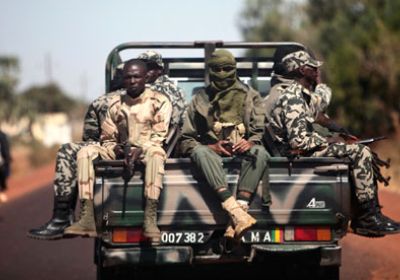 The French-led intervention in the west African nation of Mali has captured the northern towns of Timbuktu, Gao and Kidal. As the Islamist rebels flee to mountains in the north, the French are contemplating what comes next, amid concerns of a prolonged guerrilla war and war crimes committed by their Mali army allies. As with other recent examples of Western interventions, the capture of the major urban centres could prove the easiest part of the French-led intervention into the resource-rich region.
 -
The illness of Venezuelan President Hugo Chavez has created uncertainty over the future direction of his government, and specifically its commitment to revolutionary change and socialism. Throughout the 14 years of his presidency, the key to Chavez’s political success was the constant deepening of the process of change, which invigorated the rank-and-file of his movement.