

One hundred and eight leaders of the Peoples Democratic Party — the third largest party in the Turkish parliament — will face a show trial on April 26 that could see them imprisoned for life, reports Sarah Glynn.
One hundred and eight leaders of the Peoples Democratic Party — the third largest party in the Turkish parliament — will face a show trial on April 26 that could see them imprisoned for life, reports Sarah Glynn.
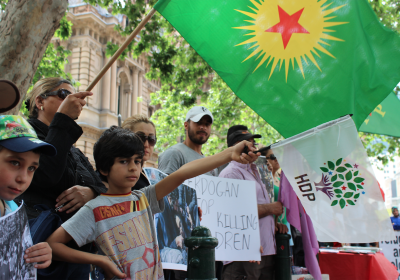
The progressive Peoples’ Democratic Party (HDP) in Turkey has called for international solidarity on April 26, reports Peter Boyle.

John Tully looks at the history of repressive, and at times genocidal, anti-Kurdish policies that go back to the foundation of the Turkish Republic.
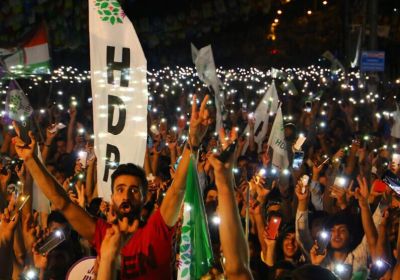
Left parties from the Asia-Pacific region have spoken out in solidarity with the pro-Kurdish Peoples’ Democratic Party, which is in the process of being banned in Turkey, reports Peter Boyle.
The pro-Kurdish Peoples’ Democratic Party reports it is under ferocious attack from Turkish president Recep Tayyip Erdogan’s Justice and Development Party regime.

Thousands of Kurdish and Turkish women and LGBTI groups in Istanbul defied a government ban to march on the eve of International Women's Day on March 8, writes Kerry Smith.
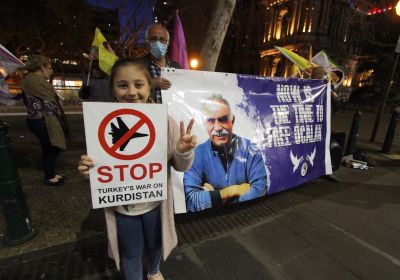
This year's Imrali peace delegation to Turkey heard disturbing accounts of brutality and repression at the hands of the Turkish state, writes Peter Boyle.
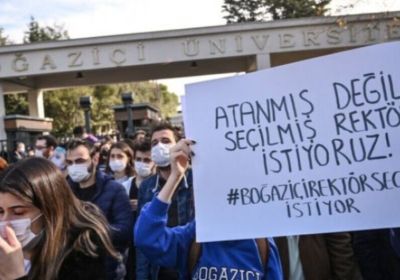
Despite mounting arrests and new threats, Turkish students continue to mobilise against the regime's violence, sexism and homophobia, writes Kerry Smith.
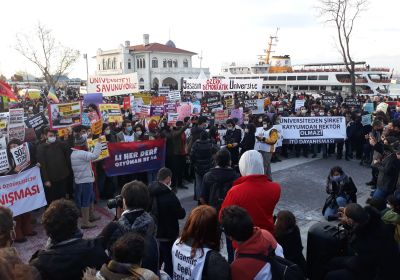
Interference in univerity affairs by Turkey's regime has sparked resistance by staff and students. Could this be the start of a new youth movement, writes Muhsin Yorulmaz?
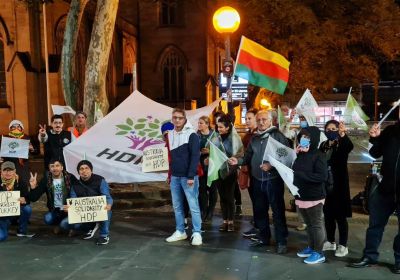
Arrest warrants were issued for 82 people in Turkey on September 25, writes Kerry Smith. The arrests targeted members and leaders of the People's Democratic Party (HDP) ‒ the third largest party in Turkey.
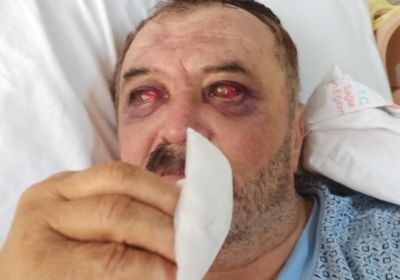
Two Kurdish farmers remain in hospital after suffering horrific injuries when they were tortured and thrown from a helicopter in Turkey’s south-eastern province of Van, writes Steve Sweeney.
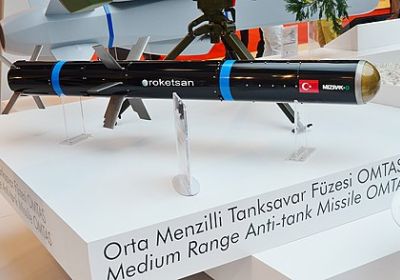
Five western companies, based in Germany, England and North America, are involved in the manufacture of missiles fired from Turkish drones against Kurdish civilians, reports ANF English.