population

Population Puzzle distorts reality

Dick Smith’s Population Puzzle, a documentary that aired on ABC1 on August 12, made no modest claims. It went for the direct, hard sell. Its message: “Cutting immigration to Australia is a great product, and you should buy it.”

It said a smaller Australia would not solve just one or two social problems, but more than a dozen.

Population: No, we're not full

“Lunchtime midweek in Campbelltown’s main street in the heart of western Sydney is a slow-moving affair”, the Australian’s Jennifer Hewett wrote on July 23.

“Cars drive in and out of the one-way street at a leisurely pace. Business is not exactly booming in most of the small, tired-looking shops. There’s plenty of room on the footpath for pedestrians.”

Population control — a political weapon for conservatives

Forget about the climate science and the record high temperatures. Prime Minister Julia Gillard has decided she doesn’t need a serious climate change policy to win the federal election.

In its place, she kicked off her election campaign on July 18 with a “sustainable Australia” policy. It promised a future of low population growth, which “preserves our quality of life and respects our environment”.

Opposition leader and climate denier Tony Abbott was quick to say he fully agreed with this vision, but was even more committed to it than Gillard.

Is population the problem?

In one of her first policy changes after replacing Kevin Rudd as leader of the Labor Party, Prime Minister Julia Gillard dumped Rudd’s idea of a “big Australia”.

On June 26, Gillard said “Australia should not hurtle down the track towards a big population”. Instead, she called for a “sustainable population”.

Almost four weeks on, however, Labor’s policy has no details — just lots of rhetoric designed to pander to fears that immigration (particularly asylum seekers) is causing a raft of social problems.

Population is not the problem

Peoplequake: Mass Migration, Ageing Nations & the Coming Population Crash
By Fred Pearce
Corgi Books, 2010, 352 pages

Review by Martin Empson

In the 200 years since the Reverend Thomas Malthus first penned his tract, An Essay on the Principle of Population, the question of the “carrying capacity” of the planet has repeatedly appeared.

Most recently, mainstream debates around how to solve the question of climate change have boiled down to the simplistic argument that “there are too many people”.

Extension of Melbourne’s boundary opposed

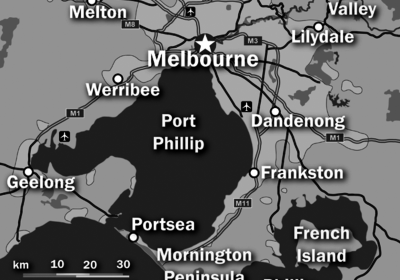
Despite a promise before the last election, the Brumby state Labor government has introduced legislation to extend the urban growth boundary for Melbourne. Planning Amendment VC 67 expands Melbourne’s Urban Growth Boundary to accommodate the 284,000 houses the government expects will be needed if Melbourne’s population reaches 5 million before 2030.

About 70 people from the Green Wedge Coalition, Protectors of Public Lands and Planning Backlash protested against these plans on June 22.

Syndicate content