
Venezuelan President Hugo Chavez was a leader for Venezuela, Latin America and the whole world, a meeting to mark 10 years since his death, was told. Chris Slee reports.
Hugo Chavez
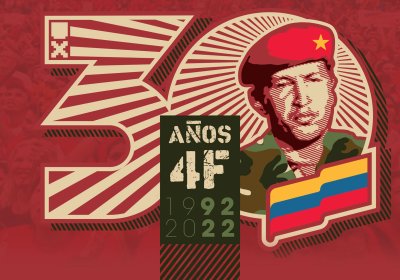
Hugo Chávez broke into Venezuela's political scene 30 years ago at the head of a civilian-military rebellion. Andreína Chávez Alava takes a look at the roots of the Bolivarian Revolution.

On May 26, journalists from the Real News Network (RNN) interviewed residents and local representatives from the barrios in Caracas about the impact of US sanctions on critical water supplies.

Forget about the right-wing opposition and its self-proclaimed “interim president” Juan Guaidó — the fate of Venezuelan president Nicolas Maduro will be decided by the political movement forged under his predecessor, writes Federico Fuentes.

Given the media barrage surrounding Venezuela’s “humanitarian crisis”, recent tensions on the Venezuela-Colombia border, and talks of “military options” and coup attempts, it was hard to know what to expect on returning to the country for the first time in five years, writes Federico Fuentes.

In early March, Green Left Weekly's Federico Fuentes travelled to Venezuela as part of a fact-finding mission. He visited Caracas’s poorer neighbourhoods, rural and border states to hear from those voices deliberated excluded from the media discussion on Venezuela.

Capitalist party politics in the United States remains in turmoil. Republicans and Democrats are at each other’s throats. Factionalism exists in both parties. Despite this situation, Democrats and Republicans have common cause in support of the Washington-organised attempt to overthrow the government led by Venezuelan president Nicolas Maduro, writes Barry Sheppard.

A war has been declared on Venezuela, of which the truth is "too difficult" to report, writes John Pilger.

Hundreds of Palestinians took to the streets of besieged Gaza on January 29 to show their support of the democratically-elected government of Venezuela and it’s legitimate leader, President Nicolas Maduro.

Voices from across South America have denounced Israel’s massacre of more than 50 Palestinians on May 14 and its ongoing repression of protesters participating in the Great March of Return that began in Gaza on March 30.
They have also condemned the United States’ decision to move its Embassy to Jerusalem and pledged support to the boycott, divestment and sanctions (BDS) campaign against Israeli apartheid.

While the voices of Venezuela's right-wing opposition are continuously amplified by the corporate media, rarely are the voices of grassroots activists heard. Green Left Weekly’s Federico Fuentes spoke to Pacha Catalina Guzman, a leading activist with Venezuela’s largest peasant-based organisation, the Ezequiel Zamora National Campesino Front (FNCEZ), to get her view on the current economic crisis and how rural communities are organising to deal with the situation.
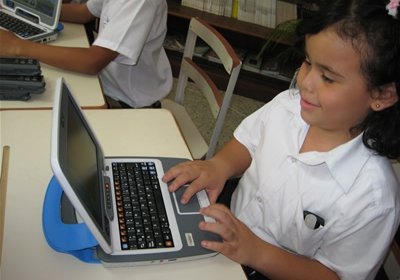
The Canaima Industries factory in Caracas is the assembly point for computers that are given to students for free across Venezuela. Its name comes from the huge Canaima National Park in the south of Venezuela, home to extraordinary landscapes and the highest waterfall in the world, Angel Falls.
We visited the small computer factory, located in the middle of a military base in the east of the capital, as part of the international solidarity delegation organised by Venezuela Analysis in August.
- Page 1
- Next page