Tamil Eelam

Sri Lanka: Tamils seek end to occupation

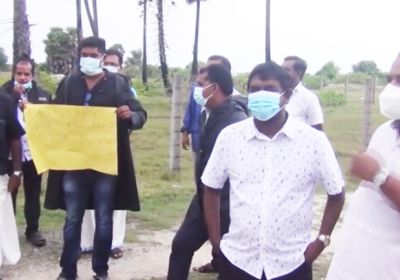
In December 1984, the Sri Lankan Army (SLA) expelled Tamil farmers from three villages in the Ma'nalaa'ru region in the northeast of the island of Sri Lanka and seized 1500 acres of land.

The land has been occupied by the SLA ever since. The displaced farmers told two Tamil National Alliance members of the Sri Lankan parliament who recently visited the area that the army still bans them from returning. They are not even allowed to look at their land.

Australia’s cricketers should shun Sri Lanka

Despite growing international outrage over the Sri Lankan military’s mass killings of over 40,000 Tamil civilians in 2009, the Sri Lankan government is defiantly refusing to heed international demands for an independent investigation into the atrocities. Instead it is escalating a range of discriminatory and repressive policies towards the Tamil people.

Australia’s cricketers should take a principled stand in defence of human rights and justice, and boycott playing with Sri Lanka until the government there conducts itself according to the rules of international society.

Poet and painter in Villawood detention centre

Iniyan and Ravi (names have been changed to protect their identities) are Tamil asylum seekers currently imprisoned at Villawood detention centre. Both detainees use art to show the oppression of Tamils in their homeland of Sri Lanka.

In May 2009, the Liberation Tigers of Tamil Eelam were defeated by the Sri Lankan army. Though the war is ended the persecution of Tamils continues. Iniyan and Ravi fled for their lives as they were being hunted by Sri Lankan government forces and paramilitaries, for suspicion of supporting the LTTE.

‘Save the Tamil children’

This year is the 15th anniversary of the Nargar Kovil school massacre in Tamil Eelam, the Tamil area of Sri Lanka.

On September 22, 1995, the Sri Lankan Air Force (SLAF) bombed Nargar Kovil Maha Vidyalayam schoolyard, which was crammed with 750 children on their lunch break. Reports of the number of children killed vary from 26 to 70.

Twelve of the children killed were six or seven years old. One hundred and fifty were injured, including 40 seriously. Twenty-two children had their limbs amputated. Ten of the amputees were under 12.

Tamils not safe under Sri Lankan rule

On April 9, the Australian Labor Party government, then led by Kevin Rudd, imposed a three-month suspension of the processing of refugees from Sri Lanka. On July 6, the Labor government of PM Julia Gillard announced, in the context of unveiling its pre-election tougher stance against refugees, that the suspension would not be extended.

Sri Lanka: UN appoints war crimes panel

United Nations Secretary-General Ban Ki-moon announced on June 22 the formation of a three-member panel to advise him on whether Sri Lanka committed crimes during the last months of its war against the Liberation Tigers of Tamil Eelam, Reuters said that day.

Sri Lanka: Tamils dispossession worsens

More than a year after its victory over the pro-independence Liberation Tigers of Tamil Eelam (LTTE), the Sri Lankan Army (SLA) continues to hold large areas of land in the predominantly Tamil north and east of Sri Lanka as “high security zones” (HSZ).

Many of the Tamil inhabitants who were evicted from these areas to create the HSZs during the decades-long war are still unable to return to their homes.

Sri Lanka: One year on from war’s end

A May 17 International Crisis Group report said there were “reasonable grounds to believe the Sri Lankan security forces committed war crimes with top government and military leaders potentially responsible” in the last five months of the 30 year long war against Tamil independence fighters. The report cited the intentional shelling of civilians, hospitals and humanitarian operations.

Tamils vote for separate homeland

Over April 17-18, Tamils across Australia voted overwhelmingly in favour of the formation of an independent and sovereign homeland — Tamil Eelam — in the north and east of Sri Lanka.

In what was described by organisers as “the most successful political event for the diaspora in Australia”, 99.38% of participants voted “yes”.

Syndicate content